Chase is defending 10,000 lawsuits. Find out more and join the party.


May God Help Us All

by Mark Stopa, Florida attorney

Wanna Buy a Government-Foreclosed Home? OK. Just Bring $10,000,000.00

Posted on June 29th, 2012 by Mark Stopa

I’ve often expressed my disgust at how Fannie Mae and Freddie Mac frequently pay banks 100% of their judgment amounts in foreclosure cases. It’s an appalling dynamic in foreclosure-world, one where banks often have no incentive to modify mortgages because "our" government will pay the banks in full once the foreclosure is over (and all the banks have to do is convey title to Fannie and Freddie). Incredibly, just when I thought I couldn’t be any more appalled, somehow, my disgust with "our" government reached a new level today.

I have it on good information (directly from someone personally involved) that Fannie and Freddie are selling foreclosed homes in bulk to third-party investors. Not one at a time, not several – dozens – at heavily discounted rates. In other words, many of the homes in Florida and elsewhere that have been foreclosed, with lower and middle-class homeowners thrown onto the streets and title transferred to Fannie or Freddie, are being sold to third-party investors in bulk.

If you think that sounds like an interesting investment opportunity, a chance to purchase a new home after you were foreclosed, let me stop you. Fannie and Freddie aren’t making these investments available to just anyone. To qualify, to even get inside the door to the auction room, you must have at least $10,000,000.00 in assets, and you must be able to prove the existence of those assets via bank statements and the like.

Ten million bucks, just to get in the door.

Is this what America has become? Throwing Americans onto the streets so "our" government pays the banks to foreclose and "our" government sells those houses in bulk at discounted rates to third-party investors with an eight-figure net worth?

Apparently so.

Sigh.

You know what’s arguably even worse? Nobody is even talking about this. No news stories. No media coverage. Nothing. Would you have known about this if Mark Stopa – basically a nobody in the scope of national news and politics – hadn’t blogged about it?

Why such secrecy? Where is the media coverage? Where’s the outrage? Who is running our government, exactly? This is as big an issue as Obamacare – thousands of homeowners getting foreclosed and their homes being sold in bulk to the mega-wealthy. Why is nobody even talking about it? Is America really a land where our government takes houses from the poor and middle class and sells them in bulk at discounted rates to the mega-wealthy – and it does so completely in secret? Does anyone care?

This is why I consider this the biggest post I’ve ever written. This is what is driving the whole foreclosure crisis, and nobody knows about it. Nobody’s even talking about it. Change is not possible without awareness, and right now, all Americans are totally in the dark about this dynamic. Well, all Americans except those who have $10,000,000.00.

May God help us all.
Mark Stopa

Chase is defending 10,000 lawsuits. Find out more and join the party.

U.S. Audit Cites OCC Lapses in Oversight of Foreclosure Process – Bloomberg

http://www.bloomberg.com/news/2012-06-01/u-s-audit-cites-occ-lapses-in-oversight-of-foreclosure-process.html

U.S. Audit Cites OCC Lapses in Oversight of Foreclosure Process

By Carter Dougherty – Jun 1, 2012 1:50 PM ET

The Office of the Comptroller of the Currency underestimated the risks in bank foreclosure practices from 2008 to 2010 and gave examiners a 13-year-old handbook that didn’t address how securitization affects loan documentation, a Treasury Department audit found.

Treasury’s inspector general’s office reviewed the OCC’s work in the years following the onset of the credit crisis. The period was later found to be rife with abusive foreclosure practices including use of fraudulent documentation by servicers. Five major banks, including JPMorgan Chase & Co. (JPM),Bank of America Corp. and Wells Fargo & Co. (WFC), settled claims from 49 states and the federal government for $25 billion on Feb. 9.

“During this time OCC did not consider foreclosure documentation and processing to be an area of significant risk and, as a result, did not focus examination resources on this function,” Jeffrey Dye, the inspector general’s director of banking audits, wrote in the May 31 report.

In missing what “turned out to be serious foreclosure issues,” the OCC relied too heavily on the banks’ own internal quality-control procedures, he said. The bank programs, in turn, focused on loss mitigation and compliance with investor guidelines, not foreclosure documentation, the report found.

The inspector general also faulted the OCC, the primary federal supervisor for national banks, for failing to update its handbook on mortgage banking examinations for 13 years. The guide didn’t address the effects of securitization or new mortgage products that were at the heart of the housing bust, the report concludes.

Comptroller Thomas Curry told the inspector general in a May 15 letter that the OCC manual will be updated, but stressed that the agency issued supplemental guidance to examiners in 2006 and 2007.

OCC spokesman Robert Garsson declined to comment on the Treasury report.

To contact the reporter on this story: Carter Dougherty in Washington at cdougherty6@bloomberg.net

To contact the editor responsible for this story: Maura Reynolds at mreynolds34@bloomberg.net

U.S. Audit Cites OCC Lapses in Oversight of Foreclosure Process – Bloomberg

DeBord Report : California is going through another ‘wave’ in foreclosures | 89.3 KPCC


California is going through another ‘wave’ in foreclosures

By Matthew DeBord

http://www.scpr.org/blogs/economy/2012/07/12/7025/california-going-through-another-wave-foreclosures/

Foreclosures Spike As Banks Accelerate Loan Default Notices

Kevork Djansezian/Getty Images

A for sale sign is posted in front of house in Glendale. California saw foreclosure starts pick up in June, suggesting that a new wave of defaults is underway.

For the first six months of 2012, foreclosures in California declined from the same period a year earlier. But RealtyTrac, an Irvine-based company that specializes in tracking foreclosures, reports that the state still has the fourth highest foreclosure rate in the nation. In fact, in June, default notices sent to homeowners increased from May. And year-over-year, California’s rate of foreclosure starts increased 18 percent, making it the top state for the month, the first time that California has held that slot since 2005.

I talked to RealtyTrac vice-president Daren Blomquist. He said that states with the worst foreclosure rates have remained consistent during the housing crisis. The top five haven’t moved around a lot: it’s Nevada, Arizona, Georgia, California, and Florida. He noted that the only surprise was that Georgia has moved into the top four and that Florida has slipped.

Foreclosure filings in California fell by about 11 percent in the second quarter of 2012. But in June foreclosure moved up a bit more than 12 percent over May.

Blomquist said we’ve seen this pattern before in California. He calls it a “foreclosure wave” and expects the pattern to continue, as banks cope with the national mortgage settlement that was signed into law by Gov. Jerry Brown yesterday and avoid flooding the market with foreclosures. Blomquist’s interpretation is that banks will work through their foreclosures gradually, so we’ll see activity ebb and flow.

"Lenders are looking at their loan portfolios and figuring out how many mortgages to set aside for modification," he said. The banks are determining which ones likely won’t qualify and sending out notices of default, the first stage of the foreclosure process, to homeowners.

Regardless of how these waves are paced, the foreclosure crisis isn’t going away any time soon. At the current rate, Blomquist expects it to take until late 2013 or early 2014 before the country’s million-and-half foreclosures are in the rearview mirror.

Follow Matthew DeBord and the DeBord Report on Twitter. And ask Matt questions at Quora.

Tagged: realtytrac, notice of default, foreclosures, california, California

DeBord Report : California is going through another ‘wave’ in foreclosures | 89.3 KPCC

Encounters with Pro Se Litigants

http://www.atlantatrial.com/encounters-pro-se-litigants/

Encounters with pro se litigants

by Daniel DeWoskin

June 1st, 2011

We have all heard that a lawyer who represents himself has a fool for a client. Many of us have had occasion to walk into a courtroom, be it in magistrate, state, or even superior court, only to find that the courtroom is packed with pro se parties waiting to have their matters adjudicated. Watching inexperienced people handle their legal matters can at times be entertaining and at other times extremely frustrating. We observe these parties fumbling with rules regarding cross-examination or the admission of evidence. It is almost always apparent that these people are uncomfortable, intimidated, and unaware of how much they do not know about prosecuting or defending a legal action. Out of necessity, desperation, or perhaps stubbornness, many people still choose to represent themselves in court.

Is it hubris that causes these people, these “fools,” to represent themselves? The fact is that many parties are representing themselves because they could neither find, nor afford, counsel in a particular matter. These situations can be simply tragic. Many times, these persons are out-maneuvered by an attorney because they fail to acknowledge procedure or to understand the application of law to a particular issue. These people may lose their cases solely because their temperament or demeanor has overshadowed the presentation of evidence in their cases. There is not much of a fix to this problem, as the courts cannot take it upon themselves to advise pro se parties lest they cease to be impartial to some extent.

As attorneys, it can be like watching a train wreck. And yet, even watching the least capable pro se parties, I have to give them credit for having the nerve to walk into court, to stand before a group of strangers, and to engage in public speaking for which the outcome may have dire consequences. It is refreshing and impressive when some of these individuals have taken the time to conduct research into their legal issues and patiently wait for certain cues from the court as they advocate for their position. We have all seen these cues ignored at times by the most experienced and knowledgeable attorneys.

I myself have dealt with pro se parties and can say that I have always found it to be troublesome. When dealing with a pro se party, I am always cautious to avoid ever giving legal advice to the other party. I have a duty to my client and my responsibility to zealously represent his or her interests cannot be compromised. I also have a duty to deal fairly and honestly with my opponent. In these situations, it can be challenging to set the right tone so that I do not inadvertently escalate any hostility that may already be present in the litigation. Even by making very deliberate choices as to how I speak with my opponent can backfire, causing more work and headache for everyone involved, including the court.

Any lawyer who has dealt with pro se parties is likely to say that there is some measure of comfort when dealing with represented parties. Pro se parties are always personally involved in the matter at hand and can often have difficulty taking a step back so that they might see their opponents’ arguments for what they are. If these people were not personally involved, they would not deem the matter worth their time or attention in the first place. When both parties are represented by experienced and professional counsel, knowledge of law and courtesy generally help govern the course of litigation. This is quite the contrast between the emotion and intimidation that can be in play in pro se litigation.

There are also times where we as attorneys sit down in a crowded court and have the person seated beside us turn and ask, “Are you an attorney?” This usually means that we are about to be asked if we can answer a quick question that is never quick and never isolated. When I find myself in this position, I usually resort to recommending that the person ask for a continuance and seek counsel, but I am always professional and polite so that I do not seem to be turning my back on them. As opposed to explaining that I need to be paid for my services, which is true, I have found that people respond better when I explain that without a thorough review of the particular facts of both parties and their assertions, I am not able to provide them with a reliable answer.

It is extremely important in our justice system for people to have access to the courts, even when they cannot afford counsel. Our judges do a good job demonstrating patience and appreciation for the rights of pro se parties, and yet I am continually perplexed by how many people will try to handle a complex litigation matter without doing any homework. While I doubt these same people would handle their own dental work, sometimes I just have to wonder.

I am disappointed when I see pro se parties get intimidated by attorneys in court. There are those rare moments when one of these parties, outgunned and out of their element, has done the legwork and prevails in court. If you have never seen this in action, it is something to behold. Recently, I spoke to a young woman who succeeded in defending herself in a civil action. It was rather remarkable. I was impressed by the quality of her research and preparation, and she was impressed by how ignorant and unprepared her attorney counterpart was.

I suppose the takeaway from this encounter was that we should never take our opponents for granted. So, while a lawyer who represents himself has a fool for a client, there is no substitute for preparation, knowledge of the law and facts, and humility in a court of law. As lawyers, we should try to find the balance between stressing the value of qualified counsel and understanding why people may still choose to represent themselves. Instead of dismissing all these people as foolhardy, perhaps we should first caution them, then suggest where they might find the resources to empower them in their decision. In the end, if they do follow through with the research, it should demonstrate that what we do is unique, precise, and specialized.

As lawyers, we are aware of the dangers of pro se litigation. We know the troubles that lurk in handling matters without knowing the facts, the law, and the applicable procedure. For those who do not know these dangers, we must act as stewards. We may benefit these people and the system in general without giving out free legal advice, but also without treating what we do as beyond the reach of a dedicated individual with something to prove. Once again, many of these individuals do not have a choice, and nobody in our community benefits from a system that breeds intimidation and contempt.

Article appears in the DeKalb Bar Association Newsletter

See Original Article>>

Daily Report: Public shut out of Georgia courts

http://www.dailyreportonline.com/PubArticleFriendlyDRO.jsp?id=1202561653020

Public shut out of Georgia courts

R. Robin McDonald

Daily Report

07-03-2012

Judges across Georgia are closing courtrooms to the general public, citing as reasons a lack of space and security concerns.

They are doing so even though the U.S. Supreme Court in January 2010 vacated a Georgia Supreme Court ruling that had upheld the closure of a DeKalb County courtroom and the removal of members of the public during jury voir dire. The U.S. justices said at the time that courtrooms should remain open to the public except in rare circumstances.

Since then, courtroom closures have been challenged in DeKalb, Fulton, Cobb and Towns counties in Georgia’s appellate courts. Two weeks ago, the Southern Center for Human Rights sued the Cordele Judicial Circuit, claiming that its superior court judges are continuing to bar public access to court hearings despite a consent agreement in 2004 that they would stop the practice.

The appellate challenges to closed courtrooms across the state have garnered mixed success, but Judicial Qualifications Commission officials are concerned.
Closing courtrooms, said JQC Chairman John Allen, “could be a violation” of state judicial canons “depending on the set of facts surrounding the closing.”

JQC director Jeffrey Davis told the Daily Report that in his work observing judges in action around the state, he is often met at the courtroom doors by local deputies who ask for his credentials and question why he is there.

“I’ve personally experienced the chill that members of the public would feel,” he said. “I’m a lawyer. It’s not that I’m under-dressed for court.”
Once a member of the public has passed through courthouse metal detectors or security at a courthouse entrance, Davis said, “No citizens should be questioned about the reason they are in a public courtroom.”

But, he continued, “It seems to be the modus operandi around the state for courts to have deputies who question those who are simply in the court without business before the court. People ought to be able to watch their government in action. And justice which is done in secret—or a feeling by those who are coming to the courthouse that somehow they don’t have a right to be there—chills the public’s ability not only to access the courts but also to have confidence in the judicial system.”

DeKalb County
Last year, DeKalb State Court Judge Barbara Mobley resigned her post to end a JQC ethics investigation that included allegations she had interfered with the public’s access to a public courtroom. Mobley posted signs that restricted access to court hearings and directed court personnel to ask court observers to identify themselves and state their business, “thereby chilling the public’s right to observe matters before the court,” according to the JQC’s report to the Georgia Supreme Court.

The Daily Report reported last year that Mobley was one of a number of DeKalb judges who had posted signs on their courtroom doors limiting courtroom access to criminal defendants, their lawyers and alleged victims. The sign on Mobley’s door said, “We do not have space for extra people.”

Allen told the Daily Report last week that after Mobley resigned, he asked the DeKalb judges “to please meet and reconsider their policy of automatically closing their courtrooms as opposed to making a case-by-case decision.”

“Openness of course is such a basic principle of the law in Georgia jurisprudence and U.S. constitutional jurisprudence,” Allen continued. “You erode the confidence in the integrity and fairness of the courts by closing the courts as a matter of course.”

“Ours was just a courtesy call,” he said, “so that the conduct of the court didn’t rise to the level of being egregious.”

Allen said he also reminded the DeKalb bench of the U.S. Supreme Court’s ruling in Presley v. Georgia, 130 S. Ct. 721, which slapped the Georgia Supreme Court for upholding a decision by DeKalb County Superior Court Judge Linda Hunter to close her courtroom during jury selection in a criminal case.

In its ruling vacating the Georgia decision, the U.S. Supreme Court held that the Sixth Amendment right to a public trial extends to the voir dire of prospective jurors and that, “Trial courts are obligated to take every reasonable measure to accommodate public attendance at criminal trials.”

The decision did allow for exceptions, holding that, “The right to an open trial may give way in certain cases to other rights or interests, such as the accused’s right to a fair trial or the government’s interest in inhibiting disclosure of sensitive information.”

But, it stated, “Such circumstances are rare, however, and the balance of interests must be struck with special care. The party seeking to close a hearing must advance an overriding interest that is likely to be prejudiced, the closure must be no broader than necessary to protect that interest, the trial court must consider reasonable alternatives to closing the proceeding, and it must make findings adequate to support the closure.”

Last year, DeKalb Chief State Court Chief Judge Wayne Purdom told the Daily Report that he posted signs limiting access to his courtroom on days when he heard jail pleas, when numerous prisoners were in court or on arraignment days when as many as 100 people might need seats. On those days, he said, members of the public were only admitted “by request.”

While acknowledging that courtroom access “is a public right,” Purdom told the Daily Report that “regulation of entrance to the courtroom is a case-by-case situation.”
Purdom also agreed that signs barring entry might have “a little bit of a chilling effect.” But, he continued, “I think there are limited situations where control of access is appropriate, although keeping the public out is not.”

Fulton challenges
Last month Atlanta attorney Brian Steel argued before the Georgia Court of Appeals that a judge’s decision to close a Fulton County courtroom had violated a criminal defendant’s constitutional rights.

Steel appealed the decision of then-Fulton County Superior Court Judge Marvin Arrington, who in the 2009 rape trial of Corsen Stewart apparently barred the public, including the defendant’s mother, from the courtroom during jury voir dire in a situation nearly identical to the DeKalb closure that led to the U.S. Supreme Court ruling.

Steel, who was not Stewart’s lawyer during the trial, said he took the case on appeal after Stewart’s mother came to see him, told him she had been locked out of the courtroom when attorneys were questioning potential jurors for her son’s case and burst into tears in his office.

In 2010, Steel asked the Georgia Supreme Court to overturn the 2006 Fulton County murder conviction of Travion Reed, basing one argument  on Judge Craig Schwall Sr.’s decision to close the courtroom during the testimony of two witnesses. Prosecutors countered that the courtroom’s closure was warranted because the two witnesses in question feared for their safety. A third witness in the case had been shot a short time after the murder, and a fourth witness had been threatened with a screwdriver in an attack that prosecutors claimed was likely linked to the defendant.

At the time, neither Reid nor his attorney objected. That omission proved critical to the Georgia Supreme Court which—three weeks after its decision in Presley was vacated—affirmed Schwall’s decision to bar public access to his courtroom during the testimony.

Steel did not represent Reed at his trial.

In an opinion written by Justice George Carley, the high court held 6-1 that in order to prevail, Reid “must show that he was prejudiced by counsel’s decision not to object to the brief closing of the courtroom. … Indeed, to hold otherwise would encourage defense counsel to manipulate the justice system by intentionally failing to object in order to ensure an automatic reversal on appeal.”

But Chief Justice Carol Hunstein, the lone dissenting vote, countered that, “No reason was articulated to support closing the courtroom” for the two witnesses when “closure was not sought for others who not only might have been, but actually were, placed in peril because of their testimony.”

“The trial court’s findings were clearly inadequate to support closure of the courtroom,” her dissent stated. “Moreover, the trial court failed to consider any alternatives to closure,” she said.

“Although the majority concludes that Reid has not shown prejudice,” Hunstein concluded, “Reid is not required to do so in order to obtain relief for a structural error which was a violation of the public-trial right.”

Steel said last week that “Prejudice is pretty hard to show when you’re closing a courtroom. It’s an almost unobtainable bar that the Supreme Court set.”
Steel said that in the Stewart appeal he argued before the state appellate court on June 13, “I’m challenging the Reid decision. … It’s primed to have a new discussion about it.”

Fulton County is not the only place where Steel has challenged closed courtrooms. In 2010, Steel also asked the Court of Appeals to overturn a Towns County defendant’s conviction because the judge moved jury selection to a nearby church and barred the public, including the defendant’s wife and daughter, from attending. The Court of Appeals reversed the conviction last March on other grounds without addressing the courtroom closure.

Cordele claims
Last month the Southern Center for Human Rights in Atlanta filed suit against the Cordele Judicial Circuit’s three superior court judges and the sheriffs of Ben Hill and Crisp counties in U.S. District Court in the Middle District of Georgia in Albany, claiming that county court officials are systemically barring the public from criminal court hearings that they say should be open to the public.

Stephen Bright, the center’s president and senior counsel, noted that in 2003, as part of a larger civil rights suit on behalf of the county’s indigent defendants, the Southern Center accused circuit officials of restricting public access to the courts. But Bright said the 2003 suit was dismissed in 2004 after circuit officials promised that courtrooms would remain open.

John Pridgen, chief superior court judge of the Cordele Circuit and a defendant in both suits, has called the 2003 allegations “complete fabrications” claiming, “There was never anything inappropriate about what we did then and what we do now.”

Another Cordele Circuit judge noted in a letter filed with the Southern Center’s complaint that the courtroom in the Crisp County Law Enforcement Center is particularly small, with limited seating.

Southern Center attorney Gerry Weber told the Daily Report last month that the center also has received anecdotal evidence that other courtrooms are being closed “in a lot of different places” across the state and is launching an investigation to determine the extent of the problem.

‘Keeps us free’
Courtroom public access issue came to the fore in Cobb County last year, when former Governor Roy Barnes secured the dismissal of an indictment against the CEO of the Cobb EMC because the grand jury presentments were made inside the new courthouse while its doors were locked and deputies barred access via a separate catwalk entrance.

The Georgia Court of Appeals upheld the indictment’s dismissal in March, ruling that, “The Georgia Supreme Court has held that any failure to return the indictment in open court is per se injurious to the defendant.”

Former Georgia Supreme Court Chief Justice Leah Ward Sears, who dissented in the state Supreme Court’s Presley decision, said in an interview with the Daily Report that the U.S. Supreme Court opinion vacating Georgia’s Presley decision “made it pretty clear … that you cannot, as a matter of policy, close courtrooms.”
In her dissent in Presley, Sears specifically addressed arguments based on lack of space.

“A room that is so small that it cannot accommodate the public,” she wrote, “is a room that is too small to accommodate a constitutional criminal trial.”
But the former chief justice, now a partner at Schiff Hardin, told the Daily Report that judges still may close a courtroom “in very narrow circumstances.” But their reasons  for doing so, “have to be well articulated,” she said. “It has to be on a case-by-case basis … It also has to be a last resort.”

Sears said she doesn’t belittle judges who struggle with issues of space and security.

“That’s what created the majority in the Presley case,” she said. “It wasn’t that the judges felt you should keep people out. They saw what a problem it was in these tiny courtrooms trying to manage things. You get very sympathetic when a trial judge is trying to … keep things secure.”

The issue, she explained, is one of competing values. But to trump the value of open courtrooms, she said, “would take some effort. … Public access is one of the cornerstones of our democracy. It’s what keeps us free.” 

<a href="http://ad.doubleclick.net/jump/alm.dailyreportonline/;pos=300a;ptype=;tile=2;sz=300×250&quot; target="_blank"> <img src="http://ad.doubleclick.net/ad/alm.dailyreportonline/;pos=300a;ptype=;tile=2;sz=300×250?"></a&gt;


Copyright 2012. ALM Media Properties, LLC. All rights reserved.

Daily Report: Public shut out of Georgia courts

Daily Report: Robin Hood lawyer fights foreclosures with a passion


http://www.dailyreportonline.com/PubArticleFriendlyDRO.jsp?id=1202559725985

‘Robin Hood’ lawyer fights foreclosures with a passion

Katheryn Hayes Tucker

Daily Report

06-18-2012

For 34 years, Robert Thompson Jr. had been a business and labor lawyer — as was his father before him — defending corporations and financial institutions and even serving on several banks’ boards of directors.

But something happened to him two and half years ago that changed his entire practice. Now, he challenges banks and financial institutions in court, accusing them of wrongful foreclosure and outright fraud on behalf of individuals who are a step away from losing their homes.

The turning point for Thompson came at Christmas time, 2009. His mortgage servicer — with whom he had been embroiled in disputes over what he said were misapplied or lost checks, late fees for payments that had been made on time, unnecessary insurance costs and double billings for taxes — moved to foreclose on his home.

"I was a single father with three young children living with me in that house," the silver-haired Thompson said during an interview in his Buckhead Thompson Law Group office filled with books about the financial industry and the economic crisis. "It was very upsetting."

But, he added, "I was the wrong person to pick on about injunctions and bank law."

On Dec. 28, 2009, he went before Fulton County Superior Court Judge John Goger, asking for an order enjoining the mortgage company from proceeding with the foreclosure. The judge’s first question was, "How much do you owe?" Thompson recalled.

"I told him I didn’t owe anything, that my payments had all been made on time, and that in fact they owed me more than $50,000 in overpayments and mystery fees," Thompson recalled.

"Can you prove it?" the judge asked.

Thompson recalled he pointed the judge to canceled checks and FedEx receipts, and the judge granted Thompson’s injunction. Thompson filed a lawsuit against his loan servicer for mortgage fraud and abuse, wrongful foreclosure, unjust enrichment, breach of contract, conversion, misrepresentation, defamation, libel and deceit.

"People started talking about it," Thompson said. "I thought it was just me, but then people started calling saying they had the same problem and wanting to know if I could help them."

Now, Thompson is a man obsessed. And he said he’s had success halting foreclosures — but acknowledged securing such an injunction for a client is only the first step.

Thompson said he still has new clients coming to his office daily. Most don’t have the exact situation as his, where the payments were current but not applied to the account. The biggest percentage, he said, are struggling because of a loss of income and are seeking loan modifications to make payments more manageable, but were told by their mortgage holder they weren’t eligible either because they weren’t behind or far enough behind.

Thompson said being behind on mortgage payments isn’t a requirement of federally funded modification programs. But, on the assumption that it was, he said, his clients missed payments in hopes of qualifying for modifications, then found themselves in foreclosure with their lender refusing to accept more payments. Thompson calls that being "lured into default."

Out of hundreds of cases he’s reviewed in the past two and a half years, he said, there wasn’t a single one where he didn’t find fraud or at least errors in the records. So far, he said, he has not yet been able to say to a homeowner, "I can’t help you because the bank did everything right."

Bank representatives say it’s absurd to suggest banks want to foreclose if there are other options. They admit some paperwork mistakes happen but suggest it’s not right to make those a basis for loan forgiveness.

Meanwhile, Thompson is ordering up forensic audits — at a minimum of $1,000 each — to ferret out problems so that he can go to court to block foreclosures. A forensic auditing company analyzes the loan activity and tracks the transfers of deed and title as the loan has been sold by one financial company to another — and sometimes to several others.

Sometimes, Thompson said, he finds the foreclosing lender has already sold the note and collected the balance, and thus doesn’t have the legal right to foreclose. Often Thompson finds what he calls a "break in the chain of title" because the deed and the note have not been kept together in the transactions, which he said is illegal.

He can’t charge the homeowners the hourly rates he used to bill his corporate clients. Some can hardly pay anything. Occasionally, he said, he just offers free advice on how to fight a foreclosure pro se. Most of the time he negotiates a flat fee varying in amounts according to the work that needs to be done and the client’s ability to pay. "I have to make it affordable or they can’t do it," he said. "But I can’t do it for free."

He is especially busy the week before the first Tuesday of every month, when crowds gather on the courthouse steps for the auctioning of foreclosed homes. This month alone, he went to court for 25 injunctions to stop foreclosures.

Asked how many he won, he said, "All of them. But the injunction is only the first step."

The next step varies, but often includes lawsuits against the lenders or servicers who initiated the foreclosure.

Lender representatives said Thompson’s charges about banks’ motivations don’t make sense.

"Do you really think the lender wants that house back?" asked Mo Thrash, a lobbyist for the Mortgage Bankers Association of Georgia and McCalla Raymer, a law firm with offices in Georgia that represents lenders. "It is absolutely ridiculous to think the lender would want the home back."

Thrash said the conventional wisdom — that the best outcome for the lender is for the homeowner to make all their payments until the loan is paid in full — is still true, maybe more so now because of falling real estate prices and difficulty in selling homes. "I admit mistakes do happen, but I’d be willing to bet that the majority of these cases are a two-way street," he said. "It takes two to tango."

The majority of mortgage banks — 99 percent — are ethical and honest, Thrash added. To suggest otherwise, he said, is "absolutely crazy."

If the personal foreclosure experiences of Thompson and some of his clients are as they described them, "It was a mistake," said J.D. Crowe, senior vice president of Southeast Mortgage of Georgia Inc. and a member of the Mortgage Bankers Association of Georgia Board of Governors.

"If that’s the case, that’s why he won an injunction and will probably win his lawsuit. With the number of foreclosures in the last few years, there’s a lot of paper going back and forth," Crowe said.

But like Thrash, Crowe said it’s "ridiculous" to suggest that a lender would want to foreclose if there were an alternative. "Lenders want to work with borrowers. They don’t want to foreclose," he said.

Crowe also suggested that when homeowners win their foreclosure fights, they usually win on a technicality — a mistake in the paperwork or the separation of the deed and note in the selling of the loan by one financial institution to another. In such cases, if homeowners win damages or loan forgiveness, allowing them to walk away from their mortgage payments, said Crowe, "I think it is unconscionable."

Disbelief, said Thompson, is the biggest challenge he faces in fighting foreclosure fraud. "People who have never suffered through it cannot believe it. It challenges the fundamentals of everything you want to believe about the banks being honest and the government protecting you."

He cited the case of client LaVonda DeWitt, a patent lawyer whose income was reduced because her firm’s revenue dropped. In an interview, she said she contacted her mortgage company to discuss a loan modification so she could lower her payments.

"They said I wasn’t eligible because I still had a job," she said.

Then she was laid off. She called her lender again about the modification and was told she wasn’t eligible because didn’t have a job. She said she was also told she wasn’t eligible unless she was three months behind. She stopped making payments in December 2010. She also filed a complaint with the U.S. Treasury Department over being denied a loan modification. The lender responded with a document she had never seen saying she had been offered a modification and rejected it, but later admitted that claim was a mistake, according to DeWitt. She still wasn’t offered a modification. She received a foreclosure notice in March of this year.

She met with Thompson, who went to court with her to block the sale on the first Tuesday in April. She won the injunction but still wasn’t able to negotiate a loan modification. So, on Thompson’s advice, she filed a lawsuit in federal court.

DeWitt said Thompson reminds her of the fictional Atticus Finch, taking on jobs that other lawyers don’t want.

Another client of Thompson’s, Patricia Sibley, won an injunction a year ago, then filed a lawsuit against the lender for wrongful foreclosure. The suit is pending in the Northern District of Georgia. Sibley and her husband are still in their home — "because of Bob Thompson," she said.

As with DeWitt, Sibley’s suit is based on what Thompson calls "luring into default." When the recession hit and slashed revenue for her advertising company, Sibley said she had to close her business. She and her husband had paid down by half their $950,000 15-year mortgage on their north Atlanta home near the Chattahoochee River, and their payments were current, she said in an interview.

She contacted the lender to ask about changing the terms to lower the payments. Since they still had some income, they felt they could afford the loan if they could spread it back to 30 years. They were told they weren’t eligible for a modification because they weren’t behind. They skipped one payment and called again, but were told they were not far enough behind to be eligible, according to Sibley and the lawsuit. After the third missed payment, they received a foreclosure notice. They tried to talk to the lender’s customer service department many times and offered to pay the loan current and cover fees in return for restructuring, she said, but heard no response.

The house was advertised for foreclosure. The weekend before the first Tuesday in June 2011, cars were driving by the house and stopping to take pictures, Sibley said. It was an experience she said she wouldn’t wish on anyone.

A friend called and said she had a friend who knew someone who might be able to help — Thompson. The friend said, "I have somebody who’s like Robin Hood. He takes from the banks and gives to the poor."

"Not that we’re the poor," Sibley added. But, she said, "I never would have dreamed I’d be in this position."

Sibley’s case is unresolved, but Thompson was able to get an injunction to prevent foreclosure while it’s pending.

McCurdy & Candler, which has offices in Decatur and Atlanta, handled Sibley’s foreclosure for PNC Mortgage, as well as DeWitt’s foreclosure for Chase. Managing partner Sidney Gelernter said the firm couldn’t comment on any pending case or even discuss foreclosures generally. Sibley’s suit is being defended by Ballard Spahr. One of the lawyers working on the case in Atlanta, Christopher Willis, said the firm couldn’t comment on any matter involving any of its clients.

Sibley’s lawsuit is against National City Mortgage Company, National City Bank, PNC Mortgage, Bank of America and unidentified investors. Sibley said she tried repeatedly to find out the identity of the investors who now own the loan — in order to work out payment terms — but PNC, the servicer, wouldn’t tell her.

A spokeswoman for PNC said the company couldn’t comment on any lawsuit. "We do work with customers," said Amy Vargo, noting modification programs described on the PNC website.

In his own personal case, Thompson sued BAC Home Loans Servicing, which is a subsidiary of Bank of America, and Bank of New York Mellon, formerly known as Bank of New York, successor in interest to JP Morgan Chase Bank. Bank of America acquired Countrywide Mortgage Company, which was Thompson’s loan servicer. Thompson’s lawsuit names four companies that owned his note successively. Thompson’s case — which he has withdrawn for now — was defended by Monica Gilroy of Alpharetta’s Dickenson Gilroy, who said she couldn’t discuss it.

The foreclosing firm in Thompson’s case was Shuping, Morse & Ross, based in Riverdale. Neither the managing partner, Sheltan Andrew Shuping Jr., nor the lawyer who handled the foreclosure, Kevin Duda, could be reached for comment.

Thompson’s lawsuit — moved from Fulton Superior Court to federal district court in Atlanta — seeks damages for overpayments and unauthorized fees, harassment and injury to his credit and reputation, naming a figure of $5 million.

Thompson said he has stopped making mortgage payments, and BAC has stopped trying to foreclose. He moved to withdraw his complaint, while keeping the door open to refiling it later, and the judge agreed. He said he believes the courts are evolving in their understanding of foreclosure fraud, and he plans to reinitiate the suit at a time that will be advantageous. For now, he said, "It’s an armed truce."

Thompson’s case in federal court is Thompson v. BAC Home Loans, No. 1:10-CV-3205-TCB.

Sibley’s case in federal court is Sibley v. National City Mortgage Co., No. 1:12-cv-00305-SCJ-JFK.

Daily Report: Robin Hood lawyer fights foreclosures with a passion

Courthouse News Service

GEORGIA ON MY MIND..>..

Tuesday, June 12, 2012Last Update: 7:06 AM PT

Squirrely Ethics in Georgia, Former Exec Says

By IULIA FILIP

ShareThis

ATLANTA (CN) – A former executive claims in court that the Georgia Ethics Commission fired her for trying to investigate a gubernatorial candidate’s violations of campaign finance laws.
     Stacey Kalberman claims the chairman of the state ethics commission board, who was the candidate’s appointee, retaliated against her to deter the investigation and promote his political career.
     Kalberman sued the Georgia Government Transparency and Campaign Finance Commission fka Georgia State Ethics Commission, Executive Secretary Holly LaBerge and Chairman Patrick Millsaps, in Fulton County Superior Court.
     The state ethics commission oversees campaign funding and spending of elected officials and lobbyists.
     Kalberman was executive secretary of the commission from April 2010 until June 2011, when she says she was "forced out of her job".
     As executive secretary, Kalberman managed the commission’s administrative, legal and investigatory functions, including investigations of complaints under the Georgia Campaign Finance Act, according to her complaint.
     "Between March and May of 2010, Kalberman became aware of three third-party complaints made against a gubernatorial candidate (the ‘candidate’) concerning his campaign’s compliance with the Georgia Campaign Finance Act," the complaint states.
     "The candidate had reappointed Millsaps to his position on the commission.
     "The commission’s investigation revealed troubling irregularities with the candidate’s campaign financial disclosures."
     After the candidate’s counsel ignored her request for documents, Kalberman says, she prepared draft subpoenas for the commission’s review.
     Kalberman says she discussed the subpoenas with Millsaps at least four times and told him that "the candidate’s campaign had possibly violated campaign contribution limits on many occasions." But she says Millsaps asked her to keep the matter in "strict confidence" and refused to sign the subpoenas.
     Kalberman claims that in June 2011, less than 3 weeks after she provided the subpoenas to the commissioners, Millsaps asked her to meet him to discuss the commission’s budget.
     But instead of discussing the budget, Millsaps told her the commission was cutting her salary by 35 percent and eliminating the position of deputy secretary, filled by Kalberman’s chief investigator, according to the complaint.
     "At the June meeting, it was obvious to Kalberman that Millsaps’ sudden ‘budget cut’ was retaliation against her for pursuing the ethics investigation into the candidate," the complaint states. "Kalberman, exhausted from previous weeks of dealing with her mother’s diagnosis of stage IV metastatic breast cancer, became emotional and stated she could not work for the drastic reduction in salary Millsaps proposed.
     "At no time did Kalberman resign her employment with the commission."
     Kalberman says that though she denied she had resigned, Millsaps sent her an email saying that the commission had accepted her "resignation."
     She says Millsaps refused to return her phone calls or further discuss the proposed budget cuts with her.
     "Millsaps then began maliciously spreading false rumors to the press and to the public that Kalberman had resigned from her position during the June meeting," the complaint states.
     "On June 15, 2011, Kalberman sent a detailed email to Millsaps outlining several alternative plans for restructuring the budget to avoid Millsaps’ proposed cuts.
     "Kalberman also indicated in her email that she felt that Millsaps’ alleged ‘budgetary concerns’ were pretextual to hide his real reason for removing Kalberman from her position: to deter the investigation into the candidate. Kalberman made it clear to Millsaps that she planned to proceed with her job duties, which included the investigation.
     "Millsaps ignored Kalberman’s overtures to discuss the commission’s budget, leaked Kalberman’s email to the press, and told the press that Kalberman had resigned from her position and that she behaved badly by becoming ‘upset’ at the June meeting. In addition, Millsaps misled the press when he reported he could not really remember if he ever received the candidate’s subpoenas."
     Kalberman says the commission enacted Millsaps’ proposed cuts and forced her to resign, claiming her authority had been compromised.
     The complaint adds: "Kalberman’s resignation as executive secretary amounted to a constructive termination because the commission, and specifically Millsaps, forced her out of her job and made it clear she would be rendered powerless, amounting to nothing more than a figurehead."
     Kalberman says Millsaps’ statements to the press hurt her reputation and prevented her from getting similar ethics-related jobs.
     She seeks compensatory and punitive damages for retaliation under the Georgia Whistleblower Act and intentional infliction of emotional distress.
     She is represented by Kimberly Worth with Joyce Thrasher Kaiser & Liss.

Courthouse News Service

OpEdNews – Article: Fukushima Denial/Awareness


Fukushima Denial/Awareness

Add this Page to Facebook!
Submit to Twitter
Submit to Reddit
Submit to Stumble Upon

Tell A Friend

By carol wolman, MD (about the author)
Become a Fan Become a Fan  (1 fan)   — Page 1 of 2 page(s)

opednews.com

Dr. Wolman is a psychiatrist who has been working to raise nuclear consciousness for 50 years. See Nuclear Terror and Psychic Numbing By CAROL WOLMAN, MD http://www.counterpunch.org/wolman12082003

Many people don’t recognize the name Fukushima until they are reminded- This is the nuclear power complex that was hit by the earthquake and tsunami last March. Like most people, I assumed the damage was immediate, not too serious in terms of consequences, and well contained.

US Senator Wyden (D- OR) took the trouble to tour the crippled plant this past April, and was alarmed. He found the damage much worse than he expected, and was especially concerned about the spent fuel rods from reactor #4 sitting in a pool 100 feet above the ground, open to the elements, in an unstable building, in an active earthquake zone.

Since his press release, reports and rumors have been flying around the internet. Some scenarios are pretty dire: an earthquake could topple the spent fuel pool, spilling out the water which keeps the rods cool, leading to an unquenchable fire which would spew out 9 times as much radiation as Chernobyl. Or reactor #2, which has a low level of water and some hydrogen buildup, could explode, again releasing huge amounts of radiation. Either of these scenarios could wipe out life in the Northern hemisphere, or on the entire planet, according to Arne Gunderson, a nuclear engineer who supervised the Three Mile Island cleanup. Many others are issuing similar warnings.

Then there’s concern about coriums, the ultra-hot residue of metal and fuel resulting from a nuclear meltdown. Three of the reactors at Fukushima melted down. The coriums are burrowing down into the earth and could possibly hit a layer of steam or methane that would explode and crack the earth’s mantle.

On the other hand, there are reassurances coming out of Japan and the World Health Organization that the amount of radiation released so far isn’t dangerous to health, and that all the reactors and spent fuel pools at Fukushima are under control and stable.

What to believe? How worried should we be? Here in California, we are directly in the path of winds and ocean currents coming from Japan. Information about the state of the reactors and the level of radiation in various places has been hard to come by. For that reason, I’ve launched a petition http://www.change.org/petitions/senators-boxer-and-feinstein-investigate-the-ongoing-danger-from-the-fukushima-nuclear-reactors

The Fukushima complex is owned by the Toyko Electric Energy Company- TEPCO, which has known associations with the Japanese underworld. TEPCO has conducted few inspections of the facility, and is refusing to allow outsiders to inspect. The plant was recently nationalized by the Japanese government, and has been toured by several ministers, who say that the cleanup is good as far as it goes, but always hedge in some way. We can hope for more transparency and more vigorous efforts to take care of the multiple dangers that are ongoing as the government takes charge.

It’s easy to ignore or deny the ongoing danger from Fukushima, for a number of reasons. Japan experienced a triple catastrophe in March 2011- earthquake, tsunami, and nuclear meltdowns. Since the first two were short-lived. self-limiting events, with recovery from both well under way, it’s easy to put Fukushima into the same category. But unlike an earthquake or tsunami, which wreaks havoc and then is finished and done with, a damaged nuclear facility is like a wounded beast- exceedingly dangerous and hard to control. The aftereffects can last for thousands, even millions of years. But unlike earthquakes and floods, radiation cannot be seen, heard, smelled, experienced directly. The effects of cancer, sterility, birth defects, etc often don’t occur until years later. Without an immediate and tangible threat, it’s easy to push the menace of Fukushima out of our consciousness.

We’ve lived with thermonuclear weapons, thousands of them, perched on top of missiles in a number of countries, on hair trigger alert, for 60 odd years. Despite the bitter animosities among nuclear nations, and the occasional hot wars, these devastating weapons have not been detonated, the feared nuclear holocaust which would wipe out life on earth has not occurred, and so we’ve relaxed our vigilance. We’ve come to trust that our species is able to control the genie which was unleashed in 1945. We don’t pay attention to the radioactive dust emitting deadly alpha particles now blowing around the planet from the use of "depleted" uranium weaponry. Similarly, we’ve embraced nuclear energy, ignoring the omnipresent problem of spent nuclear fuel, for which no good means of disposal has yet been found.

There is enormous, but deeply buried fear associated with nuclear disaster. It affects the very stuff of life, the DNA, the basic genetic code for all living beings- animal, vegetable, bacterial. We all have the image of a mushroom cloud tucked away deep in our brain, with lots of rationalizations for ignoring it, and living as if the threat of annihilation was not ever-present. There is deep despair, psychic numbing, a sense of great helplessness and inability to affect the situation. The science is intimidating, the governments and agencies involved seem out of reach, the media is untrustworthy. So the general public uses the strategy of ignoring the problem.

What can we do to empower ourselves and deal realistically with the ongoing threat posed by the Fukushima nuclear disaster?

First, we must look at the urgency. As the NYT puts it: W hether the chances (of disaster) are small or large, changes should be made quickly because of the magnitude of the potential calamity. http://www.nytimes.com/2012/05/27/world/asia/concerns-grow-about-spent-fuel-rods-at-damaged-nuclear-plant-in-japan.html?pagewanted=1&_r=2

I highly recommend this article, which presents a balanced overview of the situation.

Secondly, we must mobilize public support to force this quick change. The Japanese government seems more intent on reassuring people than on accelerating the cleanup. This is understandable, given the enormous expense required- estimated at $500 BILLION dollars. Japan should ask for international assistance, especially since the entire planet would be affected by another explosion at Fukushima. This step has not been taken, and international pressure is required to bring it about.

Nuclear disaster affects everyone- the 1% as well as the 99%. It does not discriminate on the basis of skin color, religion, political affiliation, neighborhood, sexual orientation, or any of the other variables which tend to divide people. Unlike the threat of nuclear war, the Fukushima situation is nonpartisan, so that national loyalties and ideologies don’t come into play. This should make it easy for people to unite around the threat from the damaged reactors.

What’s needed is for people to overcome denial and become aware. I recommend several measures:

  1. A simple Geiger counter can be had for under $100. The ability to detect increases in radiation oneself rather than relying on biased government or industry sources is empowering. Every neighborhood should have one.

  2. Information IS available, if one searches for it. http://enenews.com is the best website I’ve found for comprehensive, up to the minute news about Fukushima.

  3. We need to make the situation at Fukushima a priority. There are so many issues demanding our attention these days- ecological, humanitarian, political- that it’s hard to put one ahead of the rest. But the level of threat to all living beings posed by the instability at Fukushima is equivalent to a forest fire almost out of control- it must be attended to, NOW.

  4. We need to overcome the social taboo against discussing nuclear threats, and express our concerns- to our family, friends, neighbors, political representatives.

  5. We need to get together and organize to put pressure on the US govenrment, to pressure the Japanese government, to allow outside supervision and assistance. Meetups, town meetings, other events would be helpful.

  6. An independent, ongoing watchdog group is essential, both to monitor the cleanup and to put out warnings if more problems arise. We need to lobby to make this happen. My petition http://www.change.org/petitions/senators-boxer-and-feinstein-investigate-the-ongoing-danger-from-the-fukushima-nuclear-reactors is addressed to the California senators, since California will be heavily affected by any new disaster at Fukushima. Pressure from the US may be the best way to force Japan to bring in international monitoring and assistance.

    We have a choice. We can deny the imminent threat posed by the damaged reactors, or we can unite and work together to demand that all possible measures be taken, as quickly as possible, to defuse the danger.

Take action — click here to contact your local newspaper or congress people:
Investigate the ongoing danger to the US from the Fukushima reactors

Click here to see the most recent messages sent to congressional reps and local newspapers

Carol S. Wolman, MD is a psychiatrist in Northern California. A lifelong peace activist, she is helping to distribute a Peace Plan for the Holy Land- email her for a copy.

OpEdNews – Article: Fukushima Denial/Awareness

Saint Louis Missouri Inundated By Rampant Animal Abuse Epidemic – 1 WildAss


Saint Louis Missouri Inundated By Rampant Animal Abuse Epidemic

Gang House Is Torture Chamber For Five Brutally Killed Dogs

ST. LOUIS, May 16, 2012 /PRNewswire-USNewswire/ — With rampant, unchecked animal abuse occurring on a daily basis, Saint Louis City has a dark cloud hanging over it that largely remains a secret to the rest of the nation. In a state notorious for puppy mills and lax animal abuse laws, St. Louis continues to stand out among other major metropolitan cities for their unwillingness to dedicate any resources of consequence to combat the rising animal abuse epidemic that plagues the area. Stray Rescue of St. Louis, a companion animal rescue and shelter nonprofit that has been featured on networks like CNN, National Geographic and Animal Planet, arrived at a vacant city house littered with gang graffiti on Tuesday, May 15 to find five dogs savagely tortured and killed.

(Photo: http://photos.prnewswire.com/prnh/20120516/DC08614)
"I have seen a lot of horrific abuse in the decades I have been rescuing dogs, but I haven’t seen anything this barbaric," said Randy Grim, Founder of Stray Rescue. "It was like a scene from the most shocking horror film, and it will stay with me forever. These dogs truly went through hell."
In the house, rescuers found chains and electrical cords used to restrain and strangle dogs. They found skeletal remains of a dog that had been choked to death, and a trail of dried blood that led to an area where a dog was burned – more than likely alive. Furniture was stacked upon more furniture over the body of another dog that had also been strangled with a cable cord.
The lifeless body of a dog seen through an upstairs window was draped over the windowsill. X-rays, taken by Stray Rescue’s veterinary staff as part of a necropsy report, revealed severe trauma to the larynx. The vet staff believes that this was caused by the abusers positioning the dog on the windowsill and slamming the window down upon him repeatedly, crushing his larynx and killing him. One witness in the area, who wishes to remain anonymous because they are afraid of the gang who committed the abuse, reported a sixth dog who was lynched, having been hung out of a window. This dog has not been recovered.
"It’s terrifying to know that people who are capable of such abuse are running free in our neighborhoods right this moment, and it’s chilling to not know who their next victim will be," said Grim. "Stray Rescue is offering a $5,000 reward to anyone who comes forward with information that leads to the conviction of these abusers."

The correlation between animal abuse and violent crime is well documented, and Stray Rescue has been building abuse cases for the city’s Circuit Attorney’s Office for prosecution. The police have been largely unsympathetic to the situation and unresponsive to assisting in the arrests of these dangerous criminals. In fact, St. Louis is one of the few major cities with no dedicated police officers assigned to such cases, and city officials rely heavily on the nonprofit to humanely remove dogs from the streets. In July of 2011, Agent Richie Raheb of the ASPCA’s Humane Law Enforcement Division and star of Animal Planet’s "Animal Precinct" accompanied Grim for a day of rescuing and promptly stated that the areas in St. Louis "were the worst he had ever scene."
Stray Rescue deals with abuse cases in the city daily and is currently working to build a comprehensive case in order to seek arrest for the individual(s) who committed these gruesome crimes.
To honor the deceased dogs that likely never knew anything but terror, Stray Rescue gave them names before having their remains cremated together: Brandy, Schnapps, Frangelico, Grand Marnier, and B&B.
People can help by reading about this abuse story online and then contacting St. Louis Mayor’s Office, the Police Chief Isom, and other St. Louis Officials and express their outrage at this horrific abuse.

About Stray Rescue of St. Louis
Stray Rescue’s mission is to lead the way towards making St. Louis a compassionate city where every companion animal knows health, comfort, and affection, and no stray is euthanized merely because he or she has been abandoned, abused, or neglected. As part of our mission, Stray Rescue is out on the streets daily taking a progressive, proactive approach to establishing a permanent resolution to the stray companion animal problem through dedicated rescue efforts, sheltering, community outreach programs, education, collaborations, and the encouragement of responsible pet guardianship.
Contact: Randy Grim, 314.267.0704, randy@strayrescue.org
Jason Schipkowski, 314.740.5224, jason@strayrescue.org

SOURCE Stray Rescue of St. Louis

Saint Louis Missouri Inundated By Rampant Animal Abuse Epidemic – 1 WildAss

Certified Forensic Loan Auditors, LLC | AG Biden Says $25B Settlement Not the End, Securitization Next


AG Biden Says $25B Settlement Not the End, Securitization Next

mortgagenewsdaily.com | May 16, 2012

Delaware Attorney General Beau Biden said recently that the states’ attorneys general need to make it clear that the recent $25 billion settlement with five major banks is the beginning not the end of their enforcement actions.   Biden, speaking on MSNBC’s Morning Joe said the savings and loan crisis cost the economy $168 billion and 1,000 people went to jail.  "This crisis, which was man made," he said, "cost the economy trillions and I can’t really find anyone who has been held accountable."

Show co-host Willie Geist asked Biden who he was focusing on, who did he think should be in jail?  Biden said one area he, New York Attorney General Eric T. Schneiderman and others are looking at is the securitization aspect, "whether or not there were false securities, mortgage-backed securities, sold to investors.  That affects borrowers as well."

He noted that Missouri Attorney General Chris Koster recently indicted DOCX and its CEO Lorraine Brown.  This is relevant, Biden said, because this woman has become famous, on 60 Minutes and so forth, because she signed thousands upon thousands of foreclosure affidavits.  "Chris Costner indicted her for forgery.  That’s the kinds of thing we need to begin to do."  He said that investigations need to go beyond robo-signing and that people must be held accountable.  "People are angry," he said.  "Republicans, Democrats, Tea Partiers and 99 Percenters are all angry that no one has been held accountable for something they know is obviously fraught.  And that’s my job as AG."

Certified Forensic Loan Auditors, LLC | AG Biden Says $25B Settlement Not the End, Securitization Next

About Us | Foreclosure Defense Nationwide – Mortgage Foreclosure Help – Free Advice


Jeff Barnes

WILLIAM JEFF BARNES, ESQ.

Jeff is the founder of the Foreclosure Defense Nationwide (FDN) website and blog. His law practice is primarily oriented towards defense of foreclosure actions throughout the United States, with his Firm having represented victims of foreclosure and predatory lending practices with local counsel where required in the states of Alaska, Arizona, California, Colorado, Delaware, Florida, Georgia, Hawaii, Idaho, Illinois, Indiana, Iowa, Maryland, Michigan, Missouri, Minnesota, Missouri, Montana, New Jersey, New York, Ohio, Oregon, South Carolina, Tennessee, Texas, Vermont, Washington, and Wisconsin.

Jeff has been a member of the Florida Bar since 1988 and is also a member of the Colorado Bar, first admitted in 1990. Before concentrating full-time on foreclosure defense, he had been previously admitted to practice in several state courts, including the Superior Court for the State of New Jersey (Atlantic City); the Hennepin County Circuit Court (Minnesota); the Norfolk Superior Court (Commonwealth of Massachusetts); the Circuit Civil Court of Walker County, Alabama; and the Superior Court for the State of California (Orange County).

He is also admitted to several Federal Courts, including the United States District Court for the Southern and Middle Districts of Florida and the United States Courts of Appeals for the Third, Tenth and Eleventh Circuits. Jeff has been previously admitted to practice pro hac vice in the United States District Court for the District of Minnesota (Duluth); the United States District Court for the District of New Jersey (Newark); the United States District Court for the District of Wyoming; and the United States Bankruptcy Court for the Northern District of California (San Jose Division), and is currently admitted pro hac vice to the United States District Court for the Northern District of Ohio (Eastern Division); the United States District Court for the District of Oregon (Portland Division); the United States Bankruptcy Court for the Western District of Washington; and the United States District Court for the Middle District of Tennessee (Nashville Division).

Jeff has been admitted pro hac vice to the Superior Court of New Jersey, Chancery Division (numerous counties, including Atlantic, Ocean, Monmouth, Morris, Glouster, Burlington, and Passaic); the Superior Court for the Commonwealth of Massachusetts (Plymouth); the Superior Court for Flathead County (Montana); the Superior Court of Coweta County (Georgia); the Superior Court of Washington (Ferry County); the District Court for Kootenai and Bonner Counties (Idaho); Hancock County Superior Court (Indiana); Iowa District Court (Greene County); Kern County Superior Court (California); San Bernadino County Superior Court (California); Washetenaw County (Michigan); Mahoning County (Ohio); Maricopa County Superior Court (Arizona); Pima County Superior Court (Arizona); the Hawaii First District Court (Honolulu); the Hawaii Second District Court (Maui); the Kenosha County Court (Wisconsin); The Superior Court for Washington County, Vermont; the Circuit Courts of Oregon (Clackamas, Multnomah, and Crook Counties); and the Circuit Court of the 17th Judicial Circuit (Winnebago County, Illinois); all such admissions and applications being in connection with foreclosure defense litigation representing borrowers. Mr. Barnes does not represent any banks, “lenders”, servicers, trustees of securitized mortgage loan trusts, trustee sale companies, or any others who seek to foreclose.

Jeff has spent over twenty-two years litigating throughout the United States in the areas of business tort litigation, contract litigation, insurance litigation (coverage, claims, premium fraud defense, and Unfair and Deceptive Insurance Practices), fraud litigation, real estate litigation, and Administrative proceedings involving defense of chiropractors in disciplinary proceedings, and appeals in deportation proceedings following the enactment of the Illegal Immigration Reform and Responsibility Act. His practice includes both trials (jury and non-jury) and appeals at both the state and Federal level, and opposing Proofs of Claim and Stay relief Motions in Bankruptcy proceedings involving foreclosure issues. Jeff has also been a Certified Mediator and Arbitrator certified by the Supreme Court of Florida, and also previously obtained status as a Qualified Neutral in the State of Minnesota.

After graduating from Franklin & Marshall College in Lancaster, Pennsylvania with a degree in Experimental Psychology, Jeff obtained a Master of Science degree in Education and his Juris Doctor (law) degrees from the University of Miami (Florida). Between graduation from college and prior to law school, Jeff was a public and private school teacher in Miami, Florida, having taught elementary, junior, and senior high students, as well as serving as an assistant adjunct professor at Florida International University in the areas of Behavioral Science Statistics and Preventive Law to Master’s and Doctoral candidates. While in law school, Jeff served as a prosecutor in the Office of the State Attorney in Miami, Florida during law school.

FDN handles foreclosure defense matters in both judicial and non-judicial (trustee) jurisdictions and is affiliated with securitized trust auditors and investigators; mortgage loan auditors, certified fraud examiners, and paralegals who conduct a wide-ranging review of mortgage documents to ascertain any violations of Federal lending laws, loan tracking rhrough securitizations, applicable insurances, and other issues. Amortgage loan examination or audit is strongly recommended for anyone seeking to defend a foreclosure action. FDN will provide contact information for an auditor or loan examiner upon request made through our “Contact Us” link.

FDN’s local counsel network currently embraces thirty-nine (39) separate law Firms throughout the United States and continues to grow.

About Us | Foreclosure Defense Nationwide – Mortgage Foreclosure Help – Free Advice

The Securitization Curtain is Lifting in Hawaii! | Deadly Clear

Deadly Clear

Derivatives are financial weapons of mass destruction… potentially lethal. -Warren Buffet

The Securitization Curtain is Lifting in Hawaii!

Posted on March 29, 2012 by Deadly Clear

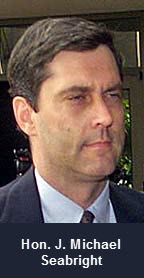
“One of the most important decisions for Borrowers Rights in the history of Hawaii has been made with this decision,” remarked Honolulu attorney Gary Dubin. Honorable Judge J. Michael Seabright of the Hawaii United States District Court, today GRANTED the homeowners’ Motion to Dismiss the case filed against them in federal district court by Plaintiff Deutsche Bank National Trust Company, as Trustee Morgan Stanley ABS Capital I Inc. Trust 2007-NC1 Mortgage Pass-Through Certificates, Series 2007-NC1.

The Williamses (Leigafoalii Tafue Williams and Papu Christopher Williams), who were represented by Honolulu attorney, James J. Bickerton (Jim), of Bickerton Lee Dang & Sullivan, filed a Motion to Dismiss pursuant to Federal Rule of Civil Procedure 12(b)(1), in which they argue, among other things, that Plaintiff has no standing to foreclose because it has not established that it was validly assigned the Mortgage and Note.

The Court noted that: “Because the court finds that Plaintiff has failed to establish its standing to bring this action, the court need not reach the Williamses’ other arguments for dismissal.”

Honorable Judge J. Michael Seabright gets it! And his ORDER was detailed. In the Discussion, Judge Seabright notes an argument that homeowners have being trying to persuade the courts (especially at the lower state levels) to grasp: STANDING and JURISDICTION.

Standing is a requirement grounded in Article III of the United States Constitution, and a defect in standing cannot be waived by the parties. Chapman v. Pier 1 Imports (US.) Inc., 631 F.3d 939,954 (9th Cir. 2011). A litigant must have both constitutional standing and prudential standing for a federal court to exercise jurisdiction over the case. Elk Grove Unified Sch. Dist. v. Newdow, 542 U.S. 1, 11 (2004). Constitutional standing requires the plaintiff to “show that the conduct of which he complains has caused him to suffer an ‘injury in fact’ that a favorable judgment will redress.” Id. at 12. In comparison, “prudential standing encompasses the general prohibition on a litigant’s raising another person’s legal rights.” Id. (citation and quotation signals omitted); see also Oregon v. Legal Servs. Corp., 552 F.3d 965, 971 (9th Cir. 2009).”

Let’s continue – but we’ll get back to that injury issue later in the post.

The WILLIAMSES’ ORDER continues: “The Williamses factually attack Plaintiff’s prudential standing to foreclose, arguing that there is no evidence establishing that Plaintiff was validly assigned the Mortgage and Note on the subject property. The issue of whether Plaintiff was validly assigned the Mortgage and Note is inextricably intertwined with the merits of the Plaintiffs claims seeking to foreclose…”

Of course, this was a New Century Mortgage (Home123) and the Plaintiffs were taking part in a fabricated assignment in 2009 to a 2007 Trust… (that boat had sailed 2 years before because theTrust had long since closed) – but even more compelling in the Motion to Dismiss-Memorandum was the Williamses assertion that New Century aka Home123 was in a liquidating bankruptcy as of August 1, 2008 and they had nothing to assign in January 2009.

Deutsche argued that the Williamses were not parties or beneficiaries to the assignment such that they cannot challenge it… [we’ve heard that before, yeah?]. However, the Judge Seabright clarifies a valid point:

“Plaintiffs argument confuses a borrower’s, as opposed to a lender’s, standing to raise affirmative claims. In Williams v. Rickard, 2011 WL 2116995, at *5 (D. Haw. May 25, 2011), — which involved the same parties in this action and in which Lei Williams asserted affirmative claims against Deutsche Bank – Chief Judge Susan Oki Mollway explained the difference between the two:

“…Standing” is a plaintiff’s requirement, and … Defendants must establish “standing” to defend themselves.”

Judge Seabright continues: ”Deutsche Bank asserts affirmative claims against the Williamses seeking to enforce the Mortgage and Note, and therefore must establish its legal right (i.e., standing) to do so. See, e.g., IndyMac Bank v. Miguel, 117 Haw. 506, 513, 184 P.3d 821, 828 (Haw. App. 2008) (explaining that for standing, a mortgagee must have “a sufficient interest in the Mortgage to have suffered an injury from [the mortgagor’s] default”).”

Attorney Bickerton faced off in court and explained to the Judge in oral argument that the banks didn’t just miss the date to file their assignments or needed to tidy up paperwork, this was a ‘Business model using the loans for overnight lending.’ Bickerton told the Court that if this wasn’t dismissed, his first line of discovery would be geared to uncover the outside financial advantages being derived from the use of the Williamses’ loan.

Understanding the premeditated intentions of these banks, how they pledge, collaterize, swap, sell, lease,and trade these loans that are SUPPOSED to have been in a static trust will open the eyes of lawmakers to the real moral hazard – the fraud upon the homeowners, the courts and the state.

Jim Bickerton profoundly says that, “every foreclosure in the state is a victim of this shadow banking scam.”

James J. Bickerton
Bickerton Lee Dang & Sullivan
Fort St Tower
745 Fort St Ste 801
Honolulu, HI 96813
808-599-3811
Email: bickerton@bsds.com

“Security trusts will no longer be able to hide behind the hocus pocus of the pooling and servicing agreements. The ramifications of this decision are extraordinary,” praises Gary Dubin.

INJURY – Remember that issue from above?

Let’s discuss the trusts. We can see by the assignments that they were not made timely and NY trust laws call them VOID. The REMIC has failed. But maybe the investors ARE getting paid with the behind the scenes shadow banking scheme.

And let’s suppose we can see the trading in the trust is active, numerous investors have already been paid off – where is the “injury”….hmmm?

We’re connecting the dots, people with above average intelligence are realizing, just like Judge Seabright, that there are huge schemes behind the scenes of an everyday mortgage that the borrower never intended to participate in… and eventually we’ll know whether the application for a mortgage started the securitization process before the borrower signed the note making them securities with no disclosure, how many insurance policies were attached to the loans and when (we never agreed to be over insured which would give someone the incentive to “off” us)… it’s coming soon – to a court room near you…

…and the Securitization curtain will be lifting for the big show.

___________________________________________________________________

Details by DeadlyClear

Honorable Judge J. Michael Seabright – Thank you. Mahalo!
This is why he gets the “Gets It” award:

http://archives.starbulletin.com/2005/04/28/news/story5.html

An assistant U.S. attorney who prosecuted several high-profile white-collar criminal cases here is on his way to becoming Hawaii’s fourth full-time federal judge. Michael Seabright: As an assistant U.S. attorney, he put three isle politicians behind bars.

The U.S. Senate voted 98-0 yesterday to confirm J. Michael Seabright as a U.S. district judge for the District of Hawaii. ”I’m very honored to have received that vote,” said Seabright, 46, an assistant U.S. attorney since 1990 and head of the white-collar crime section since 2002.

Image of the Honorable John Michael Seabright from http://www.grainnet.com/articles/usda_cited_by_federal_judge_for_permitting_violations_in_hawaii-36404.html

Bank’s Competition

clip_image001

USDOJ: Loan Officer Pleads Guilty for Role in Mortgage Fraud Scheme That Resulted in More Than $6.5 Million in Losses


News

Justice News Banner

Department of Justice

Office of Public Affairs

FOR IMMEDIATE RELEASE

Tuesday, April 17, 2012

Loan Officer Pleads Guilty for Role in Mortgage Fraud Scheme That Resulted in More Than $6.5 Million in Losses

WASHINGTON – A loan officer for a Florida mortgage company pleaded guilty late yesterday in the Southern District of Florida to one count of conspiracy to commit wire fraud for his role in a mortgage fraud scheme, Assistant Attorney General Lanny A. Breuer of the Justice Department’s Criminal Division, U.S. Attorney Wifredo A. Ferrer of the Southern District of Florida and Department of Housing and Urban Development (HUD) Inspector General David A. Montoya announced today. 
Alejandro Curbelo, 32, aka Alex Curbelo, of Miami, pleaded guilty before U.S. District Judge Joan Lenard.  Curbelo was indicted and arrested on Jan. 24, 2012.

According to court documents, from approximately February 2006 through July 2008, Curbelo was employed as a loan officer for Great Country Mortgage Bankers.  In this role, he assisted in the sales and financing of condominium units at two complexes in Florida – Dadeland Place and Pelican Cove on the Bay.  The borrowers Curbelo assisted at these two complexes were unqualified to obtain mortgage loans due to insufficient income, high levels of debts and outstanding collections.

Curbelo admitted that he conspired with others to create and submit false and fraudulent Federal Housing Administration (FHA) mortgage loan applications and accompanying documents to a lender on behalf of the unqualified borrowers.  Curbelo and others offered the borrowers cash back after closing as an incentive for them to purchase the units.  These payments were not disclosed properly during the loan application process.  According to court documents, the closing costs were paid on behalf of the borrowers by interstate wire.  After the loans closed, the unqualified borrowers failed to meet their monthly mortgage obligations and defaulted on their loans.

According to court documents, when the loans went into foreclosure, HUD, which insured the loans, was required to take title to the units and pay the outstanding loan balances to the lenders.  As of the date of the plea agreement, the actual loss related to Curbelo’s conduct that was paid by HUD was more than $6.5 million.

Curbelo is scheduled to be sentenced on June 25, 2012.  He faces a maximum prison sentence of 20 years.

This case was investigated by the HUD Office of Inspector General, as participants in the Miami Mortgage Fraud Strike Force.  Trial Attorney Mary Ann McCarthy of the Fraud Section in the Justice Department’s Criminal Division is prosecuting the case with assistance from the U.S. Attorney’s Office for the Southern District of Florida.
This prosecution is part of efforts under way by the Financial Fraud Enforcement Task Force.  President Obama established the interagency Financial Fraud Enforcement Task Force to wage an aggressive, coordinated and proactive effort to investigate and prosecute financial crimes.  The task force includes representatives from a broad range of federal agencies, regulatory authorities, inspectors general, and state and local law enforcement who, working together, bring to bear a powerful array of criminal and civil enforcement resources.  The task force is working to improve efforts across the federal executive branch, and with state and local partners, to investigate and prosecute significant financial crimes, ensure just and effective punishment for those who perpetrate financial crimes, combat discrimination in the lending and financial markets and recover proceeds for victims of financial crimes.

For more information on the task force, visit www.StopFraud.gov.

USDOJ: Loan Officer Pleads Guilty for Role in Mortgage Fraud Scheme That Resulted in More Than $6.5 Million in Losses

USDOJ: Alabama Real Estate Investor Agrees to Plead Guilty to Conspiracies to Rig Bids and Commit Mail Fraud for the Purchase of Real Estate at Public Foreclosure Auctions


Department of Justice

Office of Public Affairs

FOR IMMEDIATE RELEASE

Friday, April 20, 2012

Alabama Real Estate Investor Agrees to Plead Guilty to Conspiracies to Rig Bids and Commit Mail Fraud for the Purchase of Real Estate at Public Foreclosure Auctions

WASHINGTON – An Alabama real estate investor has agreed to plead guilty and to serve prison time for his role in conspiracies to rig bids and commit mail fraud at public real estate foreclosure auctions in southern Alabama, the Department of Justice announced today. To date, as a result of the ongoing investigation, three individuals and one company have pleaded guilty.

Charges were filed today in the U.S. District Court for the Southern District of Alabama in Mobile, Ala., against Lawrence B. Stacy of Mobile.  Stacy was charged with one count of bid rigging and one count of conspiracy to commit mail fraud.  According to the plea agreement, which is subject to court approval, Stacy has agreed to serve six months in prison.  Additionally, Stacy has agreed to pay a $10,000 criminal fine and to cooperate with the department’s ongoing investigation.

According to court documents, Stacy conspired with others not to bid against one another at public real estate foreclosure auctions in southern Alabama.  After a designated bidder bought a property at the public auctions, which typically take place at the county courthouse, the conspirators would generally hold a secret, second auction, at which each participant would bid the amount above the public auction price he or she was willing to pay.  The highest bidder at the secret, second auction won the property.

Stacy was also charged with conspiring to use the U.S. mail to carry out a scheme to acquire title to rigged foreclosure properties sold at public auctions at artificially suppressed prices, to make and receive payoffs to co-conspirators and to cause financial institutions, homeowners and others with a legal interest in rigged foreclosure properties to receive less than the competitive price for the properties. Stacy participated in the bid-rigging and mail fraud conspiracies from at least as early as May 2002 until at least January 2007.

"The Antitrust Division will continue to pursue vigorously the perpetrators involved in these real estate foreclosure auction schemes,” said Sharis A. Pozen, Acting Assistant Attorney General in charge of the Department of Justice’s Antitrust Division.  “Those who eliminate competition from the marketplace and prey on the misfortune of others will be held accountable for their actions.”

FBI Special Agent in Charge of the Mobile FBI office, Lewis M. Chapman recognized the perseverance of agents and prosecutors in this complex investigation.  Chapman stated, “This investigation sends the message that real estate fraud including antitrust violations will continue to be pursued in these tough economic times, no matter how intricate the scheme.”

Each violation of the Sherman Act carries a maximum penalty of 10 years in prison and a $1 million fine for individuals.  The maximum fine for a Sherman Act charge may be increased to twice the gain derived from the crime or twice the loss suffered by the victim if either amount is greater than the statutory maximum fine. Each count of conspiracy to commit mail fraud carries a maximum penalty of 20 years in prison and a fine in an amount equal to the greatest of $250,000, twice the gross gain the conspirators derived from the crime or twice the gross loss caused to the victims of the crime by the conspirators.

The investigation into fraud and bid rigging at certain real estate foreclosure auctions in southern Alabama is being conducted by the Antitrust Division’s Atlanta Field Office and the FBI’s Mobile Office, with the assistance of the U.S. Attorney’s Office for the Southern District of Alabama. Anyone with information concerning bid rigging or fraud related to public real estate foreclosure auctions should contact the Antitrust Division’s Atlanta Field Office at 404-331-7100 or visit www.justice.gov/atr/contact/newcase.htm.

Today’s charges are part of efforts underway by President Barack Obama’s Financial Fraud Enforcement Task Force.  President Obama established the interagency task force to wage an aggressive, coordinated and proactive effort to investigate and prosecute financial crimes.  The task force includes representatives from a broad range of federal agencies, regulatory authorities, inspectors general and state and local law enforcement who, working together, bring to bear a powerful array of criminal and civil enforcement resources. The task force is working to improve efforts across the federal executive branch, and with state and local partners, to investigate and prosecute significant financial crimes, ensure just and effective punishment for those who perpetrate financial crimes, combat discrimination in the lending and financial markets and recover proceeds for victims of financial crimes.  For more information on the task force, visit www.StopFraud.gov.

USDOJ: Alabama Real Estate Investor Agrees to Plead Guilty to Conspiracies to Rig Bids and Commit Mail Fraud for the Purchase of Real Estate at Public Foreclosure Auctions

Federal Judge Magner: Wells Fargo’s Behavior “Highly Reprehensible” – Mandelman Matters


Federal Judge Magner: Wells Fargo’s Behavior “Highly Reprehensible”

Does anyone know what’s happened at Wells Fargo Bank?  If so, please let the rest of us know, because in a line up of TBTF bank CEOs, to stand out as being particularly awful is no easy task… and yet Wells Fargo’s CEO, John Stumpf has risen to the challenge and then some.

At the beginning of April of this year, Judge Elizabeth Magner, a federal bankruptcy judge in the Eastern District of Louisiana, characterized Wells Fargo’s behavior as being “highly reprehensible.”  Think about that for a moment.  That means that the judge decided that to describe Wells Fargo as merely “reprehensible,” wasn’t enough.

Wow, that is something.  Can you imagine someone saying that about you… a federal judge, no less?  I’m thinking that if a federal judge ever has the occasion to describe my behavior as being worse than “reprehensible,” I’m going to jail for a long time.

Of course, no danger of anything like that happening here… bankers don’t go to jail in this country, every one knows that.  But, in this instance, after more than five years in litigation with a single homeowner, Judge Magner ordered Wells Fargo to pay the New Orleans man $3.1 million in punitive damages.

Now, if that sounds like a paltry sum for the likes of Wells Fargo, that’s only because it is.  And that it represents one of the largest fines ever levied related to mortgage servicing misconduct hardly makes it feel any better.

It’s kind of like being forced to eat dog turd ice cream, but finding out that it’s okay if you pour motor oil on top.  Does that improve your circumstances?  I guess so, but…

Judge Magner, in her opinion, wrote…

“Wells Fargo has taken advantage of borrowers who rely on it to accurately apply payments and calculate the amounts owed, but perhaps more disturbing is Wells Fargo’s refusal to voluntarily correct its errors. It prefers to rely on the ignorance of borrowers or their inability to fund a challenge to its demands, rather than voluntarily relinquish gains obtained through improper accounting methods.”

So, what was Wells Fargo doing exactly?  Well, they were systematically over-charging the people least able to do anything about it… those filing bankruptcy.  In this case, Wells Fargo improperly charged the borrower $24,000 in fees, but it wasn’t done by hand, it was the bank’s automated systems doing precisely what they were programmed to do.  Like, anything but an isolated incident.

After the borrower fell into default on his mortgage, Wells Fargo’s automated system began applying his mortgage payments to interest and fees that had accrued instead of to principal, as required by his servicing contract, which in turn led to him being charged with a virtual waterfall of additional fees and interest.  And even after the borrower filed bankruptcy, Wells Fargo continued to misapply his payments, according to Judge Magner’s written opinion.

And why wouldn’t they?  I know, it sounds weird to say it, but I think I would have been disappointed had Wells stopped there.

There’s even a terme de l’art for this scenario used by consumer lawyers… they call it a “rolling default.”  I suppose the name refers to the idea that once the scheme gets rolling, it’s all downhill from there.  I think it should be called a “boiling default,” because once it’s boiling, you’re goose is most assuredly cooked.

Or, wait a minute… hang on… how about we call it: “Getting Stumpfed.”

(Come on, admit it… I’m good.)

Judge Magner went on to describe Wells Fargo’s litigation tactics as involving the filing of dozens of briefs, motions and other filings clearly designed to slow down legal proceedings to such a point that anyone thinking of mounting a legal challenge against a bank quickly finds it essentially impossible.

And since it’s only through costly litigation that the insidious crimes of Wells Fargo become apparent, all the bank has to do is prevent those with limited resources from doing what they can’t do with limited resources.  Now there’s a winning business model for you.  Like making billions by stopping blind people from seeing.

What sort of a company engineers this sort of strategic core competency anyway?  Remember Ford’s infamous Pinto strategy… rather than fix the problem, just settle them as they exploded?  Well, this Wells Fargo stuff makes that look as benevolent as Girl Scouts selling cookies after church.

Wells Fargo actually engineered a strategy and built a system to rampantly abuse the individuals in our society least able to defend their interests.  This is a bank that deserves to have a statue erected in its likeliness and even its own Lazarus-styled sonnet.  I’m just thinking out loud here, but how about…

“The Statue of Larceny”

And inside the base, engraved on a bronze plaque, could be these words…

Give us your jobless, injured, bankrupt filers, whose lawyers won’t work free. 

The wretched refuse against whom in court we’ll always score. 

Send them one by one, homes all sold by substitute trustee,

We’ll rape them, rob them, force them out Wells Fargo’s golden door.

Not bad, right?  No?  Sheesh… tough crowd.

Judge Magner, in an interview with Ben Hallman of Huffington Post, said that she personally analyzed the loan files of twenty borrowers in her court and found supposed “errors” in every single instance.  So, at least we know the systems are working properly, and somehow I find that oddly reassuring.

I don’t know why but there’s something even more terrifying about the idea that we might be getting ripped off by banks in an entirely random way.  Like one day you get hit for a hundred… and the next day not only is your entire IRA gone, but two weeks later you learn that the bank bounced one of your checks to the IRS for the penalty on the early withdrawal.

I know, right?  Now, that would be rude.

I guess I only have a couple of questions I’d like to ask, and the most obvious is: Why would anyone whose read about this decision continue to bank at Wells Fargo?

I mean, if they do this sort of thing systematically… AND THEY UNQUESTIONABLY DO, how do you know where the other spots are that are picking your pocket for twenty here and twenty there.  Because you’re not going to tell me you think this case has uncovered the only place at Wells Fargo where this sort of thing goes on, are you?  Come on… what are you, six?

And, my second question is: What do our elected representatives do these days… I mean specifically?  State or federal, I don’t care which… you pick.  Because it kind of seems like we’ve quietly been transformed into a lawless society in many ways, don’t you think?

Like in this bankruptcy case… the judge has uncovered the systematic stealing from the defenseless, but it’s not like it’s a major news story, or anything.  To the contrary, it’s nowhere.  Doesn’t anyone but me find that amazing?  How do they do that?  Where have all the journalists gone?

I can tell you that I receive more complaints about Wells Fargo refusing to approve loan modifications than any three other mortgage servicers combined.  But then, Wells did modify one of the homeowners I wrote about a few months back.  I don’t know why, maybe it was an accident.

Here’s one more thing Judge Marner said about Wells Fargo in her written opinion…

“These are loans of working-class people who bought homes they could afford and whose loans were not administered correctly from an accounting perspective,” Judge Magner said. “I think that these types of problems occur in almost every [defaulted] loan in the country.”

Good Lord.

So, Mr. John Stumpf… Wells Fargo’s CEO… you just go ahead committing those criminal acts with impunity.  Don’t change now… go down with your ship.  Besides, I’m sure there are deceptions your people haven’t thought of yet.

Do you have a program that targets autistic children yet? Or what about something abusive for unmarried pregnant chicks that never finished high school? Or, what about the elderly, are you doing enough to take advantage of the elderly?

I’m sure you’ll think of something, which is why I’ve told my wife and daughter to stay out of banks for the foreseeable future.  We only make deposits at the ATM at night, which may sound crazy, but I’m betting will one day soon prove considerably safer than being inside during the day.

Lo siento.  Que se mejore pronto.

Mandelman out.

Federal Judge Magner: Wells Fargo’s Behavior “Highly Reprehensible” – Mandelman Matters

New York State Appeals Court Affirms Denial Of BofA’s Motion to Sever and Consolidate Successor Liability Claims

Published 04/16/2012

http://www.linkedin.com/osview/canvas?_ch_page_id=1&_ch_panel_id=1&_ch_app_id=49029150&_applicationId=103900&appParams=%7B%22document%22%3A%227f7c72d2-c6c5-4387-a339-9aef6cd4d216%22%2C%22method%22%3A%22document.view%22%2C%22layout%22%3A%22layout_blank%22%2C%22target%22%3A%22blank_content%22%2C%22surface%22%3A%22canvas%22%7D&_ownerId=57736655&completeUrlHash=diwZ

On April 5, 2012, a five-judge panel for the New York’s First Department intermediate appellate court affirmed a lower court’s ruling that denied Bank of America’s motion to sever successor liability claims brought against it from the primary claims in four separate actions brought by four monoline insurers. Bank of America had requested that, once severed from the underlying lawsuits, the successor liability claims should be consolidated into a separate proceeding for discovery purposes. The four insurers, Ambac Assurance Corp, Financial Guaranty Insurance Co, MBIA Inc, and Syncora Guarantee Inc., claim in their respective lawsuits that Countrywide ignored underwriting guidelines, resulting in loans that were riskier than had been represented to the insurers and thus subjecting the insurers to billions of dollars in insurance claims when the loans defaulted. They seek to hold Bank of America liable under theories of successor liability related to Bank of America’s acquisition of Countrywide. In affirming the denial of Bank of America’s motion, the appeals court reasoned that the four actions were at different stages of discovery and that consolidation would result in undue delay. Order.

R.I.P. Bill of Rights 1789 – 2011

http://www.naturalnews.com/034537_NDAA_Bill_of_Rights_Obama.html

rights

R.I.P. Bill of Rights 1789 – 2011

Sunday, January 01, 2012
by Mike Adams, the Health Ranger
Editor of NaturalNews.com
(See all articles…)

(NaturalNews) One of the most extraordinary documents in human history — the Bill of Rights — has come to an end under President Barack Obama. Derived from sacred principles of natural law, the Bill of Rights has come to a sudden and catastrophic end with the President’s signing of the National Defense Authorization Act (NDAA), a law that grants the U.S. military the "legal" right to conduct secret kidnappings of U.S. citizens, followed by indefinite detention, interrogation, torture and even murder. This is all conducted completely outside the protection of law, with no jury, no trial, no legal representation and not even any requirement that the government produce evidence against the accused. It is a system of outright government tyranny against the American people, and it effectively nullifies the Bill of Rights.

In what will be remembered as the most traitorous executive signing ever committed against the American people, President Obama signed the bill on New Year’s Eve, a time when most Americans were engaged in the consumption of alcohol. It seems appropriate, of course, since no intelligent American could accept the tyranny of this bill if they were sober.

This is the law that will cement Obama’s legacy in the history books as the traitor who nullified the Bill of Rights and paved America’s pathway down a road of tyranny that will make Nazi Germany’s war crimes look like child’s play. If Bush had signed a law like this, liberals would have been screaming "impeachment!"

Why the Bill of Rights matters

While the U.S. Constitution already limits the power of federal government, the Bill of Rights is the document that enumerates even more limits of federal government power. In its inception, many argued that a Bill of Rights was completely unnecessary because, they explained, the federal government only has the powers specifically enumerated to it under the U.S. Constitution. There was no need to have a "First Amendment" to protect Free Speech, for example, because there was no power granted to government to diminish Free Speech.
This seems silly today, of course, given the natural tendency of all governments to concentrate power in the hands of the few while destroying the rights and freedoms of their own people. But in the 1780’s, whether government could ever become a threat to future freedoms was hotly debated. By 1789, enough revolutionary leaders had agreed on the fundamental principles of a Bill of Rights to sign it into law. Its purpose was to provide additional clarifications on the limitation of government power so that there could be absolutely no question that government could NEVER, under any circumstances, violate these key principles of freedom: Freedom of speech, the right to bear arms, freedom from illegal searches, the right to remain silent, the right to due process under law, and so on.

Of course, today’s runaway federal government utterly ignores the limitations placed on it by the founding fathers. It aggressively and criminally seeks to expand its power at all costs, completely ignoring the Bill of Rights and openly violating the limitations of power placed upon it by the United States Constitution. The TSA’s illegal searching of air travelers, for example, is a blatant violation of Fourth Amendment rights. The government’s hijacking of websites it claims are linking to "copyright infringement" hubs is a blatant violation of First Amendment rights. The government’s demand that all Americans be forced to buy private health insurance is a blatant violation of Article 1, Section 8 of the Constitution — the "commerce clause."
Now, with the passage of the NDAA, the federal government has torpedoed the entire Bill of Rights, dismissing it completely and effectively promising to violate those rights at will. As of January 1, 2012, we have all been designated enemies of the state. America is the new battleground, and your "right" to due process is null and void.

Remember, this was all done by the very President who promised to close Guantanamo Bay and end secret military prisons. Not only did Obama break that campaign promise (as he has done with nearly ALL his campaign promises), he did exactly the opposite and has now subjected all Americans to the possibility of government-sponsored kidnapping, detainment and torture, all under the very system of secret military prisons he claimed he would close!

"President Obama’s action today is a blight on his legacy because he will forever be known as the president who signed indefinite detention without charge or trial into law," said Anthony D. Romero, executive director of the American Civil Liberties Union.

Obama’s signing statement means nothing

Even while committing an act of pure treason in signing the bill, the unindicted criminal President Obama issued a signing statement that reads, in part, "Moving forward, my administration will interpret and implement the provisions described below in a manner that best preserves the flexibility on which our safety depends and upholds the values on which this country was founded…"

Anyone who reads between the lines here realizes the "the flexibility on which our safety depends" means they can interpret the law in any way they want if there is a sufficient amount of fear being created through false flag terror attacks. Astute readers will also notice that Obama’s signing statement has no legal binding whatsoever and only refers to Obama’s momentary intentions on how he "wishes" to interpret the law. It does not place any limits whatsoever on how a future President might use the law as written.

"The statute is particularly dangerous because it has no temporal or geographic limitations, and can be used by this and future presidents to militarily detain people captured far from any battlefield," says the ACLU (http://www.aclu.org/blog/national-security/president-obama-signs-inde…).

What this means is that the next President could use this law to engage in the most horrific holocaust-scale mass round-up of people the world has ever seen. The NDAA legalizes the crimes of Nazi Germany in America, setting the stage for the mass murder of citizens by a rogue government.

United States of America becomes a rogue nation, operating in violation of international law

Furthermore, the NDAA law as written and signed, is a violation of international law as it does not even adhere to the fundamental agreements of how nations treat prisoners of war:  "…the breadth of the NDAA’s detention authority violates international law because it is not limited to people captured in the context of an actual armed conflict as required by the laws of war" says the ACLU (http://www.aclu.org/blog/national-security/president-obama-signs-inde…).

In 1789, today’s NDAA law would have been called "treasonous," and those who voted for it would have been shot dead as traitors. This is not a call for violence, but rather an attempt to provide historical context of just how destructive this law really is. Men and women fought and died for the U.S. Constitution and the Bill of Rights. People sacrificed their lives, their safety and risked everything to achieve the freedoms that made America such a great nation. For one President to so callously throw away 222 years of liberty, betraying those great Americans who painstakingly created an extraordinary document limiting the power of government, is equivalent to driving a stake through the heart of the Republic.

In signing this, Obama has proven himself to be the most criminal of all U.S. Presidents, far worse than George W. Bush and a total traitor to the nation and its People. Remember, Obama swore upon a Bible that he would "protect and defend the Constitution against all enemies, foreign and domestic," and yet he himself has become the enemy of the Constitution by signing a law that overtly and callously nullifies the Bill of Rights.

This is nothing less than an act of war declared on the American people by the executive and legislative branches of government. It remains to be seen whether the judicial branch will go along with it (US Supreme Court).

Origins of the Bill of Rights

The Bill of Rights, signed in 1789 by many of the founding fathers of our nation, was based on the Virginia Declaration of Rights, drafted in 1776 and authored largely by George Mason, one of the least-recognized revolutionaries who gave rise to a nation of freedom and liberty.

Mason was a strong advocate of not just states’ rights, but of individual rights, and without his influence in 1789, we might not even have a Bill of Rights today (and our nation would have slipped into total government tyranny all the sooner). In fact, he openly opposed ratification of the U.S. Constitution unless it contained a series of amendments now known as the Bill of Rights

(http://en.wikipedia.org/wiki/George_Mason)
SECTION ONE of this Virginia declaration of rights states:  "That all men are by nature equally free and independent and have certain inherent rights, of which, when they enter into a state of society, they cannot, by any compact, deprive or divest their posterity; namely, the enjoyment of life and liberty, with the means of acquiring and possessing property, and pursuing and obtaining happiness and safety."

(http://www.constitution.org/bcp/virg_dor.htm)
Section Three of the declaration speaks to the duty of the Citizens to abolish abusive government:

"That government is, or ought to be, instituted for the common benefit, protection, and security of the people, nation, or community; of all the various modes and forms of government, that is best which is capable of producing the greatest degree of happiness and safety and is most effectually secured against the danger of maladministration; and that, when any government shall be found inadequate or contrary to these purposes, a majority of the community hath an indubitable, inalienable, and indefeasible right to reform, alter, or abolish it, in such manner as shall be judged most conducive to the public weal."

By any honest measure, today’s U.S. government, of course, has overstepped the bounds of its original intent. As Mason wrote over 200 years ago, the People of America now have not merely a right but a duty to "reform, alter or abolish it," to bring government back into alignment with its original purpose — to protect the rights of the People.

Obama violates his Presidential Oath, sworn before God

Article II, Section I of the United States Constitution spells out the oath of office that every President must take during their swearing in:  "I do solemnly swear (or affirm) that I will faithfully execute the Office of President of the United States, and will to the best of my Ability, preserve, protect and defend the Constitution of the United States."


In signing the NDAA law into office, Obama has blatantly and unambiguously violated this sacred oath, meaning that his betrayal is not merely against the American people, but also against the Divine Creator.

Given that the Bill of Rights is an extension of Natural Law which establishes a direct heritage of sovereign power from the Creator to the People, a blatant attack upon the Bill of Rights is, by any account, an attack against the Creator and a violation of universal spiritual principles. Those who attempt to undermine the Bill of Rights are attempting to invalidate the relationship between God and Man, and in doing so, they are identifying themselves as enemies of God and agents of Evil.

Today, as 2012 begins, we are now a nation led by evil, and threatened with total destruction by those who would seek to rule as tyrants. This is America’s final hour. We either defend the Republic starting right now, or we lose it forever.

R.I.P. Bill of Rights 1789 – 2011

City of Roswell, Georgia bullies Andrew Wordes to death over his backyard chickens

http://www.lawlessamerica.com/index.php?option=com_content&view=article&id=817:city-of-roswell-georgia-bullies-andrew-wordes-to-death-over-his-backyard-chickens&catid=117:news-reports&Itemid=219Sick smile

City of Roswell, Georgia bullies Andrew Wordes to death over his backyard chickens

City of Roswell, Georgia bullies Andrew Wordes to death over his backyard chickens

Tuesday, 10 April 2012 11:54
William M. Windsor
  • wordes-andrew

Andrew Wordes, an innocent man who had legally been raising a few dozen chickens and other small birds in the backyard of his suburban Atlanta home, is now dead, following a crusade of terror perpetrated against him by the City of Roswell Georgia.

Andrew Wordes, who died during a recent raid on his property in which county marshals tried to illegally evict him, was the obvious victim of a rogue state gone mad — and his blood is now on the hands of the Roswell City Administrator, the Roswell City Council, and the Roswell Police Department, all of which robbed from Wordes his property, his livelihood, and ultimately his life.

See the NaturalNews infographic timeline of events that documents the escalation that ultimately led to Mr. Andrew Wordes’ death: http://www.naturalnews.com

Andrew Wordes had long raised his small poultry friends in the backyard of his one-acre property at 335 Alpine Drive in Roswell, Georgia, sharing eggs, chicks, and friendly words of wisdom and encouragement with his neighbors and with local schoolchildren all along the way. Andrew Wordes was very active in his local community, having organized a North Georgia Pet Chicken “Meetup” group, and founded a chicken breeding club. His friends and neighbors described him as a generous, kind, and loving man who was always willing to lend a hand, and who would have given you the shirt off his back if you needed it.

But Andrew Wordes met his unjust fate on March 26, 2012, after roughly four years of enduring illicit and seemingly-endless abuse, bullying, threats, and unsubstantiated legal action taken against him by Roswell city officials with an apparent axe to grind. And after losing his birds, his freedom, his entire life savings, his property, and his livelihood as a result of the City of Roswell’s sadistic war against him, Andrew Wordes ended up losing his life as a result of an explosion that occurred during the final eviction raid carried out by Fulton County marshals.

City of Roswell targets Wordes for standing up for his rights, identifies his property on planning map as future ‘green space’

The saga allegedly began in 2008 when a disgruntled neighbor of Andrew Wordes reportedly complained to the city about Wordes raising chickens, button quail, and other small creatures in his backyard. The City of Roswell responded by issuing Andrew Wordes a citation for his chickens, even though the city’s Code of Ordinances specifically provisioned at the time that property owners on less than two acres of land could legally raise chickens and swine.

With the help of Roswell’s Mayor Jere Wood, a lawyer friend of Andrew Wordes who also raises chickens himself, Wordes was able to get the citation issued against him dismissed in court. But the firestorm of childish retaliation and rage that quickly ensued as a result of Andrew Wordes standing up for himself and his rights, rather than capitulating to the city’s tyrannical and mindless demands that he get rid of his chickens, will likely go down as one of the most tragically absurd abuses of power in the history of local government.

After it became clear that Andrew Wordes was not about to let the City of Roswell trample all over him and his rights, several city officials allegedly kicked their vendetta against him into high gear, not only to forcibly have Wordes’ chickens removed, but also to seize his property right out from under him. After failing twice to get Andrew Wordes nabbed for their made-up code violations, the City of Roswell actually rewrote the law to prohibit residents from raising more than six chickens in an effort to seal the deal.

But even this failed, as a judge later ruled that Andrew Wordes, who had been in his home for more than a decade raising chickens, would be “grandfathered in” under the old provisions which allowed for residents to raise backyard chickens. So the City of Roswell switched gears again and began to play even dirtier by getting Andrew Wordes arrested for petty violations, and proceeding to reclassify his property on their long-term planning map as future green space.

You can view the City of Roswell’s2030 Comprehensive Plan, which demarcates Wordes’ property as future “Conservation Area or Greenspace” here:
http://www.roswellgov.com/index.aspx?NID=893

So it appears as though the City of Roswell used the supposed neighbor complaint as an excuse to pursue Andrew Wordes’ property for the purpose of eventually turning it into parks and green space. This would explain why the city failed to properly maintain storm water infrastructure near Wordes’ property, which resulted in his property becoming severely flooded at least a dozen times, and eventually uninhabitable.

City of Roswell refuses to submit Andrew Wordes’ request for FEMA assistance following severe flooding, issues citation when he attempts to protect his home

Not only did the City of Roswell fail to abide by legal guidelines that required it to maintain storm water infrastructure around Wordes’ property, but the city added insult to injury by refusing to file paperwork to the U.S.Federal Emergency Management Agency(FEMA) following a flood that caused severe damage to Andrew Wordes’ home, which is also located on a floodplain. As a result, he had no means by which to fix the damage.

And when Andrew Wordes attempted to protect his property from future flood damage by grading his land with a Bobcat, which he borrowed from his friend Mayor Wood, the City of Roswell actually had the audacity to issue Wordes a citation for grading his land without a permit, and for having too many cars on his property at the time.

City of Roswell Code Enforcement Supervisor violates law by contacting Andrew Wordes’ mortgage holder, coercing her into selling mortgage note

From this point on, City of Roswell officials began harassing Andrew Wordes, and the local police department began to surveil his house on a regular basis, watching closely for anything that might be considered a violation. In the process, he was pulled over and even thrown in jail on numerous occasions.

In violation of the Fair Debt Collection Practices Act and several other laws, Roswell Code Enforcement Supervisor Vicki Barclay (http://www.roswellgov.com/index.aspx?NID=94) allegedly called Wordes’ mortgage holder, an 80-year-old woman, and coerced her into selling Wordes’ mortgage note for 40 cents on the dollar to another mortgage holder by threatening to issue liens, citations, and grievances on the property if she failed to comply. Barclay is the same city official who had illegally tried to issue Wordes a citation for his chickens from the very beginning.

Having failed at all other attempts to seize his property, the City of Roswell then filed a zoning violation against Wordes claiming that his property was a “nuisance.” The city also filed a 55-page civil lawsuit against Andrew Wordes, which conveniently denied him the right to a city-funded public defender who was supposed to represent him in legal dealings involving the city.

Even with former Georgia Governor Roy Barnes on his side, Andrew Wordes was rapidly losing the ability to fend off these ravenous wolves in the City of Roswell government that were hellbent on forcing him off his property for their own devious purposes. And Roswell City Administrator Kay G. Love (http://www.roswellgov.com/Directory.aspx?EID=3), Roswell City councilmember Becky Wynn (http://www.roswellgov.com/directory.aspx?EID=6), Roswell City councilmember Rich Dippolito (http://richforroswell.com/about-rich.php), and Roswell Code Enforcement Supervisor Vicki Barclay (http://www.roswellgov.com/index.aspx?NID=94) all played a key role in making this happen, according to accounts.

Andrew Wordes’ home vandalized, chickens poisoned while he attends political rally

The madness did not stop at Andrew Wordes’ property, however, as even his animals eventually got caught in the fray of the City of Roswell’s campaign of terror. According to reports, Andrew Wordes’ home was vandalized in 2011 while he was attending a local political rally, and when he returned, he found that his animals had also been poisoned. Roughly one-third of his animals, which included turkeys, chicks, and adult chickens, ended up dying as a result of this poisoning.

Andrew Wordes filed a police report in response to these crimes, but the Roswell police department never pursued the case, and it was never determined who committed them. Consequently, Wordes lost a significant portion of his income and livelihood as a result of the mysterious deaths, which made his already-burgeoning financial problems even worse.

City of Roswell jails Wordes for 99 days, proceeds to evict him from property using phony foreclosure notice

After attacking him from practically all angles and nabbing him for every single petty violation they could think of, the City of Roswell finally ended up jailing Wordes for a whopping 99 days. And immediately after Wordes was jailed, the City of Roswell issued a public press release letting the public know that Wordes’ house was now “vacant,” a purely vindictive move that had terrifying consequences.

Within just a few hours of the announcement, Wordes’ house was vandalized and looted. Even though the City of Roswell promised to keep an eye on the property after issuing the press release, criminals were somehow able to steal Wordes’ firearms and weapons, ammunition, and other valuables, which put the entire community at risk.

During this time, Wordes was refused the ability to proceed with the bankruptcy filings that would have halted the illegal foreclosure on his property which, conveniently for the City of Roswell, was moving forward during his time in jail. As pointed out by Maggie West Bean writing forExaminer.com, the foreclosure paperwork was not even legal to begin with, as it lacked necessary information proving its validity (http://www.examiner.com).

After finally being released, Wordes was left with an uninhabitable house and property, no more animals, no more money, and a pending eviction notice illegally issued by the ruthless criminals at the City of Roswell. Throughout the process, Wordes was denied all his rights to defend himself, denied his right to defend his property against illegal foreclosure, and denied his right to pursue any sort of justice in the matter.

During a February interview with Rusty Humphries, a radio talk show host on WGST 640 in Atlanta, a desperate Wordes explained his dire situation at that point, and issued one of his final pleas for help. You can listen to that interview at either of the following two links:
http://airbornecombatengineer.typepad.com
http://www.youtube.com/watch?feature=player_embedded&v=D0Md7aIudZE

You can also read a post written by Andrew Wordes himself back in 2009 here:
http://www.backyardchickens.com

After being denied the ability to fight back against illegal foreclosure, county marshals swoop in on Andrew Wordes’ property to evict him, culminating in his death

At the end of his rope and facing insurmountable and unrelenting oppression, Wordes’ final hours were spent in his unlivable home, where Fulton County marshals staged an elaborate demonstration of police state force by illegally raiding Wordes’ property.

According to reports, the standoff concluded when Wordes finally told television reporter Mike Petchenik, who he had called to the scene by phone, to have the marshals leave the property. Moments later, an explosion was heard, and Wordes’ house became engulfed in flames.

When it was safe to go inside, responders found a body inside the home, which was later identified as being that of Wordes. And though the incident appears to have been a desperate suicide, which is how some reports categorized it right off the bat, others are worded as to leave room for the potential possibility of foul play.

City of Roswell must be held responsible for its crimes

While it has not yet been determined whether Wordes’ death was a suicide or a murder, it is clear that the City of Roswell has a whole lot of explaining to do concerning its role in the escalation of this situation over the past four years.

As usual, mainstream media reports about the saga fail to mention how the City of Roswell committed numerous criminal acts in its illegal pursuit of Wordes, or how the city is now officially lying, on record, by claiming that it played no part in working behind the scenes to transfer Wordes’ mortgage and foreclose on his property.

Nevertheless, the truth must come out about this case, and those involved in perpetrating it brought to justice. And this, of course, will start with a full investigation into the dealings of Roswell City Administrator Kay G. Love (http://www.roswellgov.com/Directory.aspx?EID=3), Roswell City councilmember Becky Wynn (http://www.roswellgov.com/directory.aspx?EID=6), Roswell City councilmember Rich Dippolito (http://richforroswell.com/about-rich.php), and Roswell Code Enforcement Supervisor Vicki Barclay (http://www.roswellgov.com/index.aspx?NID=94), as well as Roswell city attorneys and the Roswell Police Department, in the case.

It is unfortunate that NaturalNews only just now learned about the Wordes saga after the man’s death, as it may have been possible to help him earlier on by raising awareness about the injustices being perpetrated against him. But at the very least, we can all fight for justice now by banding together to make sure the facts come to light, and the criminals involved punished for their crimes.

The case also serves as a reminder to others who might be enduring similar harassment to speak up now about what they are going through. The reason why news sites like NaturalNews, InfoWars and others exist is to draw attention to issues like this, and to bring what goes on in the darkness to light — so if you or somebody you know is facing similar harassment by city officials, tell us about it!

Also, be sure to read the following memoriam written by Glenn Horowitz at American Daily Herald about the Wordes case. Horowitz was personally involved in trying to help Wordes in years past, and has put together an excellent summary of the events that took place over the last four years: http://www.americandailyherald.com

See the NaturalNews infographic timeline of events that documents the escalation that ultimately led to Mr. Wordes’ death:

http://www.naturalnews.com

Sources for this article include:

http://www.americandailyherald.com

http://www.examiner.com

http://airbornecombatengineer.typepad.com

http://www.backyardchickens.com

http://www.youtube.com/watch?feature=player_embedded&v=D0Md7aIudZE

http://theperspicaciousconservative


William M. Windsor

Fed Blesses Banks’ Foreclosure-Rental Approach – Developments – WSJ

April 5, 2012, 5:55 PM

http://blogs.wsj.com/developments/2012/04/05/fed-blesses-banks-foreclosure-rental-approach/

Fed Blesses Banks’ Foreclosure-Rental Approach

By Alan Zibel

Reuters Federal Reserve Chairman Ben Bernanke

The Federal Reserve set out new polices for banks that decide to rent out foreclosed homes, endorsing a strategy for managing the huge number of distressed properties that have piled up during the housing bust.

The central bank said in a six-page policy statement Thursday that the Fed’s regulations permit the rental of foreclosed properties to tenants “in light of the extraordinary market conditions that currently prevail.” The policy clarified that banks that would otherwise be required to sell off the properties more quickly can turn to rental as a strategy.

Banks can do so “without having to demonstrate continuous active marketing of the property provided that suitable policies and procedures are followed,” the central bank said. The shift to rentals is a significant change in the way banks deal with properties that fall into foreclosure – if loan assistance programs don’t work.

Federal Reserve Chairman Ben Bernanke and other central bank officials have spoken publicly about the need to encourage banks to rent out foreclosures. “With home prices falling and rents rising, it could make sense in some markets to turn some of the foreclosed homes into rental properties,” Mr. Bernanke said in a February speech.

The central bank said that banks holding large numbers of foreclosures should establish detailed policies for renting foreclosures, including a process to determine whether the properties are safe to occupy and meet local building code requirements.

The Fed said banks should set up criteria by which properties are picked to be rental properties. The banks should establish plans that “describe the general conditions under which the organization believes a rental approach is likely to be successful,” the central bank said.

Last month, Bank of America Corp. announced a plan to allow homeowners at risk of foreclosure to hand over deeds to their houses and sign leases that will let them rent the houses back from the bank at a market rate.

In addition, Fannie Mae is selling 2,500 homes in eight metropolitan areas around the country. The government-controlled mortgage firm is selling the $320 million portfolio to investors, who would be required to turn them into rental properties.

Follow Alan @AlanZibel


NootkaBearMcDonald Says:

It never ceases to amaze me….

First the banks screw the people with toxic loans.

They sale the Note, and then Sale the Deed to someone else, make a whole hell of a lot of money.

Then it is just a matter of time until these pick a pay loans, or negative am loans, adjustable rate loans, get to where you can no longer make the payments, no matter how much money you make.  Face it, the payment went into default when you made your first payment if you had a pick-a-pay loan, you started out making payments that were less than the amount of interest each month.

The homeowner defaults, the banks, who cannot foreclose, due to having sold the Note to one entity, and the Deed to another entity, so they have LPS, DocX, CoreLogic,  Prommis Solutions, or some other unsavory 3rd party default services entity, create falsified, robo-signed and forged documents, because ain’t no way in hell, they’re going to let your house get away.

The Bank then forecloses, no matter what they have to do, they will do it to get that home. 

Then…what are they going to do with yet another home?  Of course, the one with the most homes in the end wins.. but we still have a ways to go before then.  In the meantime, different areas are coming up with fees for having houses sitting with no one living in the homes.

BRAINSTORM!!!  RENT IT OUT!!!

So they stole your home, bought it themselves at the auction, turned the paperwork into the Insurance, got 80% of the amount you defaulted on, and they can either sale it (but there is no one left that can get a home loan, they have done foreclosed on them all) or Rent it out.  Just think!!!  When they get used to the idea, they will be renting you your house, foreclosing on you and selling your house in one swift easy move.

Hell, they should just take your house from you, let you stay there, and change it from house payment to rent, without having to do any paperwork or anything…kind of like the issue of not having the needed documents to foreclose on you.  They will wipe out the need for a Promissory Note and a Deed, they will keep you in your home by renting it to you.

L. Randall Wray: The $7 Trillion Question That Haunts Banks


L. Randall Wray

Professor of Economics and Research Director of the Center for Full Employment and Price Stability, University of Missouri–Kansas City


The $7 Trillion Question That Haunts Banks

Posted: 03/16/2012 4:09 pm

I’ve been writing about the MERS monster since 2010. Here is one of my early pieces.

I suppose it is now safe to reveal that a staffer of Representative Marcy Kaptur put me on the trail of this fraud — in dollar terms it has to be the single biggest fraud in human history. In sheer utter disregard for law, it is certainly the most audacious fraud in Western history. To tell the truth, I had never heard of MERS until she called. If you recall the Michael Moore movie, Rep. Kaptur stood on the steps and told homeowners facing foreclosure to stay in their homes. She was right: the banksters have no legal claim on the homes they are foreclosing. Foreclosure is theft. Any bank that used MERS has no legal claim on property — there are 65 million such mortgages to which no bank has a legal claim to foreclose.

And, to be sure, even those mortgages that were not run through MERS are suspect if they are handled by any of the five biggest servicers. These servicers keep such shoddy records that they cannot be trusted to accurately credit payments. They’ve been adding on fees and penalties that were unwarranted since they cannot keep track of records.

Folks, there are $7 trillion of securitized mortgages. It was (mostly) the securitization process that demanded fraud. Securitization could never have been profitable — it was a flawed way to go about financing homeownership. It was simply too expensive to compete with Jimmy Stewart thrifts. It required fraud to show profits. (As Bill Black always says: fraud is a sure thing. It is always the most profitable way to run a business — until you get caught.)

In addition to the MERS monster, we also know the securities did not meet the "reps and warranties" claimed. The banks that did the securizations will continue to get sued to take back bad mortgages. They are trying to shovel as many of these back to Fannie and Freddie as they can so that Uncle Sam will take the losses — as discussed in my previous blog they are now doing it through sale of servicing rights.

And of course Uncle Ben has helpfully put a lot of them on the Fed’s balance sheet. This is all part of the cover-up to avoid the obvious: all these big banks are massively insolvent as soon as the courts wake up to the fact that the whole damned real estate finance onion is layer upon layer of fraud.

But let us stick to the MERS fraud.

There should be an immediate and complete halt to all foreclosures in the US, and all foreclosures that have been completed over the past decade should be nullified. Yes that will get messy. But continuing with foreclosures will make the mess immeasurably worse. This foreclosure crisis is not going to stop.

No one should buy any bank-owned real estate because it is probable that eventually the US will return to the rule of law. The property will be returned to the rightful owners — those who were illegally kicked out of their houses.

Now that might be a pipe dream, but if the US is not going to be a nation ruled by law then it will not survive.

The biggest banks — including the GSEs — created MERS and proceeded to destroy our nation’s real estate property law. That is not an overstatement. Robo-signing is just one small and inevitable consequence of the fraud. The truth is that foreclosure cannot go through without fraud because the banks do not have the documents to show clear title.

Banks don’t have them because they do not exist.

There are no records because that was MERS’s business model: destroy all records of ownership while speeding the securitization process.

And since the mortgages themselves were often frauds (designing "affordability products" that homeowners could not afford), many would end in delinquency. So MERS was designed to speed the foreclosure process — it would be so much easier to foreclose if you didn’t bother with documents, records, and property law. Just kick the owners out, take the home, sell it, and reboot the whole scam again.

Another whistleblower has come forward, this one from CBO. Lan Pham was fired because she refused to get with the program: the government is supposed to help the banksters cover up their frauds, NOT expose them! She refused. So she was fired. Now she tells her story.

I won’t repeat her entire story — you can read it at Zerohedge. Here are a few quotes from Lan Pham, the CBO whistle-blower:

I was repeatedly pressured by the CBO Assistant Director, Deborah Lucas… to not write nor discuss issues in the banking sector and mortgage markets that might suggest weakness in these sectors and their consequences on the economy and households…

…Issues at the heart of the foreclosure problems pertain to securitization….and the Mortgage Electronic Registration System (MERS), which purports to have legal standing on electronic records of ownership on about 65 million…mortgages… MERS…facilitated Wall Street’s ability to expedite the pooling of subprime mortgages into MBSs by bypassing standard ownership transfer procedures as the housing bubble escalated…

The implications have profound financial and economic consequences that would be of compelling interest to Congress and the public, but the CBO sought to silence a discussion of such risks, that in reality have been materializing. These risks put into question the ability of investors or bondholders to make claims on the collateral (the homes) that underlies trillions of dollars in MBSs, the bulk of which are now guaranteed by …Fannie Mae and Freddie Mac. This affects $10 trillion in residential mortgage debt outstanding, of which $7 trillion in mortgage-backed securities (MBSs)…

The CBO dismissing such issues prevents an analysis of the risks, so that the public may be forced again to shoulder the consequences for which they have not been a given a voice or a choice.

Essentially, the chain of title on securitized mortgages appears broken, whether or not there is a foreclosure. This would pertain to most homebuyers in the past 10 years as most mortgages were securitized by Fannie Mae and Freddie Mac providing the guarantees, and the largest banks ("The $7 Trillion MBS Problem – Foreclosure Problems and Buybacks"). Recall that these same entities founded MERS, which expedited securitization and purported to have foreclosure authority from its electronic records of ownership on about 65 million mortgages. "Robo-signing" emerged as fraudulent or defective documents were used or created to establish the legal authority to foreclose as MERS faced legal challenges; as of July 22, 2011, foreclosures could no longer be initiated in MERS’ name. At last year’s pace, some figures suggest it could take lenders in New York 62 years to clear their foreclosure inventory, 49 years in New Jersey and a decade in Florida, Massachusetts, and Illinois.

It is unclear how the recent State attorney generals’ agreement to a proposed yet unpublished terms of the $25 billion robo-signing settlement would repair the chain of title issues that continue to mutate. In January 2011, the Massachusetts Supreme Judicial Court reversed the foreclosure actions of two banks for lacking proof of clear title, followed by a decision in October 2011 that a buyer who purchased a house that was improperly foreclosed upon does not make the buyer the new owner of the house; the sale does not transfer the property.

A striking little mention fact of the Massachusetts foreclosure case was that the lenders could not show that the two mortgages were part of the securitization pool. Let’s consider a thought exercise. Others have the raised the question: if the entity that has been taking the homeowners’ mortgage payments is not the real owner, what happens when the true owner(s) of the mortgage shows up? Are homeowners on the hook again for those ‘missed’ mortgage payments? It was not uncommon for mortgages to be sold multiple times, and it is my understanding that loans were intentionally not given unique identifiers as it moved from origination or purchase through to securitization.

This is what I’ve been arguing since 2010. This will not go away — no matter how much the Administration, the Congress, and the banks try to cover it up.

Cross-posted from EconoMonitor

L. Randall Wray: The $7 Trillion Question That Haunts Banks

Honor system for foreclosure paperwork has led to illegal Colorado seizures, lawyer surmises – The Denver Post

http://www.denverpost.com/business/ci_20160083/honor-system-foreclosure-paperwork-has-led-illegal-colorado

Posted:   03/13/2012 01:00:00 AM MDT
March 13, 2012 3:50 PM GMT Updated:   03/13/2012 09:50:25 AM MDT

By David Migoya
The Denver Postdenverpost.com

(Associated Press file photo)

Thousands of Colorado homes were taken in foreclosure in recent years by banks that probably never had the right to do so because no one bothered to challenge the process, said a lawyer who worked for the state’s biggest foreclosure law firm.

Lawyers often blindly sign a document attesting that the bank they represent has the right to foreclose — allowable under Colorado law — without ever actually seeing the original loan documents, attorney Keith Gantenbein said. He worked at Castle Stawiarski, where more foreclosure cases originate than any other law firm statewide.

Gantenbein said he and other lawyers signed "tens of thousands" of documents known as statements of qualified holder. The papers certify lenders’ right to foreclose, generally with little more than an e-mail from a bank or loan servicer telling the lawyers to file the case.

"The discomfort was you had no way to verify the information they provided, and we found many bank errors, and you’re not 100 percent sure you had the right to foreclose," Gantenbein said Monday. "It happened so frequently that there has to be a large percentage of homeowners who lost their homes to the wrong people."

Gantenbein, 31, is expected to appear today before a state House committee taking testimony on a bill designed to end the practice and require banks to provide original loan papers before they can foreclose.

The bill, sponsored by Rep. Beth McCann, D-Denver, also would require judges to certify that foreclosing lenders have the legal right to take a property. Currently, they only attest that a homeowner is in default of a note and is not serving in the military before ordering a foreclosed home to be sold at public auction.

HB 1156 is scheduled to be heard at 1:30 p.m. today in the Economic and Business Development Committee.

Gantenbein is the first lawyer involved in the foreclosure process to speak publicly. He is among a number of attorneys who have told The Denver Post they were uncomfortable with signing documents attesting a bank’s right to foreclose without actually knowing whether it was true.

"As an inside attorney, … Keith describes the pressure to foreclose quickly and efficiently, not always dotting the I’s," McCann said. "I admire his bravery in coming forward to help correct a broken and unfair system."

Gantenbein said Colorado’s century-old public-trustee system of foreclosures — unique in the nation — has been manipulated so often that it’s no longer the unbiased process that was intended.

"I just feel the process is tilted unfavorably to the lender and that borrowers are simply being taken advantage of with a system that isn’t transparent," said Gantenbein, who estimates he signed as many as 60 qualified-holder statements each day during the more than two years he worked at the Castle law firm.

Lawrence Castle did not respond for comment.

"The foreclosure process in Colorado is one of blind faith," Gantenbein said. "Colorado’s current laws unfairly allow lenders and law firms and attorneys to railroad through the foreclosure process and hide or gloss over substantive issues."

The qualified-holder process is legal, created in 2002 and 2006 in paragraphs buried deep inside legislation designed to shore up Colorado’s foreclosure laws.

Castle was among a group of lawyers specializing in foreclosures who helped draft the laws, which were then backed by an association representing the state’s public trustees.

In a Denver Post story published in September on how the law was drafted, several trustees said the qualified-holder section was slipped in without their knowledge. Others said they believed the bill related to battling mortgage fraud, which was another aspect to it.

Gantenbein said it was passed "solely to make foreclosures faster and easier." The reason: "To get paid faster. It’s all about the money."

Trustees, many appointed by the governor, by law are required to oversee the foreclosure process fairly and without bias.

Before the change, banks were required to file original loan documents, and homeowners had the right to challenge a bank before a judge.

David Migoya: 303-954-1506 or dmigoya@denverpost.com

Honor system for foreclosure paperwork has led to illegal Colorado seizures, lawyer surmises – The Denver Post

Eleventh Circuit Overturns District Court on FDCPA Dismissal, Rubin Lublin is a Debt Collector and Violated FDCPA!!!

http://law.justia.com/cases/federal/appellate-courts/ca11/10-14618/10-14618-2012-03-15.html

Justia.com Opinion Summary: Plaintiff appealed the district court’s dismissal of his civil action under the Fair Debt Collection Practices Act (FDCPA), 15 U.S.C. 1692. The district court concluded that plaintiff’s claim was covered by the FDCPA but that he did not allege acts that violated the FDCPA. Accepting plaintiff’s allegations as true and construing them in the light most favorable to plaintiff, the statement on the May 2009 notice that BAC was plaintiff’s "creditor" was a false representation and was made by a "debt collector" as defined by section 1692a. Therefore, the complaint stated a claim upon which relief could be granted under the FDCPA and the judgment of the district court was vacated and remanded.

Bourff v. Lublin, LLC :: Eleventh Circuit :: US Courts of Appeals Cases :: US Federal Case Law :: US Case Law :: US Law :: Justia

February 2012 U.S. Foreclosure Market Report

http://www.realtytrac.com/content/foreclosure-market-report/february-2012-us-foreclosure-market-report-7069

Half of largest metro areas post annual increases in foreclosure activity
Ten of the nation’s 20 largest metro areas by population documented year-over-year increases in foreclosure activity in February, led by the Florida cities of Tampa (64 percent increase) and Miami (53 percent increase).

The 10 metro areas with increases were all on the East Coast or in the Midwest, while most of the metro areas with year-over-year decreases in foreclosure activity were in the West, led by Seattle (59 percent decrease) and Phoenix (43 percent decrease).

The metro areas with the highest foreclosure rates among the 20 largest were Riverside-San Bernardino in California (one in 166 housing units), Atlanta (one in 244), Phoenix (one in 259), Miami (one in 264) and Chicago (one in 302).

Nevada, California, Arizona post top state foreclosure rates
Foreclosure activity in Nevada reached a 58-month low in February, but the state still posted the nation’s highest state foreclosure rate for the 62nd straight month. One in every 278 Nevada housing units had a foreclosure filing during the month, more than twice the national average.

California posted the nation’s second highest state foreclosure rate in February although the state’s foreclosure activity hit a 51-month low. A total of 48,422 California properties had a foreclosure filing during the month, one in every 283 housing units.

Arizona foreclosure activity increased on a monthly basis for the second month in a row boosted by a 33 percent jump in scheduled foreclosure auctions. One in every 312 Arizona housing units had a foreclosure filing during the month, the nation’s third highest state foreclosure rate.

One in every 331 Georgia housing units had a foreclosure filing in February, the nation’s fourth highest state foreclosure rate, and one in every 341 Florida housing units had a foreclosure filing during the month, the nation’s fifth highest state foreclosure rate. Florida default notices increased on a year-over-year basis for the fourth straight month in February, and overall Florida foreclosure activity was up on an annual basis for the second straight month.

Other states with foreclosure rates ranking among the top 10 were Illinois (one in 398 housing units), Michigan (one in 433), South Carolina (one in 489), Ohio (one in 543) and Wisconsin (one in 596).

Guilford County, North Carolina Register of Deeds Want The Mess Cleaned Up!

http://newsandinsight.thomsonreuters.com/uploadedFiles/Reuters_Content/2012/03_-_March/guilfordvmers.pdf

STATE OF NORTH CAROLINA IN THE GENERAL COURT OF JUSTICE
SUPERIOR COURT DIVISION

NATURE AND SUMMARY OF THIS ACTION
1. This lawsuit seeks to have Defendants clean up the mess they created in
Guilford County’s public property records and to hold Defendants accountable for their unfair and deceptive trade practices.

COUNTY OF GUILFORD GUILFORD COUNTY, ex rel. JEFF L.
THIGPEN, GUILFORD COUNTY  REGISTER OF DEEDS,
Plaintiff,
v.
LENDER PROCESSING SERVICES, INC.;
DOCX, LLC; LPS DEFAULT SOLUTIONS,
INC.; MERSCORP HOLDINGS, INC.;
MORTGAGE ELECTRONIC
REGISTRATION SYSTEMS, INC.; WELLS
FARGO BANK, N.A.; WELLS FARGO
HOME MORTGAGE, INC.; BANK OF
AMERICA, N.A.; JPMORGAN CHASE
BANK, N.A.; CHASE HOME FINANCE
LLC; EMC MORTGAGE CORPORATION;
MIDFIRST BANK; SAND CANYON
CORPORATION; CITI RESIDENTIAL
LENDING, INC.; GREEN TREE
SERVICING, LLC; AMERIQUEST
MORTGAGE COMPANY; USAA
FEDERAL SAVINGS BANK; AMERICAN
HOME MORTGAGE SERVICING, INC.;
MOREQUITY, INC.; U.S. BANK
NATIONAL ASSOCIATION;
EQUICREDIT CORPORATION OF
AMERICA; NATIONSCREDIT
FINANCIAL SERVICES CORP.; ARGENT
MORTGAGE COMPANY, LLC; THE
BANK OF NEW YORK MELLON; THE
BANK OF NEW YORK MELLON TRUST
COMPANY, N.A.; CAPITAL ONE, N.A.;
FIRST FRANKLIN FINANCIAL CORP.;
NAVY FEDERAL CREDIT UNION; and
WEICHERT FINANCIAL SERVICES;
Defendants.

FBI Chief Describes GPS Problems Created By Supreme Court Ruling

INVESTIGATORS CONNECT Group News | LinkedIn

Written by Pursuit Wire|03/12/2012|0 Comments

Filed in: Law Enforcement, Legislation, Technology

You remember that one court ruling that forced the FBI to shut down every GPS receiver they currently were using to track their suspects? well, one of the problems was that the FBI was unable to find the transmitters. But the same Supreme Court ruling that bars police from installing GPS technology to track suspects without first getting authorization for a judge is creating more “financial” problems for the FBI.

The agency has been forced deactivate its GPS tracking devices in some investigations, FBI director Robert Mueller said Wednesday.

Mueller told a congressional panel that the bureau has turned off a substantial number of GPS units and is using surveillance by agents instead.

“Putting a physical surveillance team out with six, eight, 12 persons is tremendously time intensive,” Mueller told a House Appropriations subcommittee. The court ruling “will inhibit our ability to use this in a number of surveillances where it has been tremendously beneficial.”

The Supreme Court voted unanimously in favor of the measure in January


Full story on CBS DC:  http://washington.cbslocal.com/2012/03/07/fbi-chief-describes-gps-problems-created-by-supreme-court-ruling/

California asks for Fannie Mae, Freddie Mac foreclosure hiatus | Share on LinkedIn

http://www.linkedin.com/share?viewLink=&sid=s926132639&url=http%3A%2F%2Fwww%2Elatimes%2Ecom%2Fbusiness%2Fmoney%2Fla-fi-mo-fannie-freddie-foreclosure-20120227%2C0%2C2545582%2Estory&urlhash=DO4W&pk=nprofile-view-success&pp=1&poster=16264752&uid=5580443759323123713&trk=NUS_UNIU_SHARE-title

Atty. Gen. Kamala D. Harris

California Atty. Gen. Kamala D. Harris during a visit last year to the East L.A. Community Corp. in Boyle Hights on a tour highlighting her work cracking down on unfair mortgage practices. (Bob Chamberlin / Los Angeles Times)

By Alejandro Lazo

February 27, 2012, 2:55 p.m.

California’s attorney general has asked for a suspension of foreclosures on loans controlled by Fannie Mae and Freddie Mac.

Atty. Gen. Kamala D. Harris in a letter asked the regulator of the government-controlled mortgage titans to halt foreclosures in California until the agency has completed a “thorough, transparent analysis of whether principal reduction is in the best interests of struggling homeowners as well as taxpayers.”

It is not the first time that Harris has tangled with the giants — last year she sued the two mortgage giants after they refused to answer subpoenas regarding their mortgage and foreclosure practices. That case remains pending.

Harris has also called on Edward DeMarco, the head of the Federal Housing Finance Agency that regulates Fannie and Freddie, to step down, accusing him of not doing enough for borrowers.

Harris’ request for a foreclosure pause comes on the heels of a multistate mortgage settlement that will require the nation’s largest mortgage servicers to reduce principal for certain borrowers. California has secured $12 billion in principal reduction and short sales from those banks, but Fannie and Freddie are not part of that deal.

Harris’ office sees the two giants as key to getting the housing market back on track, estimating that more than 60% of outstanding loans in the Golden State are controlled by them. But DeMarco has resisted principal reductions, which is the writing-down of mortgages of borrowers, arguing that the results of those reductions are not worth the costs.

The FHFA has overseen Fannie and Freddie since the two mortgage giants were placed under government control in 2008 as the financial crisis picked up steam. Calls to the agency were not returned.

Pro Se Litigants Petition

PLEDGE OF SOLIDARITY FOR THE RIGHTS OF SELF-REPRESENTED LITIGANTS! Petition | GoPetition

Click on the Link to Sign the Petition

I Support Honesty in Government and the rights we were granted under the Constitution and Bill of Rights Petition | GoPetition

DocX Faces Foreclosure Fraud Charges in Missouri – NYTimes.com


Company Faces Forgery Charges in Mo. Foreclosures

By GRETCHEN MORGENSON
Published: February 6, 2012

One of the largest companies that provided home foreclosure services to lenders across the nation, DocX, has been indicted on forgery charges by a Missouri grand jury — one of the few criminal actions to follow reports of widespread improprieties against homeowners.

Enlarge This Image

Kelley McCall/Associated Press

Chris Koster, the Missouri attorney general, is investigating DocX.

A grand jury in Boone County, Mo., handed up an indictment Friday accusing DocX of 136 counts of forgery in the preparation of documents used to evict financially strained borrowers from their homes. Lorraine O. Brown, the company’s founder and former president, was indicted on the same charges.

Employees of DocX, a unit of Lender Processing Services of Jacksonville, Fla., executed and notarized millions of mortgage documents for big banks and loan servicers over the years. Lender Processing closed the company in April 2010, after evidence emerged of apparent forgeries in these documents, a practice now called robo-signing.

Chris Koster, the Missouri attorney general, will prosecute the case. “The grand jury indictment alleges that mass-produced fraudulent signatures on notarized real estate documents constitutes forgery,” Mr. Koster said in a statement. “Today’s indictment reflects our firm conviction that when you sign your name to a legal document, it matters.”

Mr. Koster said his office’s investigation was continuing. This suggests he may hope to persuade Ms. Brown to cooperate in his investigation of the parent company. If convicted, Ms. Brown could face up to seven years in prison for each forgery count. DocX could be fined up to $10,000 for each forgery conviction.

Scott Rosenblum, a lawyer at Rosenblum, Schwartz, Rogers & Glass who represents DocX said: “We have not had an opportunity to review the indictment at this point. The company intends to enter a plea of not guilty.”

According to the indictment, Ms. Brown acted “knowingly in concert with DocX and its employees” to mislead and defraud the Boone County recorder of deeds. The documents central to the indictments were deeds of release, which eliminate a previous claim on an asset. Such releases are typically issued when a mortgage has been paid off.

A lawyer for Ms. Brown said that she intends to enter a not guilty plea and that she had no criminal intent.

Since evidence of pervasive foreclosure improprieties emerged, state officials have mostly brought civil suits against the institutions and law firms that filed the fraudulent documents. Individuals in Nevada, for example, have been charged with notary fraud, but beyond that matter, criminal cases arising from foreclosure practices have been uncommon.

The Missouri grand jury found that the person whose name appeared on 68 documents executed on behalf of a lender — someone named Linda Green — was not the person who had signed the papers. The documents were submitted to the Boone County recorder of deeds as though they were genuine, Mr. Koster said.

A recent civil lawsuit against Lender Processing by the attorney general of Nevada found that former workers at one of its divisions had described their work as “surrogate signers.” One worker who was quoted in the complaint said she had been paid $11 an hour and told that her job was “to sign somebody else’s signature on documents.” The person said she had signed roughly 2,000 documents a day for months, according to the lawsuit.

In addition to deed releases, DocX surrogate signers routinely executed assignments of mortgage, which reflect changes in ownership.

The indictment is only the latest legal assault on the company and its parent, Lender Processing. In August 2011, American Home Mortgage Servicing, a large loan servicer, sued Lender Processing contending that more than 30,000 residential mortgages that it had handled across the country contained “improper execution, notarization and recording of assignments of mortgage.” DocX executed such paperwork for American Home from April 2008 through November 2009, the lawsuit said.

Last April, Lender Processing signed a consent order with the nation’s top financial regulators, agreeing to remediate improperly executed mortgage documents and to correct its default business practices. Michelle Kersch, a Lender Processing spokeswoman, said recently that the company now executed documents “with stringent controls in place” to ensure compliance with all rules.

This article has been revised to reflect the following correction:

Correction: February 8, 2012

An article on Tuesday about indictments on forgery charges of the loan processing firm DocX and its founder and former president, Lorraine O. Brown, misstated the given name for the lawyer representing the company. He is Scott Rosenblum, not Chris. (The lawyer defending Ms. Brown is Chris Rosenbloom.)

A version of this article appeared in print on February 7, 2012, on page B1 of the New York edition with the headline: Company Faces Forgery Charges in Foreclosures in Missouri.

DocX Faces Foreclosure Fraud Charges in Missouri – NYTimes.com