Sulforaphane shown to help children with autism, research reveals

sulforaphane(NaturalHealth365)  Can sulforaphane – a substance found in broccoli sprouts and other cruciferous vegetables – have a positive effect on children with autism?  The quick answer is ‘yes!’

Today, we highlight the research out of Johns Hopkins University School of Medicine – which is quite compelling.

Autism cases are growing at an alarming rate – with many experts observing that this health issue affects 1 in 45 children.  The rapid rise in children affected by autism has been largely attributed to the ever-growing vaccine schedule and its delivery of too many neurotoxins with every vaccination.

But, even if your child has been vaccinated, there is hope.  Researchers reveal how the consumption of more sulforaphane can help children to improve their social skills, verbal communication and overall behavior.

Sulforaphane in broccoli sprouts tackle autism symptoms

The research was unveiled in the Proceedings of the National Academy of Sciences.  Apparently, sulforaphane stimulates and upregulates the genes that protect cells from the internal factors involved in autism spectrum disorder. These factors include inflammation, oxidative stress and DNA damage.

Naturally, these results are extremely exciting, as they could indicate the possibility of helping kids with autism.  By addressing the underlying cellular problems of the disease, autism symptoms could potentially be reduced or even eliminated.

For the study, 40 autistic males age 13 to 27 were given either sulforaphane or a placebo for 18 weeks.  Social responsiveness, communication skills and behavior were assessed both before and after the study period and at the four and ten week markers.

When cellular protective mechanisms are activated, autism symptoms fade away

After four weeks, behavior had improved noticeably in the sulforaphane group.

By 18 weeks, 46 percent of those taking sulforaphane showed progress in their ability to interact socially, 42 percent had improved in verbal communication, and 54 percent exhibited less aberrant behavior.  But, it’s important to note that the improvements diminished after the subjects stopped taking sulforaphane.

Interestingly, similar improvements in persons with autism have been noted when they are suffering from a fever.  The researchers postulate that this is due to the fever activating the stress response in the body – which causes protective mechanisms to kick into gear at the cellular level.

Simply put, when a healing genetic expression is activated – inflammation and cellular damage is reduced.

A 2014 article published in the journal Antioxidants & Redox Signaling also showed evidence of compounds found in broccoli as well as other foods like onions improved cellular defense mechanisms.

Exciting news for families dealing with autistic children

Current research focuses on the protein Nrf2, which is known to enter and exit the cellular nucleus every 129 minutes. When there are health threats, this oscillation increases, raising antioxidant levels.

Sulforaphane as well as quercetin (found in high amounts in onions and apples) increase Nrf2 oscillation to once every 80 minutes.

The Nrf2 oscillation function is a sort of cellular surveillance mechanism that enhances cell health when needed the most. Optimizing this mechanism through compounds like sulforaphane holds the promise of treatments for conditions like autism.

No doubt, time and again, we see the healing power of food working for us.

Sources for this article include:

NIH.gov
LifeExtension.com
NaturalHealth365.com


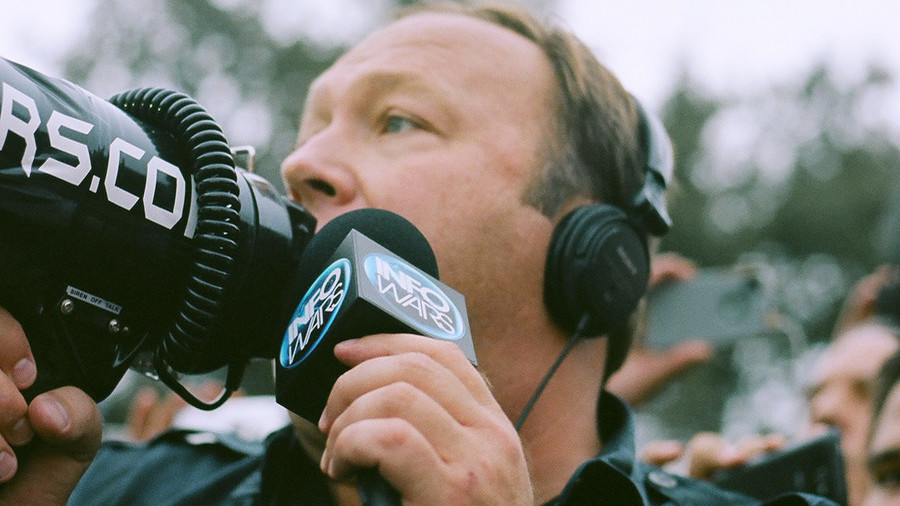
Alex Jones © Sean P. Anderson / Flickr
HomeUS News
Alex Jones suspended from Twitter after tweet calling to end censorship
Published time: 15 Aug, 2018 05:50
Edited time: 15 Aug, 2018 12:25
https://on.rt.com/9cee
Alex Jones suspended from Twitter after tweet calling to end censorship
InfoWars host Alex Jones

Controversial right-wing commentator Alex Jones has been banned from tweeting after he posted a link to a video of himself calling on President Trump to “take action” against tech companies censoring his content.

Infowars Editor Paul Joseph Watson tweeted a screenshot of the notification sent by Twitter staff to Jones. According to Twitter, a tweet by Jones one day earlier was considered to be “targeted harassment,” and, as a result, the Infowars host would have his access to the social-media platform restricted for one week. Watson described the situation as “truly, monumentally, beyond stupid.”

Alex Jones has been suspended by Twitter for 7 days for a video talking about social media censorship. Truly, monumentally, beyond stupid. 😄

On the same day that the Infowars website was brought down by a cyber attack.

Will this madness ever end? pic.twitter.com/hXDzH2b7rT
— Paul Joseph Watson (@PrisonPlanet) August 14, 2018

In the video, Jones ranted about the censorship of conservative voices by Silicon Valley tech companies, directing much of his scorn at Apple CEO Tim Cook. He called his own ban from various tech platforms a “total anti-American attack,” and called on President Trump to “do something about it.” Along the way, he bashed Democrats, criticized the mainstream media, and accused Cook of working with the Chinese government to undermine America.

Jones’ Twitter page will remain visible for the duration of the ban, but he will not be able to tweet, retweet, follow, or like.

READ MORE: Who’ll host Alex Jones? Porn sites enter the infowars

Last week, Infowars found itself banned from the platforms of almost every major Silicon Valley company – including Facebook, YouTube, Apple, and Spotify – for violating their community standards and spreading ‘hate speech.’

Until Tuesday, Twitter was one of Jones’ last safe havens online, and CEO Jack Dorsey said that Jones would not be banned until he broke the site’s rules.

Jones’ excommunication was cheered by many in the US, including Senator Chris Murphy (D-Connecticut), who called Infowars “the tip of a giant iceberg of hate and lies.” He demanded even more censorship in the name of ‘saving democracy.’

Infowars is the tip of a giant iceberg of hate and lies that uses sites like Facebook and YouTube to tear our nation apart. These companies must do more than take down one website. The survival of our democracy depends on it.
— Chris Murphy (@ChrisMurphyCT) August 6, 2018

Jones’ supporters blasted the companies for censoring the rabble-rousing host, and former UKIP leader Nigel Farage called him a “victim of collusion by the big-tech giants.”

Whether you like @RealAlexJones and Infowars or not, he is undeniably the victim today of collusion by the big tech giants. What price free speech? https://t.co/DWroGYaWvk
— Nigel Farage (@Nigel_Farage) August 6, 2018

While effectively banned from much of the internet, Jones still posted content to the Infowars website, and via the Infowars app, which has surged in popularity amid the furore. However, on Tuesday, the Infowars website went offline in what staff called a cyberattack. Upon landing on the site, visitors would simply find an error message, which was later replaced with a low-fi splash page directing them to several other affiliated sites.

They can refer to Alex Jones anyway they want to, Freedom of Speech, but censorship is censorship, are we gonna take it? I say Hell No! Facebook and Twitter can go bobbing for whatever they want, but censorship is censorship, and if we allow them to censor us, they will effectively destroy our First Amendment Rights, and move on the Second Amendment Rights and so forth.

China taking over and censoring the internet? And nobody did shit when Obama let the internet slip away from American control. Pussies!

As Snopes ‘Debunks’ Child Trafficking Camp, 160 Kids as Young as 3 Rescued in Georgia


As Snopes ‘Debunks’ Child Trafficking Camp, 160 Kids as Young as 3 Rescued in Georgia
http://www.theeventchronicle.com/cabal-exposed/as-snopes-debunks-child-trafficking-camp-160-kids-as-young-as-3-rescued-in-georgia/
By Editor June 7, 2018

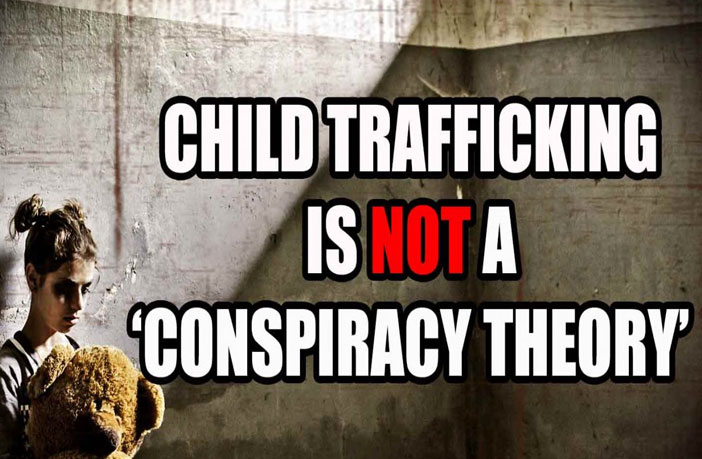
After Snopes called allegations of child trafficking made by a veterans group a ‘conspiracy theory’, 160 children, as young as 3-years-old, were rescued from traffickers in Georgia.

By Matt Agorist

North Fulton County, GA — A massive sting operation carried out by the FBI in metro Atlanta captured dozens of child traffickers and rescued 160 children who had been forced into sex slavery by their captors. This news comes as Snopes and the other ostensible arbiters of truth distort information claiming that similar trafficking is taking place in Arizona.

Illustrating the massive scope of the sting, called Operation Safe Summer, it was a collaborative effort between the FBI and 38 other law enforcement agencies from six metro counties.

“They are crimes of special concern to the FBI and to law enforcement generally,” Special Agent in Charge Matt Alcoke told Channel 2. “Because the victims are so vulnerable as children and because the offenders could be from just about any walk of life, from a gang member all the way up to someone who is highly successful and wealthy.”

In total, the sting ensnared 150 traffickers. Approximately 160 children, including some as young as 3-years-old were rescued. According to Alocke, the sting was specifically timed to catch these predators before summer started as the trade tends to prey on children when they are out of school.

“It’s important for those of us who are responsible for the children, the parents, the guardians, the older siblings, to not let children fall away (from) those strongly centered circles of importance,” Alcoke said.

This case illustrates how sinister and outright dangerous it is for the supposed arbiters of truth like Snopes, to immediately write off any allegations of child trafficking as “conspiracy theory” and fake news.

“A lot of people don’t realize these things happen here,” department spokesman Howard Miller said. Indeed, they do not realize it, and the mainstream media often seems like they are in denial when it comes to the severity of child trafficking happening within the United States.

This sting comes on the heels of a controversial topic out of Tuscon, Arizona in which a group of veterans claims to have discovered a child trafficking camp on property belonging to Cemex.

Snopes attempted to debunk the story by claiming that the Free Thought Project said that the area was a child trafficking camp. However, we did not. We merely reported what the veterans group said as these allegation most assuredly deserved scrutiny. In our report, we noted that it could also be a homeless camp.

However, because Snopes falsely accused this outlet of spreading fake news, the story has been scrubbed from Facebook and the thousands of users who shared the story—which could’ve helped to expose child trafficking—received a notification like the one below, warning them that they have shared something false.

Snopes—whether deliberately or not—is actively engaging in censorship of content that could actually help children by engaging others and fostering discussion. Instead of allowing the discussion to continue, Snopes deliberately shut down the conversation, insuring that the very important topic of child trafficking is forced into the memory hole and never heard of again.

As the above case illustrates, child trafficking is a horrifying reality. While Pizzagate scenarios may not be real, there are far worse incidents taking place across the country.

It is no longer a secret that throughout all levels of the Hollywood establishment there is rampant sexual abuse. This abuse is also rampant throughout government. It has become such a problem that millions of your tax dollars are funneled to cover it up.

Sadly, it appears, that the more monsters who get exposed for crimes against children, the more society—with the help of the mainstream media—become complacent about this reality.

The idea that someone could easily dismiss the allegations of rampant child trafficking among America’s elite as a conspiracy theory is irresponsible at best, and complicit at worst.

On multiple occasions, the Free Thought Project has reported interviews of former child sex trafficking victims who’ve all noted that they had nowhere to go as police and high-level politicians all took place in the abuse.

In case after case, the Free Thought Project reports on horrifying instances of child sex rings that were allowed to go on for decades because politicians — including heads of states — policemen, clergy, and others were all in on the sick game.

This can no longer go on. In an article after the Hollywood scandal blew up last year, The Huffington Post wrote that “Since Harvey Weinstein’s downfall, we as a society have apparently decided to try this radical new idea called ‘believing women.’”

Well, how about we, as a society, start believing children too—and stop dismissing every claim of child trafficking as a conspiracy theory without first being able to have a rational discussion about it?

Until this happens, predators in high places will enjoy the lack of scrutiny and these ‘arbiters of truth’ will be inadvertently aiding in the cover up of their crimes.

Matt Agorist is an honorably discharged veteran of the USMC and former intelligence operator directly tasked by the NSA. This prior experience gives him unique insight into the world of government corruption and the American police state. Agorist has been an independent journalist for over a decade and has been featured on mainstream networks around the world. Agorist is also the Editor at Large at the Free Thought Project. Follow @MattAgorist on Twitter, Steemit, and now on Facebook.

Related:
Atlanta sex-trafficking sting rescues nearly 160 children, authorities say

Fukushima fallout: Throwing radioactive caution to the wind – and sea Cynthia McKinney

Fukushima fallout: Throwing radioactive caution to the wind – and sea
Cynthia McKinney
https://www.rt.com/op-edge/319053-fukushima-fallout-radioactive-japan/

After serving in the Georgia Legislature, in 1992, Cynthia McKinney won a seat in the US House of Representatives. She was the first African-American woman from Georgia in the US Congress. In 2005, McKinney was a vocal critic of the government’s response to Hurricane Katrina and was the first member of Congress to file articles of impeachment against George W. Bush. In 2008, Cynthia McKinney won the Green Party nomination for the US presidency.
Published time: 19 Oct, 2015 11:08


An aerial view shows No. 4 (front L), No. 3 (front R), No. 2 (rear L) and No. 1 reactor buildings at Kansai Electric Power Co.’s Takahama nuclear power plant in Takahama town, Fukui prefecture, in this photo taken by Kyodo November 27, 2014. © Kyodo
An aerial view shows No. 4 (front L), No. 3 (front R), No. 2 (rear L) and No. 1 reactor buildings at Kansai Electric Power Co.’s Takahama nuclear power plant in Takahama town, Fukui prefecture, in this photo taken by Kyodo November 27, 2014. © Kyodo / Reuters
In the aftermath of Japan’s Fukushima nuclear power meltdown following the tsunami of March 11, 2011, the international community has totally failed in keeping the public properly informed and protected from the fallout.

Scientists and environmental officials continue to express concern, even now, at the unusual events and wonder about the causes. At the same time, the media present the facts, but fail to make any connection whatsoever to the ongoing state of affairs stemming from the tragic 2011 events at Fukushima.

Here are a few recent examples:

Seabird die-off reported around Kodiak, Alaska: A September 2015 audio report from Robin Corcoran, biologist from the Kodiak Wildlife National Refuge, confirms local reports that “emaciated” bird carcasses are washing up on Kodiak Island shores. Corcoran states that the birds were “showing up in places where people don’t normally see them . . . foraging, trying to find forage fish.”

© Toru Hanai
© Toru Hanai / Reuters

The KMXT narrator quoted Corcoran as saying it was unclear what caused the deaths but “could be related to the birds’ inability to catch forage fish,” while it was evident “the birds have no fat on their bodies and they don’t have any food in their digestive systems which indicates that they starved.”

Corcoran confirms that the last major bird die-off experienced in the region was January through March of 2012. The program concluded by stating that multiple species of birds have declined in number in other Alaska regions, according to surveys taken by the Wildlife Refuge. The next day, KTOO reported that Corcoran speculated on several causes for the die-off: “flight feather molt,”“whale die-offs,” or “harmful algal blooms . . . related to warm ocean temperatures.”

A few days before the Kodiak reports, The Daily Astorian headlined: “Scientists Searching for Answers in Bird Die-Off.” Julia Parish, speaking on behalf of the University of Washington’s Coastal Observation and Seabird Survey Team, states that the spikes in deaths are two to three times higher than normal. Josh Saranpaa of the Wildlife Center of the North Coast was quoted as saying, “Every bird we’re seeing is starving to death. It’s pretty bad.” Saranpaa added, “When you see so many starving, something is not quite right out there.”

The warming ocean and the toxic algae bloom are offered as possible explanations for the die-offs. Warming oceans, it is explained, cause the fish to swim deeper than the birds can dive while the toxic algae bloom runs from California straight up to Alasak. Parish concludes that it has been a really “odd” year with multiple regional scale events. She says that there is not much that researchers can do except wait and watch.

Julia Reis of the Half Moon Bay Review writes with understatement, “There have been noticeable changes in the Pacific Ocean that have caused difficulties for marine life of late.”


© Shizuo Kambayashi
© Shizuo Kambayashi / Reuters

Gerry McChesney of the Farallon National Wildlife Refuge says that the die-off has him all the more “baffled” because of the strip of cold water in his area full of food for these birds. In my mind’s eye, I can see McChesney scratching his head as I read that he considers poisoning, starvation, and El Nino as possible causes for the die-off. The article ends with the following comment by McChesney, “We might have to see some other problem in the ocean before we understand what’s causing the die-off.”

ENENews.com points to the problem of the massive die-off happening from San Diego to Alaska—all along the West Coast of the U.S. It highlights in various reports words like “strange,” “unprecedented,” “crazy,” “worst,” with this iconic quote from The Sacramento Bee: “Our gut tells us there is something going on in the marine environment.”

Behrens [1] published an open access 2012 model simulation of cesium 137 (137Cs) released into the Pacific Ocean as a result of the Fukushima incident and found that after the first two to three years, tracer elements descended to depths of more than 400 meters, reached the Hawaiian Islands after about two years, and North American territorial waters after about five to six years.

Although in decreased rates of concentration from the initial injection, the entire northern Pacific basin becomes saturated with tracer fluids in this simulation. This study finds that the radioactivity remains at about twice pre-Fukushima levels until about Year Nine when radioactivity tapers to pre-Fukushima levels. This research specifically does not investigate the biological effects of increased radioactivity in the Pacific Ocean.

In 2011, Lozano [2] investigated reports of man-made cesium atmospheric detection as far away as the Iberian Peninsula. Mangano and Sherman [3] take their 2015 investigation of Fukushima radiation exactly into a potentially politically uncomfortable, but essential space: biological effects. They look at “congenital anomalies” that occurred in the U.S. western states after the arrival of radioactive Fukushima Fallout. And they found that while in the rest of the U.S., birth defects decreased by almost four percentage points, on the U.S. West Coast, defects increased by thirteen percent.

View Dr. Sherman’s interview by Russia Today’s Thom Hartman where she explains the research.

Even U.S. soldiers are now experiencing Fukushima Fallout with exposure hitting home in health effects and birth defects. The Woods Hole Oceanographic Institution explains how Fukushima radioactivity reaches ocean life from both air and sea discharges. These air, ground, or sea discharges, by the way, continue twenty-four hours a day, seven days a week. Arne Gundersen of Fairewinds.org estimates that by 2015 at least 23,000 tanker truckloads of radioactive water have been released into the Pacific Ocean “with no end in sight.”

Please tell me whatever happened to the Precautionary Principle in public policy? [4] Is profit more important than prudence? Finally, a 2015 study by Synolakis and Kanoglu [5] finds that the Fukushima tragedy was preventable. They conclude that due to design flaws, regulatory failures, and “arrogance and ignorance,” and concludes that Fukushima Daiichi was “a sitting duck waiting to be flooded.”

With all of this as background, the media provide coverage of marine anomalies mentioning global warming, even El Nino and toxic algae, while the elephant in the room is Fukushima radiation. It is this silence that is deafening! It makes me wonder who are the beneficiaries of the nuclear power business? Why is the nuclear power lobby so strong when the dangers are clearly so evident? Instead, we are told: “It is fossil fuels that are destroying the planet. Nuclear power is clean and safe.” I’m also told that nuclear power is a sign of modernity; it is the future. But solar, geothermal, and wind are rarely given a mention by these same individuals. I’m also told that by posing these questions, I’m fearmongering.

I do want to know why in the face of what appear to be Pacific Ocean die-offs, El Nino is mentioned and not the Fukushima-related elevated levels of radiation. As long as there is a palpable lack of transparency in the mainstream media’s ordinary coverage of extraordinary environmental events, that includes what one senses as a reticence to discuss the obvious, I predict that there will be a proliferation of citizen journalists and citizen scientists seizing upon each piece of new data trying to make sense out of a government-approved narrative that just doesn’t make sense—again.
US President Obama stated, “We do not expect harmful levels of radiation to reach the West Coast, Hawaii, Alaska, or U.S. territories in the Pacific.”

We should not rely on government officials to tell us the truth about the full extent of Fukushima’s fallout: Incredibly, Obama advised the people of the U.S. not to take precautionary measures beyond “staying informed.” Canada immediately suspended measurements of radiation around Vancouver. The government of Japan has not been trustworthy from the very beginning about the extent of the tragedy.

The statements, views and opinions expressed in this column are solely those of the author and do not necessarily represent those of RT.

ENENews: Gov’t Report: Plutonium detected in recent California air samples — “Fallout from Fukushima nuclear accident”

Gov’t Report: Plutonium detected in recent California air samples — “Fallout from Fukushima nuclear accident” may be to blame

Published: December 28th, 2015 at 6:54 pm ET
By ENENews
Email Article Email Article
156 comments

Lawrence Livermore National Laboratory (pdf), Sept 28, 2015 (emphasis added):

Ambient Air Radioactive Particulates
Composite samples were analyzed by alpha spectroscopy for plutonium-239+240, which was detected in 2 out of 206 samples taken in 2014. Detections at the Livermore Site and Livermore off-site locations [in California] for plutonium-239+240 are attributed to a number of factors including the following: resuspension of plutonium-contaminated soil (see Chapter 6); ambient air from historical operations; resuspended fallout from previous atmospheric testing; or fallout from the Fukushima nuclear accident.
The highest values and percentage of the DCS for the plutonium-239+240 detections were as follows: Livermore Site perimeter: 13.4 nBq/m3 (0.36 aCi/m3)… Livermore off-site locations: 10.4 nBq/m3 (0.28 aCi/m3).

See also: Official data shows U.S. hit with huge spike of ‘most dangerous’ radiation from Fukushima — Levels far exceeded federal regulatory limits — Alpha particles nearly 1,000 times normal; Includes plutonium — Gov’t workers in “fear of radiation”

I hope yall aren’t waiting around for the govt. to tell you that all will be ok. There is no health threat. It takes four or more years for cancer to set in. Fukushima has been pouring 400 tons of radioactive waste cocktail into the Pacific every day since 03/2011. Almost five (5) years now. Tell me, what do you think 5 years of waste cocktail did to the Pacific Ocean?

ENENews: Mutations in nearly every fir tree by Fukushima plant — Insects with missing legs or crooked — Abnormalities also found in monkeys, fish and frogs

http://s25.postimg.org/t8rky7gb3/mousseau_map.jpg
Major Japan Newspaper: Mutations in nearly every fir tree by Fukushima plant — Insects with missing legs or crooked — Abnormalities also found in monkeys, fish and frogs

http://enenews.com/major-japan-newspaper-mutations-every-fir-tree-fukushima-plant-insects-missing-crooked-legs-abnormalities-found-monkeys-carp-frogs

Published: December 23rd, 2015 at 7:09 pm ET
By ENENews

http://ajw.asahi.com/article/0311disaster/fukushima/AJ201512220004
Asahi Shimbun, Dec 22, 2015 (emphasis added): More than 90 percent of the fir trees in forests close to the site of Japan’s 2011 nuclear disaster are showing signs of abnormality, and plant lice specimens collected in a town more than 30 kilometers from the crippled facility are missing legs or crooked. But it remains unclear whether the mutations in plants and animals are definitively connected to the disaster at the Fukushima No. 1 nuclear power plant. All that scientists in Japan are prepared to say is they are trying to figure out the effects of radioactive cesium caused by the release of huge amounts of radioactive materials from the triple meltdown at the Fukushima plant… Scientists are seeking… signs of mutation in plants and animals in areas close to the stricken nuclear plant… Scientists have reported on mutations and abnormalities among species varying from fir trees and plant lice to Japanese monkeys, carp and frogs. The National Institute of Radiological Sciences (NIRS), a government-affiliated entity, said in late August that the trunks of fir trees are not growing vertically. Fir trees are among the 44 species that the Environment Ministry asked the NIRS and other research organizations to study in trying to determine the effects of radiation on living creatures. The NIRS reported that the frequency of these mutations corresponds to a rise in natural background radiation. More than 90 percent of fir trees in the town of Okuma, just 3.5 kilometers from the crippled plant, showed signs of abnormal growth… Among other changes reported: the legs of plant lice collected in Kawamata, a town more than 30 km from the plant, were found to be missing or crooked and the white blood cell count of Japanese monkeys was lower in Fukushima, the prefectural capital, which is about 60 km from the plant… There is also a possibility that some animals, even if they exhibited signs of radiation’s effect, may no longer be alive for analysis.

See also: Japan Reporter: Mutations increasing in Fukushima — TV: “Strange things are happening to the plants and animals” — Gov’t News Agency: “Long list of mutated life forms reported” (VIDEO)
http://enenews.com/reporter-mutations-started-increasing-fukushima-locals-reporting-insect-populations-decline-tv-strange-happening-plants-animals-living-fukushima-video

And: Former Japan TV News Anchor: The mutations have begun in Fukushima; Birds found blind, unable to fly — Magazine: “Birds in tailspin 4 years after Fukushima… the proverbial canary in a coalmine” — Professor: Birds with mutations popping up all over in contaminated areas (VIDEO)
http://enenews.com/former-japan-tv-news-anchor-mutations-begun-fukushima-birds-found-fly-magazine-birds-tailspin-4-years-after-fukushima-proverbial-canary-coalmine-professor-partial-albinos-popping-all-place-conta

And: Professor: “It’s really a dead zone” in areas of Fukushima — “Huge impacts… there are no butterflies, no birds… many dramatically fewer species” — “Why does it matter to you (in the U.S.)? The reason is, it’s coming, it is coming” (VIDEO)
http://enenews.com/professor-really-dead-zone-areas-fukushima-huge-impacts-butterflies-birds-many-dramatically-fewer-species-matter-reason-coming-coming-video

Daily Report and Andrew Phillips: Analyzing the Suit Over Georgia Voters’ Personal Data Leak

Analyzing the Suit Over Georgia Voters’ Personal Data Leak
Andrew Phillips, Daily Report
November 20, 2015
http://www.dailyreportonline.com/id=1202743008663/Analyzing-the-Suit-Over-Georgia-Voters-Personal-Data-Leak?mcode=0&curindex=0&curpage=ALL


Andrew Phillips
Andrew Phillips is senior counsel in McGuireWoods’ Atlanta office, where he is editor of the firm’s “Password Protected” blog, in which a version of this article first appeared. His practice focuses on representing and counseling clients in a variety of class action and high stakes civil litigation.

John Disney/Daily Report

Did the Georgia secretary of state release the Social Security numbers, driver’s license numbers, and dates of birth of every registered Georgia voter? Those are the allegations first made by putative class representatives Elise Piper and Yvette Sanders in a recently filed Fulton County Superior Court lawsuit and confirmed by recent statements by the secretary of state.

The office of Secretary of State Brian Kemp attributes the data leak to a “clerical error,” which it alleges involved the dissemination of CD-ROMs containing extraneous data to only 12 recipients and that the disks are in the process of being recovered.

Piper and Sanders also allege that, despite being on notice of the leak, the state failed to notify the affected voters, or credit reporting agencies, in violation of the Georgia Personal Identity Protection Act of 2007 (GPIPA).

As troubling as the release of this information may be to voters—who may be dubious that the leak has been contained and are concerned about the risk of identity theft or fraud—it is unclear what, if any, legal remedy is available to plaintiffs.

The Data Leak
Per the complaint, the Social Security and driver’s license numbers were collected as part of the voter registration process. However, the suit alleges that although the voter registration process only required the last four digits of each voter’s Social Security number, the Secretary of State’s Office nonetheless maintained “each voter’s complete Social Security and driver’s license number.”

Some voter identification information, such as names and addresses—but not Social Security and driver’s license numbers—is regularly maintained in a “voter file” which is routinely provided on CD-ROM to media members and political parties free of charge. The voter file is also available to the general public for a $500 fee. However, plaintiffs allege, when the October 2015 voter file was distributed, it not only contained standard voter identification information but also the Social Security number, driver’s license number, and date of birth for all 6,184,281 registered Georgia voters.

The Georgia Personal Identity Protection Act
Legally, the type of data released is a distinction with a difference. GPIPA—like many similar state data breach notification statutes—defines “personal information,” in relevant part, as “an individual’s first name or first initial and last name in combination with any one or more of the following data elements,” including a Social Security number or driver’s license number. Thus, while the dissemination of the standard voter file containing voters’ names and addresses alone likely did not constitute a release of protected personal information, the alleged release of that information in conjunction with Social Security and driver’s license numbers could be deemed a breach.
Of course, even if the information was—as it appears to be—”personal information,” that is not the end of the inquiry. Other key questions include whether the Georgia Secretary of State is an “information broker or data collector” subject to the act, whether the release of the information was a “breach of the security of the system” within the meaning of the act, and whether the state failed to comply with the notice requirements of GPIPA.

Based on what we know, it would appear the answers to the first two questions are yes. GPIPA defines a data collector to include state agencies and actors as long as they are not maintaining records “primarily for traffic safety, law enforcement or licensing purposes or for purposes of providing public access to court records or to real or personal property information.” Assuming the Office of the Secretary of State cannot meet any of these exceptions—as seems likely—it is a “data collector.”

Likewise, the act defines “breach of the security of the system” to mean “unauthorized acquisition of an individual’s electronic data that compromises the security, confidentiality or integrity of personal information.” Again, based on the available information, this definition would appear to have been met by the dissemination of the personal information to media and political parties.

That said, the secretary of state may argue that the release of the information to a mere dozen people, followed by prompt efforts to recover the disks and contain the leak, did not jeopardize “the security, confidentiality, or integrity of personal information.” Of course, the fact that plaintiffs’ counsel apparently ended up with one of the disks undermines these arguments.

Turning to the next question, if GPIPA applies and the release was a breach, what was the Office of the Secretary of State required to do?
Under GPIPA, any information broker or data collector “shall give notice of any breach of the security of the system following discovery or notification of the breach” to Georgia residents whose unencrypted personal information was “acquired by an unauthorized person.”
With regard to timing, the notice shall be made “in the most expedient time possible and without unreasonable delay, consistent with the legitimate needs of law enforcement.” Law enforcement may delay notification if “a law enforcement agency determines that the notification will compromise a criminal investigation.”

Finally, where, as here, a breach requires notification to more than 10,000 residents, the data collector must also inform “all consumer reporting agencies.” Per the complaint, the secretary of state’s office did not provide notice to affected voters or consumer reporting agencies in the approximately one-month since the release, which could constitute a lack of notice.

On the other hand, perhaps the state can argue that the length of time that has passed since the potential breach without notification was not an “unreasonable delay” in light of the facts surrounding the release.

As for the type of notice required, the act typically requires written, telephonic, or, with prior permission, electronic notice. However, where the cost of the notice, as here, would exceed $50,000 or the breach affected more than 100,000 individuals, “substitute notice” may be appropriate. This can include notice by email (when known), conspicuous notice on the entity’s website, and notification via statewide media.
Thus, in this case, the statute could likely be satisfied with a press release and conspicuous notification on the Secretary of State web page—an embarrassment, perhaps, but not a huge logistical hurdle.

Do Plaintiffs Have a Case?
Despite the possibility that the secretary of state’s office may have violated GPIPA, plaintiffs’ remedy, if any, is unclear. Notably, plaintiffs have not sued for damages—likely because GPIPA does not expressly allow damages, and, regardless, seeking damages would likely trigger a sovereign immunity fight. Rather, the suit seeks equitable relief requiring the secretary of state to comply with GPIPA’s notification requirements and “prevent future harm due to the disclosure,” and attorneys’ fees.

While it is difficult to imagine that GPIPA was enacted without any enforcement mechanism or remedy—unlike many other states’ data privacy laws—GPIPA does not expressly create an independent civil cause of action, contain any statutory remedies or provide for an award of attorneys’ fees.

Moreover, while the only two published cases that have examined the act have not foreclosed a private right of action, neither has expressly found one, either. In the first, Willingham v. Global Payments, the Northern District of Georgia held the act inapplicable because the plaintiffs in that case were not residents of Georgia.
More recently, in an opinion arising out of the In re Target data breach litigation, the court allowed plaintiffs’ GPIPA claim to survive a motion to dismiss because “Georgia’s data-breach-notice statute is silent as to enforcement” and “neither party cites any case regarding how a court should interpret silence as to enforcement under Georgia law.”

The plaintiffs’ chance of success is unclear based on the paucity of case law examining GPIPA—and the fact that no court has affirmatively found a private cause of action.

Lessons for Government and Industry
Although the merits of plaintiffs’ suit are an open question—both because the secretary of state may have a viable defense and because GPIPA may be relatively toothless—it still carries important lessons for businesses and others collecting and processing personal information.

First, the Secretary of State Office’s “clerical error” illustrates the risk of collecting more data than needed. If only the last four digits of voters’ Social Security numbers were necessary, then the retention of complete Social Security and driver’s license numbers appears to have been an unnecessary risk that, in this case, led to a substantial data leak and litigation.

Second, those collecting and processing personal information should know—and comply with—data breach notification laws. For larger companies, this likely means compliance with various states’ disclosure laws—many of which have much clearer penalties and enforcement mechanisms than GPIPA.

Finally—and perhaps most fundamentally—data collectors and custodians should have a robust information management program in place that is commensurate with the volume and sensitivity of the data at issue. Simply put, a data management system with sufficient checks and safeguards should prevent a “clerical error” from potentially putting millions at risk.

Andrew Phillips is senior counsel in McGuireWoods’ Atlanta office, where he is editor of the firm’s “Password Protected” blog, in which a version of this article first appeared. His practice focuses on representing and counseling clients in a variety of class action and high stakes civil litigation.

Read more: http://www.dailyreportonline.com/id=1202743008663/Analyzing-the-Suit-Over-Georgia-Voters-Personal-Data-Leak#ixzz3sCITf37b


AlertsUSA and The Dept of State Alerts on Travel Due to Ebola

Potential Implications for Travel Because of Ebola in Parts of West Africa

LAST UPDATED: DECEMBER 2, 2014

http://travel.state.gov/content/passports/english/alertswarnings/ebola-west-africa.html#

The Department of State alerts U.S. citizens to screening procedures, travel restrictions, and reduced aviation transportation options in response to the outbreak of Ebola Virus Disease (EVD) in Guinea, Liberia, Sierra Leone, and Mali. This Travel Alert will expire on June 2, 2015.

Due to an outbreak of EVD in the West African nations of Liberia, Guinea, Sierra Leone, and Mali, the Centers for Disease Control and Prevention (CDC) issued Level 3 Travel Warnings for Liberia, Guinea, and Sierra Leone advising against non-essential travel and a Level 2 Travel Alert for Mali, to practice enhanced precautions for avoidance of contact with ill individuals. The Bureau of Consular Affairs’ website prominently features an Ebola Fact Sheet and links to the CDC Health Travel Warnings, Travel Alert, and general guidance about Ebola.

The World Health Organization (WHO) and CDC have also published and provided interim guidance to public health authorities, airlines, and other partners in West Africa for evaluating risk of exposure of persons coming from countries affected by EVD. Travelers should consult the U.S. Department of Homeland Security website for the most up-to-date information regarding enhanced screening procedures at five U.S. airports (Newark, New York JFK, O’Hare, Atlanta, and Dulles) for all people entering the United States from or who have traveled through the Ebola-affected countries. Travelers who exhibit symptoms indicative of possible Ebola infection may be prevented from boarding and restricted from traveling for the 21-day period. Moreover, CDC’s guidelines outline the minimum recommended procedures, and state and local governments have the power to implement more stringent procedures. Please note neither the Department of State’s Bureau of Consular Affairs nor the U.S. Embassy have authority over quarantine issues and cannot prevent a U.S. citizen from being quarantined should local health authorities overseas, or in the United States, require it. For questions about quarantine, please visit the CDC website that addresses quarantine and isolation issues.

Medical evacuation from Ebola-affected countries is very difficult, even for non-Ebola illnesses. The cost for a medical evacuation flight can exceed $200,000. We encourage U.S. citizens travelling to Ebola-affected countries to purchase travel insurance and ensure this insurance includes medical evacuation for EVD. Policy holders should confirm the availability of medical care and evacuation services at their travel destinations prior to travel.

Some local, regional, and international air carriers have curtailed or temporarily suspended service to or from Ebola-affected countries. U.S. citizens planning travel to or from these countries, in accordance with the CDC Health Travel Warnings and Health Travel Alert, should contact their airline to verify seat availability, confirm departure schedules, inquire about screening procedures, and be aware of other airline options.

The Department is aware that some countries have put in place procedures relating to the travel of individuals from or who have traveled through the affected countries, including complete travel bans. Changes to existing procedures may occur with little or no notice. Please consult your airline or the embassy of your destination country for additional information.

We strongly recommend that U.S. citizens traveling or residing abroad enroll in the Department of State’s Smart Traveler Enrollment Program (STEP). STEP enrollment allows you to receive the Department’s safety and security updates, and makes it easier for the nearest U.S. embassy or U.S. consulate to contact you in an emergency. If you do not have Internet access, enroll directly with the nearest U.S. embassy or consulate.

Regularly monitor the State Department’s website where you can find current Travel Warnings, Travel Alerts, and the Worldwide Caution, and read the Country Specific Information for your destination countries. For additional information, refer to the “Traveler’s Checklist” on the State Department’s website. Current information on safety and security can also be obtained by calling 1-888-407-4747 toll-free from within the United States and Canada, or 1-202-501-4444 from other countries. These numbers are available from 8:00 a.m. to 8:00 p.m. Eastern Time, Monday through Friday (except U.S. federal holidays). Follow us on Twitter and on Facebook.