
Tag: corruption
North Georgia newspaper publisher jailed over open records request
North Georgia newspaper publisher jailed over open records request
July 1st, 2016 in Local Regional News Read Time: 4 mins.

A North Georgia newspaper publisher was indicted on a felony charge and jailed overnight last week – for filing an open-records request.
Fannin Focus publisher Mark Thomason, along with his attorney Russell Stookey, were arrested on Friday and charged with attempted identity fraud and identity fraud. Thomason was also accused of making a false statement in his records request.
Thomason’s relentless pursuit of public records relating to the local Superior Court has incensed the court’s chief judge, Brenda Weaver, who also chairs the state Judicial Qualifications Commission. Weaver took the matter to the district attorney, who obtained the indictments.
Thomason was charged June 24 with making a false statement in an open-records request in which he asked for copies of checks “cashed illegally.” Thomason and Stookey were also charged with identity fraud and attempted identity fraud because they did not get Weaver’s approval before sending subpoenas to banks where Weaver and another judge maintained accounts for office expenses. Weaver suggested that Thomason may have been trying to steal banking information on the checks.
But Thomason said he was “doing his job” when he asked for records.
“I was astounded, in disbelief that there were even any charges to be had,” said Thomason, 37, who grew up in Fannin County. “I take this as a punch at journalists across the nation that if we continue to do our jobs correctly, then we have to live in fear of being imprisoned.”
Thomason and Stookey are out on $10,000 bond and have a long list of things they cannot do or things they must do to avoid going to jail until their trials. On Thursday, for example, Thomason reported to a pretrial center and was told that he may have to submit to a random drug test – a condition of the bond on which he was released from jail last Saturday.
Alison Sosebee, district attorney in the three counties in the Appalachian Judicial Circuit, and Judge Weaver say the charges are justified. Weaver said she resented Thomason’s attacks on her character in his weekly newspaper and in conversations with her constituents.
“I don’t react well when my honesty is questioned,” Weaver said.
She said others in the community were using Thomason to get at her. “It’s clear this is a personal vendetta against me,” she said. “I don’t know how else to explain that.”
But legal experts expressed dismay at the punitive use of the Open Records Act.
“To the extent these criminal charges stem from the use of the Open Records Act undermines the entire purpose of the law,” said Hollie Manheimer, executive director of the Georgia First Amendment Foundation. “The Open Records Act is the vehicle by which citizens access governmental information Retaliation for use of the Open Records Act will inhibit every citizen from using it, and reel us back into the dark ages.”
Another expert said the charges against attorney Russell Stookey may also be unfounded. Robert Rubin, president of the Georgia Association of Criminal Defense Lawyers, said it was wrong for the grand jury to indict a lawyer who “is using the legitimate court process for a subpoena to get records relevant for his case.” The dispute grows out of a March 2015 incident involving another judge who is no longer on the bench. Judge Roger Bradley was presiding over several cases and asked the name of the next defendant. The assistant district attorney announced next up was “(Racial slur) Ray.” Bradley, who resigned earlier this year, repeated the slur and also talked about another man whose street name started with the same slur.
Thomason asked for the transcript after he was told courtroom deputies also used the slur.
But the transcript only noted that Bradley and the assistant district attorney used the word.
According to Thomason, the court reporter told him that it was “off the record” when others in the courtroom spoke the word so it would not be recorded in the transcript. He asked to listen to the audio recording, but his request was rejected.
In an article Thomason quoted the court reporter as saying the slur was not taken down each time it was used.
And then Thomason asked Stookey to file paperwork with the court to force the the stenographer, Rhonda Stubblefield, to release the recording.
Stubblefield responded with a $1.6 million counterclaim against Thomason, accusing him of defaming her in stories that said the transcript she produced may not be accurate. Two months later a visiting judge closed Thomason’s case, concluding that Thomason had not produced evidence the transcript was inaccurate.
Last April, Stubblefield dropped her counterclaim because, her lawyer wrote, it was unlikely Thomason could pay the award if she won.
The next month, however, Stubblefield filed paper work to recoup attorney’s fees even though last last year she was cut a check for almost $16,000 from then-Judge Bradley’s operating account.
“She was being accused of all this stuff. She was very distressed. She had done absolutely nothing wrong,” Weaver said of the judges’ decision to use court money to cover Stubblefield’s legal expenses. “She was tormented all these months and then had to pay attorneys’ fees. And the only reason she was sued was she was doing what the court policy was.”
Stubblefield’s lawyer, Herman Clark, said in court Stubblefield was asking for the money from Thomason or his attorney so she could replace the funds taken out of the court bank account. Clark said it was unfair to expect taxpayers to pick up the cost.
To fight Stubblefield’s claim for legal fees, Stookey filed subpoenas for copies of certain checks so he could show her attorneys had already been paid. One of those two accounts listed in a subpoena had Weaver’s name on it as well as the Appalachian Judicial Circuit.
Weaver said the identify fraud allegations came out of her concern that Thomason would use the banking information on those checks for himself.
“I have absolutely no interest in further misappropriating any government monies,” Thomason said. “My sole goal was to show that legal fees were paid from a publicly funded account.”
FreeRepublic: Gun Purchases Continue to Soar
Gun Purchases Continue to Soar
nraila.org ^ | July 8, 2016
Posted on 7/10/2016, 10:19:26 AM by PROCON
http://www.freerepublic.com/focus/f-chat/3447979/posts
Maybe Americans aren’t taking to Hillary Clinton’s sour attitude toward guns. Maybe they’re arming themselves out of concern about terrorists and criminals of a more conventional stripe. And maybe they’re showing what they think of members of Congress who use terrorists’ crimes as the excuse to push for more gun control.

image hosting sites
One way or the other, though, Americans are continuing to acquire guns at an unprecedented level. The FBI reported this week that in June 2016, firearm-related background checks set a new record for any month of June, up 39% from the number of checks conducted in June 2015.
For the first six months of 2016, checks are up 32 percent over the same period in 2015. If the present rate of checks holds through December, there will be over 32 million checks conducted this year, more than double the number conducted during President Obama’s first year in office. There have been 26.5 million checks during the last 12 months, more than in any 12-month period previously.
NICS checks don’t precisely indicate the number of firearms acquired in a given time frame. But the trend in checks makes clear that Americans are acquiring firearms at a record pace. The annual number of checks has risen from 12.7 million during the last year of President George W. Bush’s administration to an average of 23 million during Obama’s second term.

how to print screen on pc
NICS checks don’t stop criminals from stealing guns or acquiring guns on the black market, and criminals defeat checks by having other people, who can pass checks, buy guns for them. But they continue to deliver data undermining gun control supporters’ perennial boast that gun ownership is declining. If anything, the data suggest that the opposite is true.
Monsanto Wins 1st Senate Vote on Roberts-Stabenow DARK Act!

Thank-or-Spank?
Monsanto Wins 1st Senate Vote on Roberts-Stabenow DARK Act!
https://action.organicconsumers.org/content_item/oca-email?email_blast_KEY=1352333
Dear Friend,
On June 29, Monsanto scored a preliminary victory, winning a Senate “test vote” on a bill known as the DARK Act that Senate Agriculture Committee Chair Pat Roberts (R-Kansas) and Ranking Member Debbie Stabenow (D-Mich.) introduced to Deny Americans the Right to Know about GMOs.
TAKE ACTION: Call your Senators at 888-897-0174 to tell them what you think of their votes! Calls are the fastest, and most effective way to get your message through to Congress.
Scroll down for the vote count. There were 68 “yeas” and 29 “nays”. We’ve also included the amount of money each Senator has received from agribusiness. The average agribusiness contribution for “yes” voters ($867,518) is two-and-a-half times more than the average for “no” voters ($350,877).
Thank your Senators who voted “No”. “Spank” your Senators who voted “Yes”. Call 888-897-0174.
Here are some talking points you can use when you call:
“The Roberts-Stabenow GMO labeling bill would kill the Vermont law that labels GMO foods as “produced with genetic engineering.” Vermont’s law is working. GMOs are being labeled. Food prices are staying the same. The labels are being used nationwide. The Roberts-Stabenow bill wouldn’t require words on the package. It exempts nearly all GMOs from labeling. It would take at least 2 years to take effect. And, it’s essentially voluntary because there would be no enforcement for non-compliance.”
NO Votes
Total: $10,175,439 Average: $350,877
Blumenthal D-CT NO $43,033
Booker D-NJ NO $215,250
Boxer D-CA NO $517,498
Cantwell D-WA NO $273,246
Cardin D-MD NO $230,103
Gillibrand D-NY NO $627,514
Heinrich D-NM NO $128,927
Hirono D-HI NO $108,150
Kaine D-VA NO $140,825
Leahy D-VT NO $356,995
Markey D-MA NO $118,144
Menendez D-NJ NO $647,774
Merkley D-OR NO $222,442
Mikulski D-MD NO $255,439
Murkowski R-AK NO $463,144
Murphy D-CT NO $132,650
Murray D-WA NO $667,307
Paul R-KY NO $416,761
Reed D-RI NO $110,550
Reid D-NV NO $691,398
Sanders I-VT NO $750,242
Schatz D-HI NO $88,750
Schumer D-NY NO $814,930
Sullivan R-AK NO $157,541
Tester D-MT NO $476,153
Udall D-NM NO $338,055
Warren D-MA NO $91,243
Whitehouse D-RI NO $98,408
Wyden D-OR NO $992,967
TOTAL: $10,175,439 AVERAGE: $350,877
YES Votes
Total: $58,991,192 Average: $867,518
Alexander R-TN YES $980,283
Ayotte R-NH YES $235,956
Baldwin D-WI YES $160,709
Barrasso R-WY YES $207,250
Bennet D-CO YES $473,397
Blunt R-MO YES $2,069,365
Boozman R-AR YES $646,471
Brown D-OH YES $379,952
Burr R-NC YES $1,933,705
Capito R-WV YES $456,720
Carper D-DE YES $203,662
Casey D-PA YES $405,550
Cassidy R-LA YES $504,933
Coats R-IN YES $527,927
Cochran R-MS YES $2,333,394
Collins R-ME YES $596,291
Coons D-DE YES $86,858
Corker R-TN YES $664,527
Cornyn R-TX YES $1,688,149
Cotton R-AR YES $508,940
Crapo R-ID YES $1,170,466
Cruz R-TX YES $1,647,662
Daines R-MT YES $596,781
Donnelly D-IN YES $363,199
Enzi R-WY YES $350,502
Ernst R-IA YES $256,998
Feinstein D-CA YES $1,645,599
Fischer R-NE YES $536,262
Flake R-AZ YES $535,102
Franken D-MN YES $286,547
Gardner R-CO YES $946,349
Graham R-SC YES $1,131,590
Grassley R-IA YES $1,929,489
Hatch R-UT YES $725,633
Heitkamp D-ND YES $236,975
Heller R-NV YES $258,140
Hoeven R-ND YES $405,020
Inhofe R-OK YES $938,853
Isakson R-GA YES $1,227,649
Johnson R-WI YES $489,435
King I-ME YES $74,515
Kirk R-IL YES $718,270
Klobuchar D-MN YES $720,592
Lankford R-OK YES $226,040
Lee R-UT YES $77,950
McCain R-AZ YES $4,496,004
McCaskill D-MO YES $383,024
McConnell R-KY YES $3,373,204
Moran R-KS YES $2,284,551
Nelson D-FL YES $873,540
Perdue R-GA YES $489,830
Peters D-MI YES $238,147
Portman R-OH YES $1,011,940
Risch R-ID YES $367,154
Roberts R-KS YES $2,808,111
Rounds R-SD YES $258,600
Rubio R-FL YES $1,141,265
Sasse R-NE YES $329,935
Scott R-SC YES $403,300
Shaheen D-NH YES $167,474
Sessions R-AL YES $927,652
Shelby R-AL YES $843,957
Stabenow D-MI YES $1,565,978
Thune R-SD YES $1,900,160
Tillis R-NC YES $437,750
Toomey R-PA YES $682,904
Vitter R-LA YES $657,365
Wicker R-MS YES $789,690
TOTAL YES:$58,991,192 AVERAGE YES: $867,518
Durbin D-IL
Not Voting $951,130
Manchin D-WV Not Voting $196,850
Warner D-VA Not Voting $518,317
TAKE ACTION: Call your Senators at 888-897-0174 to tell them what you think of their votes!
Thanks!
-Alexis for the OCA team
Google CEO Sundar Pichai told thousands of his vision for a future in which his company, extends its reach into nearly every aspect of its users’ lives.

Google Pushes for Bigger Role in Smart Homes
Google CEO Sundar Pichai told thousands of developers last week his vision for a future in which his company, once known just as a way to search the Internet, extends its reach into nearly every aspect of its users’ lives.
He envisions people telling a voice-activated device called Google Home to turn on lights or play music. And when people chat with friends on Google’s new messaging app, Allo, they won’t have to leave the app to make a restaurant reservation. Allo will actually suggest where they should dine based on the context of the conversation.
“We are pushing ourselves really hard so Google is evolving and staying a step ahead of our users,” Pichai said to a crowd of more than 7,000 people at the Google I/O conference at Mountain View’s Shoreline Amphitheatre.
Google Home will directly compete with the $180 Amazon Echo. While Amazon has a head start, Google is betting that its dominance of the Internet search market will give consumers a reason to buy Home instead. The device, which will hit the market this year, can play music, answer questions such as “How much fat is in an avocado?” and operate Web-connected “smart home” appliances.
“Google Home could be a major force and could also dramatically decrease the sales potential of Amazon Echo,” said Patrick Moorhead, president of Moor Insights & Strategy. “The biggest sales determinant could be the quality of the (artificial intelligence) experience, and in the end, Google will likely win over Amazon.”
Google did not reveal the price of the small device, which will have a white top. Customers will choose their own color for the bottom to blend in with their home.
Many Google users are already using voice commands to search the Internet. In the United States, about 20 percent of the queries in Google’s mobile app are voice queries, according to the company.
The device will be a cornerstone of a concept that Pichai on Wednesday described as “Google assistant,” an ongoing dialogue between the company and users.
Google already helps them in many facets of their daily lives, from turning on a thermostat to translating words and searching for selfies in their digital photo collections. And Google’s expanding universe of products and services can learn their users’ preferences over time.
“The Google assistant not only knows about the world, it will also stand apart with how well it gets to know you over time, with your permission of course,” said Mario Queiroz, a Google vice president of product management.
Even though few people own smart-home devices, like Google’s Nest thermostat, some analysts are bullish that this will become a major tech market in the future. Just 19 percent of U.S. broadband households have smart-home devices, according to a report this year by research firm Parks Associates.
“Adoption of the connected lifestyle continues to expand as the supporting technologies mature and the value propositions of smart, connected devices and streaming services are better understood by consumers,” said analyst Brad Russell with Parks Associates.
Google also unveiled video chat app Duo and messaging app Allo, available on Android and Apple devices this summer.
Allo has similar features to Facebook Messenger, where users can chat with friends and add stickers. But it also has an option to have an “incognito” chat that is encrypted. While users are chatting on Allo, they can call on Google to suggest restaurants and book reservations through OpenTable without leaving the app.
Google also renewed its commitment to virtual reality, announcing a platform that will bring the budding medium to smartphones, headsets and apps.
The company has worked with phone manufacturers such as Samsung and Huawei to produce phones that will meet the specifications of Google’s new virtual reality platform. Google also said it has made a prototype design for a virtual reality headset and controller that will work with the Android operating system and shared that design with Android manufacturers. The headset would work with a smartphone.
“There are so many things you need to get just right,” said Clay Bavor, a Google vice president overseeing virtual reality, regarding the headset. “It has to be comfortable.”
More information on Google’s virtual reality plans will be revealed on Thursday, company representatives said.
Gene Munster, an analyst with Piper Jaffray, argues that VR devices could replace smartphones in the future, adding that he believes the ability to do computing hands-free and through eye movement is better than typing or tapping on a screen.
“This is the equivalent of talking about smartphones in 1995,” Munster said.
Natural News: Glyphosate weed killer unleashes grotesque chemical deformations in farm animals

Glyphosate weed killer unleashes grotesque chemical deformations in farm animals… two-headed calves, pigs born with no skin, twisted life forms seem spawned from Hell… PHOTOS
Tuesday, May 24, 2016
by Mike Adams, the Health Ranger
http://www.naturalnews.com/054129_glyphosate_weed_killer_animal_mutations_genetically_modified_crops.html
Tags: glyphosate weed killer, animal mutations, genetically modified crops
(NaturalNews) Glyphosate weed killer, heavily used in conjunction with genetically modified crops, is being blamed for a sharp rise in grotesque, horrific animal mutations taking place in Argentina (see horrifying photos below).
While this story will never appear in the corporate-controlled U.S. media, the UK-based Daily Mail reports that the mutations “look like something from a horror movie – a black dog with a mini trunk protruding from its nose. The baby yellow chick with not two but four feet, the spider piglet with one head, two bodies and eight legs, the goat with two heads and the baby pig with skin so wafer thin you can see the muscles and blood flowing around its body.”
“Farmers blame harsh chemical Glyphosate for causing the mutations,” reports the Daily Mail, adding that “local media said that the deformation was due to the use of pesticides on farmland in the region.”
Number of mutations had QUADRUPLED as use of genetically modified crop chemicals increases
Local who were not aware of the toxicity of glyphosate originally thought the mutations were caused by evil spirits or some sort of demonic curve. But “blame has shifted to the widespread use of the harsh chemical glyphosate which is used as a pesticide,” reports Daily Mail UK:
Argentina is the world’s biggest user of the controversial product, which kills all non-genetically modified (GM) crops. The country supplies GM soya beans that are fed to animals in the UK, and cotton that is used in the manufacture of everything from T-shirts through to tampons. EU policy makers are considering banning the harmful chemical which is known to cause serious birth defects in both animals and humans.
Glyphosate has unleashed a chemical holocaust across our world
What we are all witnessing is a chemical holocaust that has already begun to devastate our world. That so many animals are now being born with devastating, grotesque mutations which resemble hellish life forms is no coincidence: Glyphosate is “Satan’s chemical” and it is sold by a demonic, life-hating corporate monstrosity named Monsanto.
All the promoters of glyphosate, it turns out, are also hate-filled destroyers of life and the planet. Filled with rage and hatred towards women — the bearers of new life — glyphosate-pushing dark operatives like former Forbes.com writer Jon Entine echo the patterns of destruction and deception that you’d most likely associate with Satan himself.
Observe the following photos for yourself, if you dare, and witness what glyphosate has done to our world.
And then join our fight to banish glyphosate from our world by staying informed at Glyphosate.news and Natural News. Avoid all GMO foods and buy organic wherever possible. Join every effort to stop Monsanto, reject GMOs and eradicate glyphosate from our world. (And pray for these innocent animal beings who suffered intensely from the chemical poisoning that now threatens us all…)


No wonder my wolves have decided to shun most of the meat available.
OPINION: The heightened pleading standard established in 2009 is based on faulty propositions. Arthur H. Bryant, The National Law Journal

National Law Journal
http://www.nationallawjournal.com/printerfriendly/id=1202758245088
‘Iqbal’ Brings Seven Years of Bad Luck for Plaintiffs
OPINION: The heightened pleading standard established in 2009 is based on faulty propositions.
Arthur H. Bryant, The National Law Journal
May 23, 2016
The seventh anniversary of the U.S. Supreme Court’s 2009 decision in Ashcroft v. Iqbal was May 18. It’s a date that should live in infamy.
A 5-4 decision, Iqbal ignored reality — and the fact that truth is stranger than fiction. It flouted the process for amending the Federal Rules of Civil Procedure. And it particularly limited access to justice for civil rights, employment discrimination and individual plaintiffs.
Seventy years before Iqbal, in 1938, the Federal Rules were adopted to get rid of “fact” pleading, which the rule-makers thought “led to wasteful disputes about distinctions that … were arbitrary or metaphysical, too often cutting off adjudication on the merits.” Under the new Rule 8, to start a lawsuit, the plaintiff had to file a complaint with “a short and plain statement of the claim showing the pleader is entitled to relief.”
As the court later explained in Conley v. Gibson, the complaint did not have to “set out the facts in detail.” It just had to give the defendant “fair notice of what the plaintiff’s claim is and the grounds upon which it rests.” A motion to dismiss would only be granted if “it appears beyond doubt that the plaintiff can prove no set of facts in support of his claim which would entitle him to relief.” Then, the plaintiff could take discovery, to find out what the defendant and other relevant people knew and when they knew it. After that, the court would determine whether there was sufficient proof to require a trial.
In Iqbal, the court rejected a complaint alleging that high-level U.S. officials had a Pakistani Muslim and thousands of other Arab men illegally arrested and detained after the 9/11 attacks because of “their race, religion, and national origin … and not because of any evidence” of their “involvement in supporting terrorist activity.”
To do so, the court changed the rules. It held that, from now on, to “survive a motion to dismiss, a complaint must contain sufficient factual matter, accepted as true, to state a claim to relief that is plausible on its face.” Dismissal no longer turned on whether the complaint provided “fair notice” to the defendant; it turned on whether the claim was “plausible on its face.” How were judges to determine that? By drawing on their “judicial experience and common sense.”
Motions to dismiss were immediately filed throughout the federal courts. Judges’ and lawyers’ workloads increased enormously. The lower courts and lawyers are still struggling to figure out how the new system is supposed to work — and, if they can, make it fair.
For three reasons, however, it’s become increasingly clear that Iqbal was a mistake.
First, whatever one thinks about the allegations in the case, the Iqbal pleading standard is based on a proposition — allegations probably aren’t true if they’re not plausible on their face — that is false. Reality keeps teaching us that. None of us, including federal judges using their “judicial experience and common sense,” would have believed that any of the following was plausible a few years ago:
• Donald Trump would be the presumptive Republican Party nominee for president of the United States of America.
• A prominent candidate for president would propose banning all Muslims from entering America or call women “fat pigs,” “dogs” and “disgusting animals.”
• Same-sex marriage would be legal nationwide.
• The U.S. government would obtain and be able to search virtually all Americans’ phone records.
• Olympic champion Bruce Jenner would become a woman, Caitlyn Jenner.
• Federal, state and local governments would battle over what kind of bathroom people such as Caitlyn Jenner could use.
Similar implausible things happen every day.
Second, Iqbal effectively rewrote the Federal Rules without following the legally established rules for amending them. Under the Rules Enabling Act, before rules are changed, detailed procedures must be followed involving the Advisory Committees to the U.S. Judicial Conference’s Standing Committee on Rules of Practice and Procedure; the Standing Committee itself; notice to and comment from lawyers, judges and the public; the U.S. Judicial Conference; the Supreme Court; and Congress — so the changes are fully considered and fair.
In 2002, the court unanimously rejected a company’s plea for a heightened pleading standard in employment discrimination cases, saying that result “must be obtained by the process of amending the Federal Rules, and not judicial interpretation.” It should have said that in Iqbal, too.
Third, Iqbal is especially harmful to civil rights, employment discrimination and individual plaintiffs. Last year, the most comprehensive study of Iqbal’s effects, “Measuring the Impact of Plausibility Pleading,” was published in the Virginia Law Review. It found that Iqbal increased dismissals of most cases by 10 percent, but employment discrimination and civil rights cases much more (16 percent and 19 percent, respectively). Cases filed by individuals were also dismissed far more often (18 percent), but not cases filed by corporations.
In theory, this could mean that only bad cases were dismissed more promptly. But, if that were true, a higher percentage of the cases remaining in court would succeed. They didn’t. These plaintiffs were just disproportionately denied a chance to prove their claims.
The high court should reverse the Iqbal decision. Whether cases proceed should turn on the facts and the law, not on whether judges think the allegations are plausible.
Arthur H. Bryant is the chairman of Public Justice, a national public interest law firm dedicated to advancing and preserving access to justice. His practice focuses on consumers’ rights, workers’ rights, civil rights, environmental protection, and corporate and government accountability.
The Scary TRUTH About Fukushima (Fukushima Exposed Full Documentary: Deception/End Times 2015)

If you don’t do anything else productive this week, do me one small favor, go here:
watch this youtube video, and learn the truth. I have been trying to tell people for the last 5 years, and cannot get enough people to listen, or believe the truth.
The US govt., the Japanese govt., are not going to tell you the truth. Every time I see someone letting their kids play in the rain, I want to walk up and slap them for their stupidity, then have to remember that no one has told them the truth. The news media, the govt, they all know the truth. Let’s just go about our daily lives, and ignore the situation.
Cancer has already been running rampant, the statistics show that it will take 15-17 years from March 11, 2011 to hit most people in the US. So much time will have passed since the triple – 100% meltdowns, that most peopel will not put 2 + 2 together to make 4. 2 + 2 by then, will be equal to 5.
Watch:
The Scary TRUTH About Fukushima (Fukushima Exposed Full Documentary: Deception/End Times 2015)
So along with the chemtrails dumbing people down, helping them stay asleep, together with the deadly fluoride in the water, keep IQs that of a snail, and vaccines causing autism, all the more to black and hispanic males, most peopel in the US will contract cancer and never put it all together. Their children born with autism, their reproduction possibilities deteriorated, and never know what hit them.
Wake up you bunch of idiots, and smell the cesium, the strotium, tritium, and all the other radiations taking hold of your bodies. You cannot see radiation, you cannot smell it, you cannot feel it. It bioaccumulates in your bodies, and is a slow and horrible death.
How many people continued eating seafood? Wow! How many continued eating vegetables grown in California? How many people continued living on the California Coast? How many people go surfing in the Pacific? It only took 3-6 days from the March 11, 2011 triple melt down to reach the California coast.
Has anyone bothered to look at some of the pix of dead whales that have washed up on California beaches? How can the govt not tell these people living along the Pacific Ocean that their kids have been conaminated to the point that their grandchildren will not look anything like a human? The extent of our exposure is sickening, and no one cares, they won’t even listen.
No wonder they want to start confiscating our guns now. They know that when people learn the truth, some of the people are going to rebel. I watched a video recently that showed Hillary Clinton had the March 11, 2011 emails to her telling her to stay inside for the next three days. She knew all about what had happened and the extent of contamination. Japan passe secrecy laws to keep the people from talking about it. Media personnel that spoke of it, disappeared.
The births of the next couple of generations will be heartbreaking, horrors fit for horror movies. God Help Us All!
ENENews: “Experts: We’re really starting to worry”
“Dead animals litter California beaches… Alarming phenomenon” — “Graveyard of washed-up sea life” — “Influx of malnourished sea creatures” — Experts: We’re really starting to worry… The animals are starving to death… Covered in sores… Stunted growth… Weak immune systems (VIDEOS)
Published: April 25th, 2016 at 7:26 am ET
By ENENews
Email Article Email Article
806 comments
NBC L.A., Apr 19, 2016 (emphasis added): Officials are investigating why sick sea lions are washing up onshore… The Laguna Beach Pacific Marine Mammal Center has an overflow of sea lions… The reason for the influx of sea lions remains a disappearing cold water food source… Another unusual phenomenon they are seeing: Elephant and harbor seals are coming into the centers in addition to California sea lions, and that is not typical.
NBC L.A. transcript, Apr 19, 2016: “Now, an alarming number of sea lions are washing up along our local beaches… it is taking longer to rehabilitate these sick sea lions… Experts say [they are] taking longer to become healthier.”
Laguna Beach Independent, Apr 23, 2016: Most are malnourished and many are infected with parasites, [said Keith Matassa, Pacific Marine Mammal Center]… “The rehabbing process is slower this year because the sea lions are coming in older and sicker.”
Salon, Apr 21, 2016: Dead animals litter California beaches — California is in its third straight year of “unusual mortality” rates for sea lions. The dismal state was first declared in January of 2013 and death rates have increased each year since… It looks like 2016 will be worse… They are starving to death. The same goes for birds… California beaches are littered with dead sea lions and birds. Watch our video for more on this alarming phenomenon. [Video transcript: (Stephen Scheiblauer, Monterey Harbormaster:) “We’re seeing a greater mortality of sea lions… also some kinds of birds… We bury [sea lions]… dig a big trench and bury it.”]
Pepperdine University’s student newspaper (‘The Graphic‘), Mar 28, 2016: A walk on Point Dume’s beach [Malibu, California] recently resembles a graveyard of washed-up sea life. On the stretch of the Pacific Coast… dead sea lions, tuna crabs and crows littered on the sand, a defunctive and rotten smell permeating the sea air… [S]tranded sea lions have become a regular sight for those who frequent Point Dume, as beach-goers stretch their towels yards away from the rotting corpses. “This has been a coast-wide problem for the past four years,” Seasonal Assistant Marine Coordinator Colleen Weiler said.
KRON, Apr 11, 2016: Marine Mammal Center dealing with influx of malnourished sea creatures… Hundreds of elephant seals, harbor seals, and sea lions are [at the center]… Rescue crews are bringing them in daily because they simply don’t have enough to eat… Dr. Shawn Johnson is the lead veterinarian at the center and said the animals are starving…
The Channels Newspaper, Apr 22, 2016: Rescued seals are brought [in] with seaborne diseases… causing bumps and blisters on the face, neck and flippers…
Marin Independent Journal, Apr 10, 2016: Marine Mammal Center coping with relentness influx of ailing sea lions… “They are skin and bones, they are malnourished, they have secondary infections like pneumonia because their immune systems are suppressed,” said [Dr. Shawn Johnson]… the sea lions appear to be experiencing stunted growth… “These are the smallest pups we have seen in 41 years of study,” [NOAA’s Sharon Melin] said.
The Marine Mammal Center, Mar 29, 2016: This is the fourth year in a row that we’ve seen California sea lions in crisis… [This year] these animals are also unusually small… essentially fur-covered skeletons—they seem to be experiencing stunted growth… pup weights are the lowest ever documented… [T]he spike in sea lion strandings began before the current El Niño pattern took hold and even before the warm water “blob” began to form… “After four years of sea lions in crisis, the initial shock of seeing so many starving sea lions is over and now we’re really starting to worry about long-term impacts on the population as a whole,” says Dr. Shawn Johnson, Director of Veterinary Science at the Center.
Watch videos here: NBC LA | Salon | KRON
Priceless, they “are starting to worry”? They should have been worried every day since March 11, 2011. Five years later, after Japan has continued pumping some of the most obnoxious radioactive material into the Pacific Ocean every day for more than five years, and officials are finally starting to worry?
Either our officials and scientists have been “dumbed down” with the rest of America, or they jest.
Sorry, I just can’t buy it! If our officials and scientists are that freaking dumb, this country is a ticking time bomb, on the verge of melting down itself.
Judge Says FBI’s Hacking Tool Deployed In Child Porn Investigation Is An Illegal Search

Judge Says FBI’s Hacking Tool Deployed In Child Porn Investigation Is An Illegal Search
The judicial system doesn’t seem to have a problem with the FBI acting as admins for child porn sites while conducting investigations. After all, judges have seen worse. They’ve OK’ed the FBI’s hiring of a “heroin-addicted prostitute” to seduce an investigation target into selling drugs to undercover agents. Judges have, for the most part, allowed the ATF to bust people for robbing fake drug houses containing zero drugs — even when the actual robbery has never taken place. Judges have also found nothing wrong with law enforcement creating its own “pedophilic organization,” recruiting members and encouraging them to create child pornography.
So, when the FBI ran a child porn site for two weeks last year, its position as a child porn middleman was never considered to be a problem. The “network investigative technique” (NIT) it used to obtain identifying information about anonymous site visitors and their computer hardware, however, has resulted in a few problems for the agency.
While the FBI has been able to fend off one defendant’s attempt to suppress evidence out in Washington, it has just seen its evidence disappear in another case related to its NIT and the “PlayPen” child porn site it seized (and ran) last year.
What troubles the court isn’t the FBI acting as a child porn conduit in exchange for unmasking Tor users. What bothers the court is the reach of its NIT, which extends far outside the jurisdiction of the magistrate judge who granted the FBI’s search warrants. This decision benefits defendant Alex Levin of Massachusetts directly. But it could also pay off for Jay Michaud in Washington.
The warrants were issued in Virginia, which is where the seized server resided during the FBI’s spyware-based investigation. Levin, like Michaud, does not reside in the district where the warrant was issued (Virginia – Eastern District) and where the search was supposed to be undertaken. As Judge William Young explains, the FBI’s failure to restrict itself to the location where the NIT warrants were issued makes them worthless pieces of paper outside of that district. (via Chris Soghoian)
So, when the FBI ran a child porn site for two weeks last year, its position as a child porn middleman was never considered to be a problem. The “network investigative technique” (NIT) it used to obtain identifying information about anonymous site visitors and their computer hardware, however, has resulted in a few problems for the agency.
While the FBI has been able to fend off one defendant’s attempt to suppress evidence out in Washington, it has just seen its evidence disappear in another case related to its NIT and the “PlayPen” child porn site it seized (and ran) last year.
What troubles the court isn’t the FBI acting as a child porn conduit in exchange for unmasking Tor users. What bothers the court is the reach of its NIT, which extends far outside the jurisdiction of the magistrate judge who granted the FBI’s search warrants. This decision benefits defendant Alex Levin of Massachusetts directly. But it could also pay off for Jay Michaud in Washington.
The warrants were issued in Virginia, which is where the seized server resided during the FBI’s spyware-based investigation. Levin, like Michaud, does not reside in the district where the warrant was issued (Virginia – Eastern District) and where the search was supposed to be undertaken. As Judge William Young explains, the FBI’s failure to restrict itself to the location where the NIT warrants were issued makes them worthless pieces of paper outside of that district. (via Chris Soghoian)
The government argues for a liberal construction of Rule 41(b) that would authorize the type of search that occurred here pursuant to the NIT Warrant. See Gov’t’s Resp. 18-20. Specifically, it argues that subsections (1), (2), and (4) of Rule 41(b) are each sufficient to support the magistrate judge’s issuance of the NIT Warrant. Id. This Court is unpersuaded by the government’s arguments. Because the NIT Warrant purported to authorize a search of property located outside the Eastern District of Virginia, and because none of the exceptions to the general territorial limitation of Rule 41(b)(1) applies, the Court holds that the magistrate judge lacked authority under Rule 41(b) to issue the NIT Warrant.
The government deployed some spectacular theories in its effort to salvage these warrants, but the court is having none of it.
The government advances two distinct lines of argument as to why Rule 41(b)(1) authorizes the NIT Warrant. One is that all of the property that was searched pursuant to the NIT Warrant was actually located within the Eastern District of Virginia, where the magistrate judge sat: since Levin — as a user of Website A — “retrieved the NIT from a server in the Eastern District of Virginia, and the NIT sent [Levin’s] network information back to a server in that district,” the government argues the search it conducted pursuant to the NIT Warrant properly can be understood as occurring within the Eastern District of Virginia. Gov’t’s Resp. 20. This is nothing but a strained, after-the-fact rationalization.
As the government attempts to portray it, the search was wholly contained in Virginia because the NIT was distributed by the seized server in the FBI’s control. But, as the judge notes, the searchitself — via the NIT — did not occur in Virginia. The NIT may have originated there, but without grabbing info and data from Levin’s computer in Massachusetts, the FBI would have nothing to use against the defendant.
That the Website A server is located in the Eastern District of Virginia is, for purposes of Rule 41(b)(1), immaterial, since it is not the server itself from which the relevant information was sought.
And, according to Judge Young, that’s exactly what the FBI has now: nothing.
The Court concludes that the violation at issue here is distinct from the technical Rule 41 violations that have been deemed insufficient to warrant suppression in past cases, and, in any event, Levin was prejudiced by the violation. Moreover, the Court holds that the good-faith exception is inapplicable because the warrant at issue here was void ab initio.
The judge has more to say about the FBI’s last ditch attempt to have the “good faith exception” salvage its invalid searches.
Even were the Court to hold that the good-faith exception could apply to circumstances involving a search pursuant to a warrant issued without jurisdiction, it would decline to rule such exception applicable here. For one, it was not objectively reasonable for law enforcement — particularly “a veteran FBI agent with 19 years of federal law enforcement experience[,]” Gov’t’s Resp. 7-8 — to believe that the NIT Warrant was properly issued considering the plain mandate of Rule 41(b).
The court doesn’t have a problem with NITs or the FBI’s decision to spend two weeks operating a seized child porn server. But it does have a problem with the government getting warrants signed in one jurisdiction and using them everywhere but.
The decision here could call into question other such warrants used extraterritorially, like the DEA’s dozens of wiretap warrants obtained in California but used to eavesdrop on targets located on the other side of the country. And it may help Jay Michaud in his case, seeing as he resides a few thousand miles away from where the search was supposedly performed.
ENENews: “70% of Japan’s agricultural and marine products are contaminated.”
Top Official: Over 60 million Japanese irradiated by Fukushima — Nuclear Expert: 50,000 sq. miles of Japan highly contaminated… Many millions need to be evacuated… Gov’t has decided to sacrifice them, it’s a serious crime — TV: More than 70% of country contaminated by radiation (VIDEOS)
| http://enenews.com/top-official-60-million-japanese-irradiated-fukushima-nuclear-expert-50000-square-miles-country-highly-contaminated-many-millions-be-evacuated-govt-decided-sacrifice-serious-crime-professor-70-l?utm_source=feedburner&utm_medium=feed&utm_campaign=Feed%3A+ENENews+%28Energy+News%29 |
Published: April 12th, 2016 at 3:31 pm ET
|
Interview with nuclear engineer Hiroaki Koide (translation by Prof. Robert Stolz, transcription by Akiko Anson), published Mar 8, 2016 (emphasis added): [Radioactive] material has been dispersed, contaminating Tohoku, Kanto [Tokyo area], and western Japan… [The law says] that absolutely nothing may be removed from a radioactive management area in which the levels exceed 40,000 Becquerels per square meter… [H]ow much area has been contaminated beyond 40,000 Bq/m2… that answer is 140,000 km^2 [54,054 square miles]… Indeed, while centered on Fukushima, parts of Chiba and Tokyo have also been contaminated. The number of people living in what must be called a radiation-controlled area is in the millions, and could exceed ten million… I believe the government has the responsibility to evacuate these entire communities… the government decided to leave them exposed to the real danger of radiation. In my view, Fukushima should be declared inhabitable… but if that were to be done, it would likely bankrupt the country… They’ve decided to sacrifice people… In my view, this is a serious crime committed by Japan’s ruling elite… [F]undamentally, people must not be forced to live in contaminated areas… First must come complete evacuation… [W]hen it comes to radiation… “removal of contaminants” is impossible… This stuff contaminates everything.
Naoto Kan, former Prime Minister of Japan, Apr 11, 2016 (at 2:15 in): The molten material broke through the pressure vessel and accumulated low down in the containment. Now what would have happened if this molten material had escaped from the containment?… A radius of 250 kilometers — which includes the city of Tokyo — anyone living in this area, if you count them up it comes to 50 million or 40% of the Japanese population, and they would all have had to be evacuated. As we know from Chernobyl, not just a couple of weeks, but 30 years  or 40 years — it would have virtually meant the end of Japan. [Note: Many nuclear experts believe the molten fuel did in fact escape from the containment] Half the population was subject to radiation [Japan Population: 127 million]. That’s something that could just be imagined, for instance the event of losing a major war.
Arirang (Gov’t-funded Korean TV network), ‘Fukushima and Its Aftermath’, Mar 16, 2016 (at 6:45 in) — Prof. Kim Ik-Jung, Medical College at Dongguk Univ.: “When you look at the contamination map, about 70% of Japan is contaminated by radiation. That means that 70% of Japan’s agricultural and marine products are contaminated.”… According to PNAS, one of the five major scientific journals, over 70% of the land in Japan is contaminated by radiation.
Judicial Corruption at its Finest
Reprimanded judge says presiding over his own divorce case for several months ‘made no difference’
Posted Mar 23, 2016 03:00 pm CDT
Reprimanded last month for presiding over his own divorce case for four months after it was randomly assigned to his own court, a Texas judge told a local newspaper that doing so did no harm.
“This was my personal divorce,” said 383rd District Judge Mike Herrera to the El Paso Times on Tuesday, explaining that there was “no rush” to transfer the case to another judge because he and his wife were trying at the time to work things out.
Hence, “the fact that it was in this court made no difference. It stayed there,” Herrera said of the divorce case. “I wasn’t actively doing anything. Me and my former spouse were working on everything. She and I were working on everything carefully.”
The Texas Commission on Judicial Conduct noted that Herrera had filed motions in the case while it was in his own court. The commission said that the judge “failed to comply with the law, demonstrated a lack of professional competence in the law, and engaged in willful and persistent conduct that was clearly inconsistent with the proper performance of his judicial duties,” the newspaper reports.
In addition to reprimanding Herrera, the commission ordered him to get six hours of training.
Biologist Explains: “THC, the primary psychoactive component of cannabis, induces tumor cell ‘suicide’ while leaving healthy cells alone”
Biologist explains how marijuana causes tumor cells to commit suicide
Sunday, March 08, 2015 by: Jonathan Benson, staff writer
http://www.naturalnews.com/048913_cannabis_cancer_treatment_herbal_medicine.html
Tags: cannabis, cancer treatment, herbal medicine

(NaturalNews) The therapeutic potential of cannabis appears limitless, extending far beyond just relieving nausea or pain in the terminally ill. Christina Sanchez, a molecular biologist from Compultense University in Madrid, Spain, has been studying the molecular activity of cannabinoids for more than 10 years, and during this time she and her colleagues have learned that tetrahydrocannabinol, or THC, the primary psychoactive component of cannabis, induces tumor cell “suicide” while leaving healthy cells alone.
This amazing discovery was somewhat unexpected, as Sanchez and her team had initially been studying brain cancer cells for the purpose of better understanding how they function. But in the process, they observed that, when exposed to THC, tumoral cells not only ceased to multiply and proliferate but also destroyed themselves, both in lab tests and animal trials. Sanchez first reported on this back in 1998, publishing a paper on the anti-cancer effects of THC in the European biochemistry journal FEBS Letters.
“In the early 1960s, Raphael Mechoulam from the Hebrew University in Israel categorized the main compound in marijuana producing the psychoactive effects that we all know,” explained Sanchez during an interview with Cannabis Planet. “After the discovery of this compound that is called THC, it was pretty obvious that this compound had to be acting on the cells, on our organism, through a molecular mechanism.”
Sanchez expounds upon this and much more in a five-minute video segment available here:
Vimeo.com.
Human body designed to utilize cannabis compounds, research finds
Later research in the 1980s revealed that the human body contains two specific targets for THC: an endogenous framework that processes THC and other cannabinoids, known as the endocannabinoid system, and various cannabinoid receptors throughout the body that utilize them. Together, these two natural systems allow the body to benefit from the cannabinoids found in cannabis, some of which aren’t found anywhere else in nature.
“The endocannabinoids, together with the receptors and the enzymes that synthesize, that produce, the endocannabinoids and that degrade the endocannabinoids, are what we call the endocannabinoid system,” added Sanchez. “And we now know that the endocannabinoid system regulates a lot of biological functions: appetite, food intake, motor behavior, reproduction, and many, many other functions. And that’s why the plant has such a wide therapeutic potential.”
“Phoenix Tears” cannabis oil is already curing people of cancer
When inhaled or consumed, cannabis cannabinoids are incorporated into the body’s natural endocannabinoid system, binding to cannabinoid receptors in the same way as endogenous cannabinoids. The effects of this in terms of cancer, as demonstrated in animal models of both breast and brain cancers, is that tumor cells are thrust into a state of apoptosis, meaning they self-destruct.
“Cells can die in different ways, and after cannabinoid treatment, they were dying in the clean way — they were committing suicide,” revealed Sanchez. One of the advantages of cannabinoids… is that they target, specifically, the tumor cells. They don’t have any toxic effect on normal, non-tumoral cells. And this is an advantage with respect to standard chemotherapy, which targets basically everything.”
What Sanchez is describing here sounds a lot like what Canadian researcher and innovator Rick Simpson has been doing with his “Phoenix Tears” cannabis oil, which has reportedly cured many people of cancer over the years without harming them like chemotherapy and radiation do.
You can learn more about Phoenix Tears here:
PhoenixTears.ca.
“I cannot understand why in the U.S. cannabis is under Schedule I, because it is pretty obvious, not only from our work, but from the work of many other researchers, that the plant has very wide therapeutic potential,” emphasized Sanchez.
Sources:
ENENews: L.A. Times: “Ongoing fish famine” along US West Coast — “Dearth of food across ocean” — Severe fishery implosion — Supply has been low since 2011 — Gov’t Expert: “Looks very grim… It is hard to watch”
L.A. Times: “Ongoing fish famine” along US West Coast — “Dearth of food across ocean” — Severe fishery implosion — Supply has been low since 2011 — Gov’t Expert: “Looks very grim… It is hard to watch”
http://www.latimes.com/local/california/la-me-coastal-watch-20160225-story.html
Published: February 29th, 2016 at 9:58 am ET
By ENENews

L.A. Times, Feb 25, 2016 (emphasis added): Fewer sea lions have been stranded this year, but that’s a bad sign, scientists say… it’s a sign that the sea lion population is dwindling rather than recovering. An ongoing fish famine is preventing mothers from producing enough milk, resulting in smaller and less hardy pups. As of Monday, there had been 375 sea lion strandings so far in 2016… about 160 sea lions are found stranded during the first two months of a typical year… [L]ess available prey are hurting newly born sea lions the most, potentially slowing down the species’ population growth, scientists say. “It’s going to decline,” said Sharon Melin, wildlife biologist at the NOAA Alaska Fisheries Science Center… During NOAA’s survey of the sea lion breeding grounds, Melin said, researchers saw more dead pups than usual. The increased mortality could cause fewer pups to become stranded because they’re dying before they can leave the islands, she said. The exact number of dead pups is not known… The pups… should have gained about 20 pounds in the last six months, Melin said, but they haven’t grown at all. “It still looks very grim this year,” Melin said…

http://www.sandiegouniontribune.com/news/2016/feb/24/sea-lion-pup-strandings/
S.D. Union Tribune, Feb. 24, 2016: Record sea lion strandings are tapering off; Scientists say the trend may indicate dwindling population, not a recovery… SeaWorld San Diego typically rescues 200 marine mammals in any given year. Already this year, there are 147 sea lions in SeaWorld’s care, according to David Koontz, theme park spokesman… The low birth weight suggests that there isn’t adequate prey… “It’s a clear sign that there is a mismatch between supply and demand,” said Nate Manuta, a NOAA climate scientist… The dearth of food across the ocean isn’t harming the adult sea lions as much as the pups… Melin said more pups are leaving their mothers before they are ready, likely because of hunger… Because food supplies have been low for five years, the habits of the species have to adjust. “We are seeing adaptation,” Melin said, “even though it is hard to watch.”

http://www.seattletimes.com/seattle-news/environment/west-coast-sardine-populations-long-sinking-look-even-worse-in-forecast/
Seattle Times, Feb 27, 2016: Sardines off the West Coast have continued on a steep decline, with populations this summer forecast to be down 93 percent from a 2007 peak, according to a draft assessment from the National Marine Fisheries Service… Last year, the sardine implosion was so severe that the Pacific Fishery Management Council voted to call off the season that was scheduled to start in July for West Coast fleets… The stocks of sardines aged one year or older are forecast to be 64,422 metric tons, about a third lower than the 2015 assessment… Albert Carter, of Ocean Gold Seafood… who serves on a Pacific Fishery Management Council advisory committee, said… if populations have continued to decline, he does not expect a 2016 season.
http://enenews.com/officials-historic-crisis-affecting-west-coast-facing-fishery-disaster-very-never-before-be-exclamation-alarm-general-public-unprecedented-include-threat-extinction-salmon-runs-closure-sardine-fish
See also: Officials: “Historic crisis” along US West Coast… “We’re facing a fishery disaster”… “Very never-seen-before things”… Should be exclamation alarm to public — Extinction threat for salmon runs; Loss of sardines, squid, sea urchins, kelp; Massive sea star deaths; Marine mammal strandings… more
Scott Bernstein’s “The Clinton Body Bag Count”

The Clinton Body Bag Count
Jan 29, 2016
https://www.linkedin.com/pulse/clinton-body-bag-count-scott-bernstein
Those too young to remember, a reminder of the Clinton history and the list of strange deaths of people close to Bill and Hillary. The country does not need to start on this road again with the election of Hillary.
What an amazing list of mere coincidences…..Purely coincidental? THE CLINTON BODY BAGS.
Food for Thought… Just a quick refresher course lest we forget what has happened to many “friends” of the Clintons.
1- James McDougal – Clintons convicted Whitewater partner died of an apparent heart attack, while in solitary confinement. He was a key witness in Ken Starr’s investigation.
2 – Mary Mahoney – A former White House intern was murdered July 1997 at a Starbucks Coffee Shop in Georgetown. The murder happened just after she was to go public with her story of sexual harassment in the White House.
3 – Vince Foster – Former White House councilor, and colleague of Hillary Clinton at Little Rock’s Rose Law firm. Died of a gunshot wound to the head, ruled a suicide.
4 – Ron Brown – Secretary of Commerce and former DNC Chairman. Reported to have died by impact in a plane crash. A pathologist close to the investigation reported that there was a hole in the top of Brown’s skull resembling a gunshot wound. At the time of his death Brown was being investigated, and spoke publicly of his willingness to cut a deal with prosecutors. The rest of the people on the plane also died. A few days later the air Traffic controller commited suicide.
5 – C. Victor Raiser, II – Raiser, a major player in the Clinton fund raising organization died in a private plane crash in July 1992.
6 – Paul Tulley – Democratic National Committee Political Director found dead in a hotel room in Little Rock, September 1992. Described by Clinton as a “dear friend and trusted advisor”.
7 – Ed Willey – Clinton fundraiser, found dead November 1993 deep in the woods in VA of a gunshot wound to the head. Ruled a suicide. Ed Willey died on the same day his wife Kathleen Willey claimed Bill Clinton groped her in the oval office in the White House. Ed Willey was involved in several Clinton fund raising events.
8 – Jerry Parks – Head of Clinton’s gubernatorial security team in Little Rock. Gunned down in his car at a deserted intersection outside Little Rock. Park’s son said his father was building a dossier on Clinton. He allegedly threatened to reveal this information. After he died the files were mysteriously removed from his house.
9 – James Bunch – Died from a gunshot suicide. It was reported that he had a “Black Book” of people which contained names of influential people who visited prostitutes in Texas and Arkansas.
10 – James Wilson – Was found dead in May 1993 from an apparent hanging suicide. He was reported to have ties to Whitewater.
11 – Kathy Ferguson – Ex-wife of Arkansas Trooper Danny Ferguson, was found dead in May 1994, in her living room with a gunshot to her head. It was ruled a suicide even though there were several packed suitcases, as if she were going somewhere. Danny Ferguson was a co-defendant along with Bill Clinton in the Paula Jones lawsuit Kathy Ferguson was a possible corroborating witness for Paula Jones.
12 – Bill Shelton – Arkansas State Trooper and fiancee of Kathy Ferguson. Critical of the suicide ruling of his fiancee, he was found dead in June, 1994 of a gunshot wound also ruled a suicide at the grave site of his fiancee.
13 – Gandy Baugh – Attorney for Clinton’s friend Dan Lassater, died by jumping out a window of a tall building January, 1994. His client was a convicted drug distributor.
14 – Florence Martin – Accountant & sub-contractor for the CIA, was related to the Barry Seal, Mena, Arkansas, airport drug smuggling case. He died of three gunshot wounds.
15 – Suzanne Coleman – Reportedly had an affair with Clinton when he was Arkansas Attorney General. Died of a gunshot wound to the back of the head, ruled a suicide. Was pregnant at the time of her death.
16 – Paula Grober – Clinton’s speech interpreter for the deaf from 1978 until her death December 9, 1992. She died in a one car accident.
17 – Danny Casolaro -Investigative reporter. Investigating Mena Airport and Arkansas Development Finance Authority. He slit his wrists, apparently, in the middle of his investigation.
18 – Paul Wilcher – Attorney investigating corruption at Mena Airport with Casolaro and the 1980 “October Surprise” was found dead on a toilet June 22, 1993, in his Washington DC apartment. Had delivered a report to Janet Reno 3 weeks before his death.
19 – Jon Parnell Walker – Whitewater investigator for Resolution Trust Corp. Jumped to his death from his Arlington, Virginia apartment balcony August 15, 1993. He was investigating the Morgan Guaranty scandal.
20 – Barbara Wise – Commerce Department staffer. Worked closely with Ron Brown and John Huang. Cause of death unknown. Died November 29, 1996. Her bruised, nude body was found locked in her office at the Department of Commerce.
21 – Charles Meissner – Assistant Secretary of Commerce who gave John Huang special security clearance, died shortly thereafter in a small plane crash.
22 – Dr. Stanley Heard – Chairman of the National Chiropractic Health Care Advisory Committee died with his attorney Steve Dickson in a small plane crash. Dr. Heard, in addition to serving on Clinton’s advisory council personally treated Clinton’s mother, stepfather and brother.
23 – Barry Seal – Drug running TWA pilot out of Mena Arkansas, death was no accident.
24 – Johnny Lawhorn, Jr. – Mechanic, found a check made out to Bill Clinton in the trunk of a car left at his repair shop. He was found dead after his car had hit a utility pole.
25 – Stanley Huggins – Investigated Madison Guaranty. His death was a purported suicide and his report was never released.
26 – Hershell Friday – Attorney and Clinton fundraiser died March 1, 1994, when his plane exploded.
27 – Kevin Ives & Don Henry – Known as “The boys on the track” case. Reports say the boys may have stumbled upon the Mena Arkansas airport drug operation. A controversial case, the initial report of death said, due to falling asleep on railroad tracks. Later reports claim the 2 boys had been slain before being placed on the tracks. Many linked to the case died before their testimony could come before a Grand Jury. THE FOLLOWING PERSONS HAD INFORMATION ON THE IVES/HENRY CASE:
28 – Keith Coney – Died when his motorcycle slammed into the back of a truck, July, 1988.
29 – Keith McMaskle – Died, stabbed 113 times, Nov, 1988
30 – Gregory Collins – Died from a gunshot wound Jan, 1989.
31 – Jeff Rhodes – He was shot, mutilated and found burned in a trash dump in April 1989.
32 – James Milan – Found decapitated. However, the Coroner ruled his death was due to natural causes”.
33 – Jordan Kettleson – Was found shot to death in the front seat of his pickup truck in June 1990.
34 – Richard Winters – A suspect in the Ives/Henry deaths. He was killed in a set-up robbery July 1989.
THE FOLLOWING CLINTON BODYGUARDS ARE DEAD
36 – Major William S. Barkley, Jr.
37 – Captain Scott J . Reynolds
38 – Sgt. Brian Hanley
39 – Sgt. Tim Sabel
40 – Major General William Robertson
41 – Col. William Densberger
42 – Col. Robert Kelly
43 – Spec. Gary Rhodes
44 – Steve Willis
45 – Robert Williams
46 – Conway LeBleu
47 – Todd McKeehan
Quite an impressive list! Pass this on. Let the public become aware of what happens to friends of the Clintons! It’s a dangerous affiliation.
2016 STATE OF THE JUDICIARY ADDRESS THE HONORABLE CHIEF JUSTICE HUGH P. THOMPSON SUPREME COURT OF GEORGIA January 27, 2016, 11 a.m. House Chambers, State Capitol
016 STATE OF THE JUDICIARY ADDRESS
THE HONORABLE CHIEF JUSTICE HUGH P. THOMPSON
SUPREME COURT OF GEORGIA
January 27, 2016, 11 a.m.
House Chambers, State Capitol
Lt. Governor Cagle, Speaker Ralston, President Pro Tem Shafer, Speaker Pro Tem Jones, members of the General Assembly, my fellow judges and my fellow Georgians:
Good morning. Thank you for this annual tradition of inviting the Chief Justice to report on the State of Georgia’s Judiciary. Thanks in large part to your support and the support of our governor, as we move into 2016, I am pleased to tell you that your judicial branch of government is not only steady and secure, it is dynamic; it has momentum; and it is moving forward into the 21st century with a vitality and a commitment to meeting the inevitable changes before us.
Our mission remains the same: To protect individual rights and liberties, to uphold and interpret the rule of law, and to provide a forum for the peaceful resolution of disputes that is fair, impartial, and accessible to all.
Our judges are committed to these principles. Each day, throughout this state, they put on their black robes; they take their seat on the courtroom bench; and they work tirelessly to ensure that all citizens who come before them get justice.
Our Judicial Council is the policy-making body of the state’s judicial branch. It is made up of competent, committed leaders elected by their fellow judges and representing all classes of court. They are assisted by an Administrative Office of the Courts, which is under a new director – Cynthia Clanton – and has a renewed focus as an agency that serves judges and courts throughout Georgia.
A number of our judges have made the trip to be here today. Our judges are here today because the relationship we have with you is important. We share with you the same goal of serving the citizens of this great state. We could not do our work without your help and that of our governor.
On behalf of all of the judges, let me say we are extremely grateful to you members of the General Assembly for your judicial compensation appropriation last year.
Today I want to talk to you about Georgia’s 21st century courts – our vision for the future, the road we must travel to get there, and the accomplishments we have already achieved.
It has been said that, “Change is the law of life. And those who look only to the past or present are certain to miss the future.”
Since a new state Constitution took effect in 1983, our population has nearly doubled to a little over 10 million, making us the 8th most populous state in the country. We are among the fastest growing states in the nation, and in less than four years, our population is projected to exceed 12 million.
Because it is good for our economy, we welcome that growth. Today, Georgia ranks
among states with the highest number of Fortune 500 companies, 20 of which have their global headquarters here; we have 72 four-year colleges and universities; we have the world’s busiest airport and we have two deep-water ports. Georgia is a gateway to the South, and for a growing number of people and businesses from around the world, it is a gateway to this country.
All of this growth produces litigation – increasingly complex litigation – and just as our state must prepare for this growth by ensuring we have enough roads and modes of transportation, enough doctors and hospitals, and enough power to reach people throughout the state, our courts also must be equipped and modernized for the 21st
century.
While our population has nearly doubled since 1983, the number of Georgia judges has
grown only 16 percent. We must work together to ensure that our judicial system has enough judges, staff and resources in the 21st century to fulfill the mission and constitutional duties our forefathers assigned to us.
A healthy, vibrant judiciary is absolutely critical to the economic development of our state. Thanks to many leaders in the judiciary, as well as to our partnership with the governor and to you in the legislature, we are well on our way to building a court system for the 21st century.
This time next year, with your support, we will have put into place an historic shift in the types of cases handled by the Georgia Supreme Court – the highest court in the state – and by the Court of Appeals – our intermediate appellate court. Thanks to Governor Deal’s Georgia Appellate Jurisdiction Review Commission, this realignment will bring the Supreme Court of Georgia in line with other state Supreme Courts, which handle only the most critical cases that potentially change the law. Serving on the Commission are two of my colleagues – Justice David Nahmias and Justice Keith Blackwell – as well as two judges from the Court of Appeals – Chief
Judge Sara Doyle and Judge Stephen Dillard.
I thank you, Justices and Judges, for your leadership.
Under the Georgia Constitution, Supreme Court justices collectively decide every case that comes before us. Currently the state’s highest court hears divorce and alimony cases; we hear cases involving wills; we hear cases involving titles to land; and we hear disputes over boundary lines.
But the Governor’s Commission, and a number of reports by other commissions and
committees issued since 1983, have recommended that such cases should be heard by our intermediate appeals court, not by our highest court.
Both of our courts are among the busiest in the nation. But unlike the Supreme Court, which sits as a full court with all seven justices participating in, and deciding, every case, the Court of Appeals sits in panels of three. With your approval last year of three new Court of Appeals judges, that court will now have five panels, so it will have the capacity to consider five times as many cases as the Supreme Court.
Modernization of the Supreme Court makes sense. In a 19th century court system, when
most of the wealth was tied up in land, maybe title to land cases were the most important. Maybe they had the greatest implications for the public at large. But as we move into the 21st century, that is no longer true.
In answer to questions such as who owns a strip of land, what does a will mean, and who should prevail in a divorce settlement or an alimony dispute, most judicial systems believe that three judges are enough to provide the parties with a full and fair consideration of their appeal. It no longer makes sense to have seven – or nine – justices collectively review these types of cases.
There is no doubt these cases will be in good hands with the Court of Appeals.
Let me emphasize that all these cases the Commission recommended shifting to the Court of Appeals are critically important to the parties involved.
Let me also emphasize that the purpose of this historic change is not to lessen the burden on the Supreme Court. Rather, the intent is to free up the state’s highest court to devote more time and energy to the most complex and the most difficult cases that have the greatest implications for the law and society at large.
We will therefore retain jurisdiction of constitutional challenges to the laws you enact, questions from the federal courts seeking authoritative rulings on Georgia law, election contests, murder and death penalty cases, and cases in which the Court of Appeals judges are equally divided.
Significantly, we want to be able to accept more of what we call “certiorari” cases
which are appeals of decisions by the Court of Appeals. The number of petitions filed in this category during the first quarter of the new docket year is nearly 14 percent higher this year over last. Yet due to the amount of appeals the law now requires us to take, we have had to reject the majority of the petitions for certiorari that we receive.
These cases are often the most complex – and the most consequential. They involve
issues of great importance to the legal system and the State as a whole. Or they involve an area of law that has become inconsistent and needs clarification.
Businesses and citizens need to know what the law allows them to do and what it does
not allow them to do. It is our job at the highest court to reduce any uncertainty and bring consistency and clarity to the law.
Under the Commission’s recommendations, our 21st century Georgia Supreme Court will
be able to accept more of these important appeals.
As we move into the 21st century, plans are being discussed to build the first state Judicial Building in Georgia’s history that will be dedicated solely to the judiciary. We are grateful for the Governor’s leadership on this. The building that now houses the state’s highest court and the Court of Appeals was built in 1954 when Herman Tallmadge was governor. Back then, it made sense to combine the state judicial branch with part of the executive branch, by locating the Law Department in the same building.
But the world has changed since 1954, and the building we now occupy was not designed with visitors in mind. It was not designed with technology in mind. And it surely was not designed with security in mind. Indeed, it was designed to interconnect with neighboring buildings that housed other branches of government.
A proper Judicial Building is about more than bricks and mortar. Outside, this building will symbolize for generations to come the place where people will go to get final resolution of civil wrongs and injustices; where the government will go to safeguard its prosecution of criminals; and where defendants will go to appeal convictions and sentences to prison for life.
Inside such a building, the courtroom will reinforce the reality that what goes on here is serious and solemn; it is a place of great purpose, in the words of a federal judge. The parties and the lawyers will understand they are all on equal footing, because they are equal under the law.
There is a majesty about the law that gets played out in the courtroom. It is a hallowed place because it is where the truth must be told and where justice is born. The courtroom represents our democracy at its very best.
No, this building is not just about bricks and mortar. Rather it is a place that will house Georgia’s highest court where fairness, impartiality, and justice will reign for future generations.
We are no longer living in a 1950s Georgia. The courts of the 21st century must be
equipped to handle an increasingly diverse population. Living today in metropolitan Atlanta alone are more than 700,000 people who were born outside the United States. According to the Chamber of Commerce, today some 70 countries have a presence in Atlanta, in the form of a consulate or trade office. We must be ready to help resolve the disputes of international businesses that are increasingly locating in our state and capital. Our 21st century courts must be open, transparent and accessible to all. Our citizens’ confidence in their judicial system depends on it. We must be armed with qualified, certified interpreters, promote arbitration as an alternative to costly, courtroom-bound litigation, ensure that all those who cannot afford lawyers have an avenue toward justice, and be constantly updating technology with the aim of improving our courts’ efficiency while saving literally millions of dollars. For all of this, we need your help.
When I first became a judge, we had no email, no cell phones, no Internet. People didn’t Twitter or text, or post things on YouTube, Facebook or Instagram. The most modern equipment we had was a mimeograph machine.
This past year, by Supreme Court order, we created for the first time a governance
structure to bring our use of technology into the 21st century. Chaired by my colleague Justice Harold Melton, and co-chaired by Douglas County Superior Court Judge David Emerson, this permanent Judicial Council Standing Committee on Technology will lead the judicial branch by providing guidance and oversight of its technology initiatives.
Our courts on their own are rapidly moving away from paper documents into the digital age. At the Supreme Court, lawyers must now electronically file all cases. This past year, we successfully launched the next phase by working with trial courts to begin transmitting their entire court record to us electronically. The Court of Appeals also now requires the e-filing of applications to appeal, and this year, will join the Supreme Court in accepting electronic trial records.
Our goal is to develop a uniform statewide electronic filing and retrieval system so that lawyers and others throughout the judiciary can file and access data the easiest way possible.
Using a single portal, attorneys will be able to file documents with trial courts and appellate courts – and retrieve them from any court in the state. This is the system advocated by our partner, President Bob Kaufman of the State Bar of Georgia, and by attorneys throughout the state.
Such a system will not only make our courts more efficient at huge savings, but it will make Georgia safer. When our trial judges conduct bond hearings, for example, they often lack critical information about the person before them. They usually have reports about any former convictions, but they may not have information about cases pending against the defendant in other courts. The technology exists now to ensure that they do.
Also on the horizon is the expanded use of videoconferencing – another electronic
improvement that will save money and protect citizens’ lives. After a conviction and sentence to prison, post-trial hearings require courts to send security teams to pick up the prisoner and bring him to court. Without encroaching on the constitutional right of confrontation, we could videoconference the inmate’s testimony from his prison cell. Again, the technology already exists.
Our Committee on Technology will be at the forefront of guiding our courts into the 21st century.
As Georgia grows, it grows more diverse.
Our Georgia courts are required by the federal government to provide language services free of charge to litigants and witnesses, not only in criminal cases but in civil cases as well.
Even for fluent English speakers, the judicial system can be confusing and unwelcoming.
My vision for Georgia’s judiciary in the 21st century is that every court, in every city and every county in Georgia, will have the capacity of serving all litigants, speaking any language, regardless of national origin, from the moment they enter the courthouse until the moment they leave. That means that on court websites, signs and forms will be available in multiple languages, that all court staff will have the tools they need to assist any customers, and that court proceedings will have instant access to the interpreters of the languages they need.
Chief Magistrate Kristina Blum of the Gwinnett County Magistrate Court has been
working hard to ensure access to justice for all those who come to her court, most of whom are representing themselves.
Recently her court created brochures that provide guidance for civil trials, family
violence matters, warrant applications, garnishments, and landlord-tenant disputes. These brochures provide basic information about each proceeding – what to expect and how best to present their case in court.
Judge Blum, who is in line to be president of the Council of Magistrate Judges and is a member of our Judicial Council, has had the brochures translated into Spanish, Korean and Vietnamese. Such non-legalese forms and tutorial videos that our citizens can understand go a long way toward building trust in the judicial system, and in our entire government.
The Supreme Court Commission on Interpreters, chaired by Justice Keith Blackwell, is
making significant strides in ensuring that our courts uphold the standards of due process. With the help of Commission member Jana Edmondson-Cooper, an energetic attorney with the Georgia Legal Services Program, the Commission is working around the state to educate judges,court administrators and lawyers on the judiciary’s responsibilities in providing language assistance.
The essence of due process is the opportunity to be heard. Our justice system is the envy of other countries because it is open and fair to everyone seeking justice. By helping those who have not yet mastered English, we reinforce the message that the doors to the best justice system in the world are open to everyone.
Our law demands it. Our Constitution demands it.
The courts of the 21st century will symbolize a new era. A turning point in our history occurred when we realized there was a smarter way to handle criminals.
Six years ago, my colleague and then Chief Justice Carol Hunstein accompanied
Representative Wendell Willard to Alabama to explore how that state was reforming its criminal justice system. Back in Georgia, Governor Deal seized the reins, brought together the three branches of government, and through extraordinary leadership, has made criminal justice reform a reality. Georgia is now a model for the nation.
Today, following an explosive growth in our prison population that doubled between
1990 and 2011 and caused corrections costs to top one billion dollars a year, last year our prison population was the lowest it has been in 10 years. Our recidivism rate is the lowest it’s been in three decades. And we have turned back the tide of rising costs.
For the last five years, the Georgia Council on Criminal Justice Reform – created by the governor and your legislation – has been busy transforming our criminal justice system into one that does a better job of protecting public safety while holding non-violent offenders accountable and saving millions in taxpayer dollars. I am extremely grateful to this Council and commend the steady leadership of co-chairs Judge Michael Boggs of the Court of Appeals and Thomas Worthy of the State Bar of Georgia.
Throughout this historic reform, Georgia’s trial court judges have been in the trenches.
Our number one goal in criminal justice reform is to better protect the safety of our citizens.
Central to that goal is the development of our specialty courts – what some call accountability courts.
These courts have a proven track record of reducing recidivism rates and keeping our
citizens safe. Nationwide, 75 percent of drug court graduates remain free of arrest two years after completing the program, and the most conservative analyses show that drug courts reduce crime as much as 45 percent more than other sentencing options. Last year, these courts helped save Georgia more than $51 million in prison costs.
From the beginning, you in the legislature have steadfastly supported the growth in these courts, most recently appropriating more than $19 million for the current fiscal year.
Georgia now has 131 of these courts, which include drug courts, DUI courts, juvenile and adult mental health courts, and veterans courts. Today, only two judicial circuits in the state do not yet have a specialty court, and both are in the early stages of discussing the possibility of starting one. In addition to those already involved, last year alone, we added nearly 3500 new participants to these courts.
Behind that number are individual tales of lives changed and in some cases, lives saved.
Our judges, who see so much failure, take pride in these success stories. And so should you.
Chief Judge Richard Slaby of the Richmond County State Court, speaks with great pride of Judge David Watkins and the specialty courts that have grown under Judge Watkins’ direction. Today the recidivism rate among the Augusta participants is less than 10 percent.
The judges who run these courts are committed and deserve our thanks. We are grateful to leaders like Judge Slaby, who is President-Elect of the Council of State Court Judges and a member of our Judicial Council; to Judge Stephen Goss of the Dougherty Superior Court, whose mental health court has been recognized as one of the best mental health courts in our country; to Chief Judge Brenda Weaver, President of the Council of Superior Court Judges and a member of our Judicial Council. Judge Weaver of the Appalachian Judicial Circuit serves on the Council of
Accountability Court Judges of Georgia, which you created last year by statute. Its purpose is to improve the quality of our specialty courts through proven standards and practices, and it is chaired by Superior Court Judge Jason Deal of Hall County. Judge Deal’s dedication to the specialty court model in his community, and his guidance and encouragement to programs throughout the state, are described as invaluable by those who work with him.
We may not have a unified court system in Georgia. But we have judges unified in their commitment to our courts. Among our one thousand four hundred and fifty judges, Georgia has many fine leaders. I’ve told you about a number of them today. In closing, I want to mention two more.
When the United States Supreme Court issued its historic decision last year on same-sex marriage, our Council of Probate Court Judges led the way toward compliance. Three months before the ruling was issued, the judges met privately at the behest of the Council’s then president, Judge Chase Daughtrey of Cook County, and his successor, Judge Don Wilkes of Emanuel County. Together, they determined that regardless of what the Supreme Court decided, they would follow the law. Both Governor Deal and Attorney General Sam Olens also publicly announced they would respect the court’s decision, despite tremendous pressure to do otherwise.
These men are all great leaders who spared our state the turmoil other states endured. The bottom line is this: In Georgia, we may like the law, we may not like the law, but we follow the law.
The day-to-day business of the Georgia courts rarely makes the news. Rather judges,
their staff and clerks spend their days devoted to understanding the law, tediously pushing cases through to resolution, committed to ferreting out the truth and making the right decision. It is not easy, and they must often stand alone, knowing that when they sentence someone to prison, many lives hang in the balance between justice and mercy.
So I thank all of our leaders, and I thank all of our judges who are leading our courts into the 21st century.
May God bless them. May God bless you. And may God bless all the people of Georgia.
Thank you.
Wells Fargo Agrees to pay $1.2 Billion (yes, with a B) to resolve claims by Justice Dept. & other federal agencies for the origination of “shoddy loans” insured by FHA

Compliance & Regulation
Why Wells Fargo Blinked in Its FHA Fight with the Government
Kate Berry
By Kate Berry
February 3, 2016
http://www.nationalmortgagenews.com/news/compliance-regulation/why-wells-fargo-blinked-in-its-fha-fight-with-the-government-1071213-1.html?utm_medium=email&ET=nationalmortgage:e4010451:a:&utm_source=newsletter&utm_campaign=-feb%205%202016&st=email
The long arm of the government is tough to elude, even if you are the nation’s largest home lender.
Wells Fargo stunned the mortgage industry Wednesday by tentatively agreeing to pay $1.2 billion to resolve civil claims by the Justice Department and other federal agencies that it originated shoddy loans insured by the Federal Housing Administration.
The proposed settlement could prove a bellwether for other banks that have outstanding investigations of FHA loans including PNC Financial Services Group, Regions Financial and BB&T.
Wells had been the lone big bank holdout willing to go to trial as a potential test of the government’s pursuit of banks for violations of the False Claims Act. That Civil War-era law allows the government to collect triple damages for fraud against the government. The law also has been a lightning rod for banks, causing some to pull out of FHA lending entirely.
Some observers said they were surprised at the size of the deal. Wells had put up a fight, claiming it has always been a prudent and responsible FHA lender. But some observers said the risk to its reputation and the cost of continuing the litigation was just too great.
“Nobody’s put [the government] to the test like Wells,” said Allen Jones, an independent mortgage consultant who managed Bank of America’s FHA business from 2005 to 2009. “They definitely made a run like no one else has. But there comes a point in time where you add it up and have to quantify the downside risk.”
The $1.8 trillion-asset bank reached an “agreement in principle” on Monday to resolve the FHA claims but could not provide any additional details until the deal is finalized, said Catherine Pulley, a Wells spokeswoman.
The agreement is forcing Wells to shave $134 million, or three cents a share, off its previously reported net income for 2015, the bank said in a Securities and Exchange Commission filing. Wells said its revised profit for 2015 is $22.9 billion, or $4.12 a share.
The San Francisco bank had to provide for an additional legal accrual because of the settlement, which increased its operating losses within noninterest expense by $200 million, the filing said.
The deal appears to provide Wells some future protections. It would resolve “other potential civil claims relating to the company’s FHA lending activities for other periods,” the filing said.
Prosecutors had alleged that Wells “engaged in a regular practice of reckless origination and underwriting of its retail FHA loans” from 2001 to 2010.
Theoretically lenders are required to indemnify FHA for loans that contain mistakes or are defective, essentially self-insuring the loan so taxpayers are not on the hook for potential losses. In this case, Wells not only failed to report material violations to the Department of Housing and Urban Development, but HUD also paid insurance claims on thousands of defaulted loans that it later found had significant violations, the lawsuit alleged.
Last year the government added a Wells executive in charge of quality control, Kurt Lofrano, as a defendant to the lawsuit, which was originally filed in 2012. Lofrano was responsible for reporting loans with material defects to HUD, which oversees the FHA.
Prosecutors were preparing to use Wells’ own internal quality control reports to prove that executives knew some loans were of poor quality but did nothing about it. Wells failed to report the errors or change its practices because of pressure to fund more loans, the government claimed.
Patricia McCoy, a professor at Boston College Law School who specializes in banking law, said that because details of the settlement have not yet been released, there is no way to gauge the severity of Wells’ lending errors.
“Part of the problem is, there is a continuum of different types of conduct that would have led to a False Claims Act claim, and depending on the lender it could have been really bad, or a mixture with innocuous errors that slipped through,” McCoy said. “We don’t know where Wells Fargo fell along that continuum. At worst, it was a mix, some bad and probably a lot of innocuous errors.”
A bigger problem, McCoy said, is that the Justice Department has used the False Claims Act and its potential for treble damages for each violation as a tool to get banks to settle FHA violations. That threat has caused many to flee the program, she said.
“It’s a very heavy sledgehammer, and that’s not a constructive approach because in the course of underwriting innocent mistakes can happen and often they can be cured or fixed,” she said. “If the FHA is saying as a condition of a lender doing FHA loans, they have to be 100% perfect or else they are automatically going to face this threat of treble damages — that’s not a viable lending program.”
The Bank With the Most Homes in the End Wins!!!!!
“Four judicial appointments are being denied Gov. Nathan Deal”. “over a period of decades, it has become customary throughout Georgia for a judge to resign mid-way through the final elected term, which allows the governor to install an incumbent of his choice in time for the next nonpartisan election. Which usually discourages all challengers. Bestowing these prizes has become one of the great perks of the governor’s office.”

(Judge Irma Glover speaks to the audience during a criminal arraignment at Cobb County State Court in Marietta in 2013. Her retirement was announced on Tuesday. Hyosub Shin, hshin@ajc.com)
Greg Bluestein
@bluestein
Daniel Malloy
@ajconwashington
Jim Galloway
@politicalinsidr
http://politics.blog.ajc.com/2016/01/06/cobb-county-judges-deny-gov-nathan-deal-four-bench-appointments/
Cobb County judges deny Gov. Nathan Deal four bench appointments
January 6, 2016 | Filed in: Cobb County, Elections – President, Georgia Legislature, Jimmy Carter, John Lewis, Nathan Deal.
Judge Irma Glover speaks to the audience during a criminal arraignment at Cobb County State Court in Marietta in 2013. Her retirement was announced on Tuesday. Hyosub Shin, hshin@ajc.com
Judge Irma Glover speaks to the audience during a criminal arraignment at Cobb County State Court in Marietta in 2013. Her retirement was announced on Tuesday. Hyosub Shin, hshin@ajc.com
We told you earlier this morning that Allison Barnes Salter, daughter of former Gov. Roy Barnes and a managing partner in the Barnes Law Group, will run for an open seat on the Cobb County State Court bench.
But that is only part of the story.

(Allison Salter Barnes, who announced her candidacy for a state court judgeship on Tuesday).
Allison Salter Barnes, who announced her candidacy for a state court judgeship on Tuesday.
A total of four judges in Cobb County – all women, one on the superior court bench and three on the state court bench – have announced that they will not be running for re-election when their terms expire this year.
Which means that four judicial appointments are being denied Gov. Nathan Deal.
This is actually how the system is supposed to work. But over a period of decades, it has become customary throughout Georgia for a judge to resign mid-way through the final elected term, which allows the governor to install an incumbent of his choice in time for the next nonpartisan election. Which usually discourages all challengers. Bestowing these prizes has become one of the great perks of the governor’s office.
One can’t rule out the possibility that these departing judges hold a fervent belief in the power of voters. Superior Court Judge Adele Grubbs, who is retiring at age 72, won her seat on the bench in a 2000 election. State Court Judge Melanie Clayton first won her seat in an open-field election in 1992.
But we also may be seeing something of a Democratic hangover here. Kathryn Tanksley, another departing state court judge, was appointed as one of the last acts of Governor Barnes before he left office in 2002. And State Court Judge Irma Glover, whose retirement was announced Tuesday in the Daily Report, was a 1995 appointee of Gov. Zell Miller.
Fire At Missouri Nuclear Site!!! Heads Up! Yall Be Safe!!!
CBS: Fire erupts at another U.S. nuclear site near major city — Witness: Flames within feet of radioactive waste — TV: “You can see the smoke for miles… A big-time scare” — EPA emergency response specialists deployed (PHOTO & VIDEOS)
Published: October 28th, 2015 at 11:19 pm ET
|
KTVI, Oct 24, 2015 (emphasis added): Brush fire at West Lake Landfill sparks concern —Smoke could be seen for miles as fire crews responded to a brush fire at the West Lake Landfill in Bridgeton Saturday… The fire was started by a faulty switch… inside the landfill’s perimeter. The switch overheated, causing hot metal to drop below and ignite a fire… Arearesidents and elected officials gathered near the scene of the fire Saturday to see if it would move into a restricted area where an underground fire is burning. Residents were concerned that the fire would reach area whereradioactive waste is buried…
KTVI Transcript, Oct 24, 2015: You can see the smoke for miles… A big-time scare for residents out there tonight… Dawn Chapman, resident: “This fire came within feet of it,within feet of radioactive waste“…
CBS News, Oct 27, 2015: No one knows for sure what will happen if the fire comes into contact with it… some low-level radiation has moved into neighborhoods… But it’s not just the underground fire that is a concern – this weekend a grass fire erupted within some 75 yards of the radioactive waste. This region also sits near an earthquake fault line.
AP, Oct 26, 2015: On Saturday, a fire blamed on a faulty utility pole ignited brush on the West Lake Landfill’s grounds… [EPA official Mark] Hague said testing showed no immediateevidence residents were in peril.
St Louis Public Radio, Oct 27, 2015: Stoking many fears was [a] brush fire at the Bridgeton Landfill… which was first called in to the fire department by a resident. Some took that as asign that the landfill’s owner, Republic Services, does not have an adequate handle on the site… [EPA] sent a letter reprimanding Republic Services for the incident.
St. Louis American, Oct 25, 2015: Saturday’s fire supposedly resulted from a malfunctioning electrical switch… EPA emergency response specialists were deployed to the site of the fire, according to the EPA’s statement. “Personnel will be in the field today taking samples from the surrounding area to confirm there is not a release of contaminants,” it stated… “Pattonville Fire District conducted air monitoring during the event.” The Missouri Department of Natural Resources (MDNR)… reviewed data from its monitors located near the landfills, “and the readings stayed consistent with background,” according to the EPA.
CBS St Louis, Oct 25, 2015: Missouri Attorney General Chris Koster [said] “the fire at the Bridgeton Landfill is ever changing”… Koster says Saturday’s fire is a reminder flames can surface in unexpected places without warning.
See report from earlier this month here: AP: Catastrophic event could release radioactive fallout over major U.S. metropolitan area — Gov’t issues emergency plan as fire burns near nuclear site — Senator: “What we have… could end up as Chernobyl” (VIDEO)
See last week’s reports from Las Vegas-area here: EPA data shows radiation spike in major US city soon after explosions at nuclear waste facility — AP: Drums of buried waste were blasted over site’s fence; Large crater reported (VIDEO)
A Must See For Every True American
I just watched a very, very short video at: http://www.conservativewarchest.com/
It really made one hell of a statement. Every true American needs to see this video, to see where we stand in this country. A true eye-opener.
<a href="
“>

Everyone has 2 minutes to see this. It last only two minutes:
American Prosperity: “Obama Left the Border Open Something Deadlier than Ebola Found Its Way In”
Found at:
Because Obama Left the Border Open Something Deadlier than Ebola Found Its Way In…

Obama demonstrated what could be called a most lackluster response to a serious crisis when he allowed the Ebola virus into the U.S.
His actions to refuse to stop flights into America from Western Africa led to Ebola’s emergence here in the U.S.
But what isn’t being discussed nearly as much as it should be is how Obama’s failure to close the American-Mexico border has likely contributed to the emergence of another super-deadly virus.
One that has killed far more people than Ebola has so far.
The virus is known as EV-D68. It’s an enterovirus similar to polio, but slightly different in structure.
So far thousands of men, women and children have fallen ill with the virus and as many as nine people have died since contracting it.
Top health officials have made connections to the EV-D68 virus that has shown up in numerous locations in the U.S. to the same EV-D68 virus from Central America.
As the Daily Caller reports:
So far, that virus has been found in nine American kids who died from illness, has apparently inflicted unprecedented polio-like paralysis in roughly 50 kids, and has put hundreds of young American kids into hospital emergency wards and intensive care units throughout more than 40 states.
A series of government researchers, health experts and academics refused to comment, or else urged self-censorship, when they were pressed by The Daily Caller for statistical and scientific data that would exonerate Obama and his deputies.
As illegals have surged over the border, health officials knew this kind of fallout was possible. And that’s why they’re keeping quiet about it now. Because the connection is obvious.
Enteroviruses infect anywhere from 10-15 million people in the U.S. a year. But what’s different about this particular strain is its origins are likely from people who came here illegally.
The path of illegals from Central American countries as well as Mexico has been well documented, and with 100s upon 1,000s of them making it over the border every day, the likelihood the virus came in with them is extremely high.
If nothing else, this kind of health debacle demonstrates how Obama’s ineptitude isn’t just maddening, it’s deadly.
Cynthia J Becker, Longtime Member of the Black Robed Mafia, Shown in Article by TinaTrent.com, http://crimevictimsmediareport.com/?p=1
Becker’s excuse for her failings that caused the death of a special cancer research specialist, was that she liked the wedding dress website that the felon had told her was his website. How that woman’s family must have felt, and had to deal with her death.
TinaTrent.com ●
February 21, 2009 2:40 pm
The Anatomy of Yet Another Unnecessary Murder: How the Justice System Failed Eugenia Calle and Is Failing Us All
by Tina in Atlanta,Citizens Fight Back,Crime and Justice Blog,Judges,Recidivism
Introduction
What follows is a preliminary effort to piece together Shamal (aka Jamal) Thompson’s long and troubling journey through Georgia’s broken criminal justice system prior to February 17, 2009, the day he murdered* an innocent cancer researcher named Eugenia Calle. Ten months earlier, a DeKalb County Superior Court Judge named Cynthia J. Becker let Thompson walk free from what should have been a ten-year sentence for burglary. She did so on the grounds that he was a first-time offender.
He was not.
I gathered the records of Thompson’s many other criminal charges and pleas merely through Internet searches and a few phone calls to court clerks in Fulton, DeKalb and Gwinnett Counties in Georgia. These counties and jurisdictions vary quite significantly in their commitment to making public safety information available to the public. Fulton County’s public records system is almost uniquely shameful in comparison to similar courts throughout the country, while DeKalb County’s records are impressively detailed and easy to access on-line.
This information is preliminary, based only on a few phone calls and web searches. If you choose to reproduce or quote this article, please understand that I am unable to guarantee its absolute accuracy at this point. Court records themselves often contain errors, and I can only reproduce what is entered on-line by the courts. However, I include the public records case numbers for every case I cite, and if anyone involved in the justice system (or not) wishes to offer corrections or add to this account, please contact me through this website.
Why Didn’t Judge Cynthia Becker Do What I Did?
I am not a lawyer. I don’t even live in Georgia anymore, though I lived in southeast Atlanta for twenty years. Yet I managed to look up Shamal Thompson’s criminal history while sitting at a computer in Florida. From 500 miles away, with no press credentials or official status or legal secretary or law clerk, I was able to easily discover what several judges in Georgia apparently did not care enough to find out: Shamal Thompson was no “first-time offender,” or mere “troubled kid” when he strolled into courtrooms throughout Metro Atlanta and was repeatedly given a slap on the wrist and a fourth, or tenth, second chance. He was no first-time offender when he strolled into Eugenia Calle’s condominium and beat her to death on Tuesday.
He was clearly no first-time offender in 2006, when he walked away from felony charges of aggravated assault in DeKalb County after the ADA declined to present the case against him to the Grand Jury (DeKalb County on-line Judicial System, #D0170113). He was no first-time offender in 2007, when State Court of Fulton County Judge John Mather let him take a plea on theft-by-taking (State Court of Fulton County #06CR314782). And he was certainly no first-time offender ten months ago, when DeKalb County Superior Court Judge Cynthia J. Becker let him walk out of prison with time served on a ten-year sentence for Burglary that she chose to reduce to a six-month “first offender” sentence, and then reduced, even more, to time served (DeKalb County On-Line Judicial System #07CR3936).
How does ten years become six months become time served? How does somebody who has bonded out of several courts and been charged with multiple crimes multiple times keep getting defined as a “first-time offender?” Why do judges keep releasing him, and DAs keep declining to prosecute him? How many innocent people have to die before we acknowledge that our courts are so de-funded and functionally broken that predators have little or nothing to fear from being arrested over and over and over again?
How many people have to die before we say that we’ve had enough?
Here is the burglary sentence delivered to Shamal Jerome Thompson on April 3, 2008 in a courtroom in DeKalb County, Georgia. Think of it as Eugenia Calle’s death sentence:
Docket Text Details
Case ID 07CR3936
Description Sentence
Docket Filing Date 03-APR-2008
Associated Party SHAMAL JEROME THOMPSON
Text
AS TO THOMPSON, FIRST OFFENDER SENTENCE, 10 YEARS TO SERVE 6 MONTHS IN JAIL AS TO COUNT 1. CREDIT FOR TIME SERVED FROM 9/30/2006 – 10/4/2006 AND FROM 2/11/2008 TO PRESENT, TIME TO SERVE REDUCED TO TIME SERVED. MUST PAY $32/M PROBATION FEE AND $50 INDIGENT DEFENSE FEE, RESTITUTION IN THE AMOUNT OF $350, RESTITUTION NEEDS TO BE PAID WITHIN 12 MONTHS, IF PROBATION IS DONE CORRECTLY AND RESTITUTION IS PAID CASE MAY CLOSE AFTER 5 YEARS. SIGNED BY JUDGE BECKER ON 4/3/2008
Why did Judge Becker give Thompson First Offender status? His adult record stretches back virtually to the day he ceased being a juvenile, which certainly suggests that he committed crimes that we, the public, cannot even know about before he turned 18. And why, once again, was I able to find these things on-line, hundreds of miles away, while the courts in Atlanta kept letting Shamal Thompson back onto the streets?
WSB Atlanta offers some truly gut-wrenching insight into what Judge Becker was using her Internet for when she should have been looking into Thompson’s criminal history before sentencing him on those burglary charges. She was looking at the bridal gown website Thompson claimed to have designed. According to WSB (and WSB was the only news station that reported this), “Judge Becker cited the Web site and the ‘beautiful designs’ on the site as part of the reason for the light sentence she gave Thompson in the burglary case.”
Let’s take a moment to let that sink in.
Perhaps because I wasn’t busy looking at bridal gowns, what I found on-line about Shamal Thompson had less to do with taffeta than serial identity theft. And fraud. Little clues that should have led the Judge to ask herself: “Is this guy even telling me the truth when he tells me he’s a bridal fashion designer?” Cynthia Becker needs to resign, out of embarrassment if not some deeper comprehension of the grotesquely ironic lack of judgment she displayed.
Am I the only person who thinks Cynthia Becker needs to quit her day job? Well, here’s a good way for you to decide. Because DeKalb County keeps such stellar on-line records, you can actually go to their website, the Online Judicial System of DeKalb County.
Go to Shamal Thompson’s case, #07CR3936, and you will see a list of documents – a case docket. Some of the documents are on-line, and some, like the court transcripts, aren’t on-line, but you can go to the court and request to see those. Or pick some other offender – someone who has been terrorizing your neighborhood, or someone who has been in and out of the courts, or another of Becker’s cases. Take a look at the dockets and think about all of the money we’re wasting on truly baroque and foolish things, while the crimes themselves – the point of the courts – seem to literally disappear in the endless processing and pleading and not prosecuting, or “nolle prosequi.”
Nolle prosequi can occur because nobody had the resources to even investigate the case, or because there are too many defendants, or too many crimes, or because the public has become so gob-smacked with the idea that they are freeing innocent men that it is practically impossible to get most people put away anymore. Nolle prosequi might as well be translated: we’re losing this game every day.
And don’t expect critical news about the broken court system from the daily paper. They run personality pieces on criminals and mash notes about defense attorneys and never, ever, challenge judges. The AJC hasn’t done a substantive series questioning sentencing in the courts since 1993. They’ll go after the police, and some of the time when they do they should, but the courts get treated with real kid gloves.
So I encourage you to go to the courthouse and see how things work. But please remember, court clerks are busy people. The good ones rank among the un-noticed heroes of our dysfunctional courts. They don’t get the cushy no-show jobs like Juanita Hicks, former Fulton County Clerk of Court, who appointed her crony, Cathelene Robinson, who then turned around and paid Juanita to “write a history of the Clerk’s Office,” which Hicks of course, didn’t get around to writing.
But she did take the money, which is just one reason why Fulton County says it can’t afford to put criminal records on-line, so you can’t go on-line and find information about the dirt-bag who just kicked in your back door.
Just remember that when you’re standing in the hallway of the courthouse with a paper in your hand on which Judge Cynthia Becker prattles on about Shamal Thompson’s design skills: it wasn’t the clerk behind the counter who let Thompson walk out the door you’re about to walk out through. The clerk behind the counter probably would have thrown him in prison, where he belonged.
Who is Shamal Thompson?
I know nothing of Thompson’s life story. For that type of “color coverage,” you’ll have to wait for the AJC to run long, plaintive stories about his difficult youth. Meanwhile, here is what I was able to find out about Shamal Thompson’s crimes and history, so far:
Thompson was born either on 3/11/86 or 11/3/86, and he may well have used different birthdates, as well as different names, to avoid detection of his other crimes. Of course, with technology like the In-ter-net, and fingerprint databases, such simple ploys should not have worked at all. Did they? Interesting question.
On May 18, 2005, a warrant was issued for Thompson in Gwinnett County on the charge of theft by receiving stolen property (#05W-17152). It would be two years before the courts addressed these charges. He also apparently committed an act of theft on December 9, 2005 (#06CR314782). The information I received was confusing, but the State Court of Fulton County wouldn’t address those charges, either, until 2007.
Meanwhile, on September 28, 2005, Thompson was arrested in DeKalb County. He was released on October 5. Charges included felony aggravated assault, fleeing/attempt to elude, and reckless driving. Eight months later, on July 25, 2006, an Assistant District Attorney declined to present the case to a Grand Jury in DeKalb, and Thompson walked (#D0170113, or use the name Shamal Thompson, and be sure to hit the “all” button on the “case status” prompt).
Why did the ADA decline to go forward with the case? Why didn’t the jurisdictions of Gwinnett and DeKalb communicate with each other and deliver Thompson to Gwinnett to face his outstanding warrant there?
In any case, on August 26, 2006 (note, we’re up to 2006 now – the dates get confusing: there’s so many of them), Thompson committed a felony burglary in DeKalb County. He was arrested and spent five days in jail – from September 30 to October 4, 2006. This case wouldn’t reappear until 2008, in Judge Becker’s court.
About ten weeks later, December 5, 2006, Thompson was in trouble again, this time in the State Court of Fulton County. I have little information on this case, and the on-line database from the State Court of Fulton County is ridiculously unusable. The charge was forgery-in-the-first-degree; Thompson was the second defendant in the case, and it is “still open,” according to a helpful clerk on the phone. The case number is #06CP5770.
Next, on or around December 18, 2006, Thompson was either charged with theft-of-services and identity fraud or appeared in court on those charges. Again, the information I have is confusing, but the clerk told me that the case is still open; the “last court date scheduled for it was January 2, 2007; and that the Fulton DA “hasn’t scheduled another court date.” The case number is #06CP60870.
All of this could be made clear to us on-line, of course, if there were any functioning leadership at the Clerk of Court during the expensive and ruinous years of Juanita Hicks and Cathelene Robinson.
The next day, December 19, 2006, Thompson had 11 counts of identity fraud “dismissed at jail.” Whatever that means. It could be that some overworked cop didn’t show up, or didn’t show up the sixth time, after Thompson’s defense attorney managed to spin the date a half-dozen times before. It could mean some paperwork disappeared. Or was disappeared. It could be that the overworked DA’s office couldn’t cope, that the case seemed insignificant compared to the thousands of others they were investigating and preparing. In any case, in case #06CP60926, Thompson walked out the door. Free again.
For forty days, at least. On January 30, 2007, the State Court of Fulton County got around to addressing Thompson’s 12/9/2005 theft charge. Judge John Mather accepted a plea, and Thompson walked. The case number is #06CR314782.
It would be great if somebody in Atlanta would go to the State Court of Fulton County and take a look at Judge Mather’s sentence and any other materials related to the case. For if Thompson accepted a plea, why is it that Judge Becker gave him a first-time offender’s break, and Judge Michael Clark (we’ll get to him next) simply dropped charges against him and let him walk?
Onward and upward. On April 23, 2007, Judge Michael Clark of the Gwinnett Superior Court cut Thompson a deal: in exchange for Thompson pleading guilty to theft by receiving, Clark dropped another charge of theft by taking and gave him five years probation — as a first offender. Case #06-B-02474-4, Gwinnett Courts.
Questions arise. If Thompson pleaded guilty on January 30, 2007, why did he get to plead guilty, again, as a first offender, some seven weeks later? For that matter, had Judge Mather give him a first-offender deal, too, those seven weeks prior to his second first-offender plea, despite his juvenile record, if it exists, and all the other confirmed charges floating around? The head swims. But, then again, I’m sitting here in Florida, getting paid nothing to watch the dolphins cavort, dreaming of crime victims.
I’m not some judge in her chambers in DeKalb County getting paid to enforce the law. Dreaming of wedding gowns.
Some time around February 11, 2008, Shamal Thompson was back in jail again in DeKalb County, where he stayed until April 3, when he convinced Judge Cynthia J. Becker that his bridal gown web design skills entitled him to a third first-offender sentence, a further reduction in that sentence, and immediate release with time served, justice be damned.
And 319 days later it was, wasn’t it?
What Will Happen Now?
What will happen now is that Shamal Thompson has just bought himself (on our tab) a very expensive and high-profile defense team who will use our money to accuse us as a society of failing this talented /troubled/ mentally unstable/ promising/ neglected/ sensitive/ misunderstood young man while using every trick they’ve embedded in the criminal justice system to try to get him off again as they grandstand to enhance their public personas while lining their pockets and wailing that they do all this in order to defend justice from its enemies.
Lapdogs in the daily press will breathlessly report this.
Eugenia Calle’s family and loved ones will bury her body and remember all the good she did while she was alive.
Her colleagues will go back to trying to cure cancer.
Who Was That Who Saw it Coming?
In 2005, a writer named Coley Ward published a startling article in Atlanta’s Creative Loafing. Called “Case Dismissed: Accused Felons Often Are Released When Officers Fail to Testify,” Ward interviewed Fulton County Magistrate Judge Richard Hicks, who complained that more than half of the felony cases scheduled in his courtroom had to be dismissed, usually when police officers didn’t show up to testify. The police argued back that they didn’t always receive subpoenas in time, or that they were on duty elsewhere or off the clock – working for free. DA Paul Howard (whose own staff is stretched beyond human means) argued that most of those felons eventually got re-arrested for something else and thus indicted, an argument Judge Hicks called statistically untrue. Even if it were true, Coley Ward points out, what type of system lets out half its felons, or more, on the grounds that they’ll be back again soon?
Everybody agreed on one thing, though: the justice system is so broken that the chance of a felon even getting indicted once he has been caught, if he is caught, is so small in Fulton County that it hardly seems worth worrying about.
Now picture Shamal Thompson boldly strolling through Dr. Eugenia Calle’s condominium lobby, trying to get back into her apartment, where he knew her body lay, after killing her and going on a cold-blooded shopping spree with her credit card. No consequences. No fear.
We should have all seen it coming. Thompson appears before Judge Richard Hicks on March 3, four years after Hicks pulled the fire alarm on his own courthouse.
And the Mayor and the Chief of Police continue to say that there’s no problem, that it’s all in people’s heads, that crime is down.
I once had a defense attorney say: “Geez, you take this stuff so personally.” Well, I’m a victim of violent crime, and so is my husband and many, many of my friends in Atlanta. I matriculated from Emory University’s Graduate School, and as a public health worker and lobbyist, I occasionally worked with the epidemiologists, including those involved in seeking the links between hormones and cancer that defined Eugenie Calle’s research (I never met her). My dear friend, Toni, lost her life to cancer two years ago. Another dear friend and mentor, Vicki, has been fighting breast cancer for years. I lost a beloved male friend suddenly to cancer last year. And since Christmas, my mother has been waging a valiant fight against late-stage lung and brain cancer.
So, yeah. As someone who prays daily for those gone to cancer and those fighting it now, I take the loss of a brilliant and dedicated cancer researcher personally. God rest.
As a crime victim, I take crime personally.
As an Emory alum, I take their community’s safety personally, and I would expect all members of the campus, even those faculty of the offender-besotted-ilk, to take the murder of a member of their community seriously.
As a woman, I take the vulnerability of women personally. As a former Atlantan who worked hard to make the city a safer place for women and children, I take crime in Atlanta seriously.
It’s up to us – black and white, neighbor by neighbor by neighbor, to come together to demand that criminals be removed from the streets. Permanently. The only way to break the cycle of violence — to save the younger brothers and sisters of all the Shamal Thompsons out there, is to change what the courts have been doing for the last thirty years.
Stop letting the predators out. All of them.
Start prosecuting crimes. All of them.
Start telling us the truth, the whole truth, and nothing but the truth about what is happening in our courts. They are the problem. And that is what this blog will be about.
I am so, so sorry for Eugenia Calle and for the people who loved her.
Tomorrow: What citizens in Atlanta are doing to fight crime and monitor the courts.
*Of course, Thompson has not yet been convicted of the crime.
Strange tumors, kids dying, pets dying — Much higher incidences of whole range of health problems reported — Experts: 1,000,000 cancers
“Truly Frightening”: Doctors being threatened for linking illnesses to Fukushima — Strange tumors, kids dying, pets dying — Much higher incidences of whole range of health problems reported — Experts: 1,000,000 cancers, plus many other ailments possible (AUDIO & VIDEO)
Published: October 28th, 2014 at 12:43 pm ET
Arnie Gundersen of Fairewinds Energy Education on Radio Ecoshock, released Oct 29, 2014:
Alex Smith, host of RadioEcoshock (at 10:30 in): We’ve heard almost nothing about the impacts [of the Fukushima catastrophe] on people in that region. There are accounts coming out of there of strange tumors, kids dying, pets dying — what have you heard? Can we ever expect an honest accounting from Japanese authorities?
Arnie Gundersen, nuclear engineer (emphasis added): That’s a pretty good summary, frankly. We continue to get information from people who live there about cancer rates — and illnesses in general, not just cancer. We think of radiation as a cancer causing thing, but it also causes many other ailments. Much higher incidences of a whole range of illnesses than they had in 2010, the year before the accident… We’re also working with doctors in Japan, and some brave doctors are saying that they’ve been threatened — that their hospital rights have been threatened — if you tell your patient this illness is radiation related you’ll lose your right to practice and things like that. So there’s enormous pressure on the medical community to tell the patients that what they’re experiencing is not at all related to radiation. The key is statistics, and the question is when will the statistics be released for mortality, morbidity, and general illnesses… We’re not seeing the data. The medical community now has to file every report that it writes with the IAEA, the International Atomic Energy Agency, before it’s issued. So if you’re a hospital, and you’ve got mortality data, you’re not allowed to issue that to the public until those reports have been cleared by the IAEA. Well, Article II of the IAEA charter is to promote nuclear power. So even if the hospital was conscientious — there’s a lot of political pressure not to be — but even if it was conscientious, there’s another step in the process, and they’ve got to clear an IAEA hurdle before those numbers are released. It’s truly frightening, the pressure the medical community is undergoing in Japan. Very few of them are willing to tell the truth.
Arnie Gundersen, nuclear engineer, Oct. 20, 2014 (at 15:00 in): There’s experts out there like me – independent experts – who are saying that as many as a million cancers may result.
Sneak peek of Oct. 29 broadcast here | Watch Oct. 20 presentation here
Judge Brian House Up For Re-Election?
It don’t get much more obvious that the corruption in Ringgold Georgia. The judges there violate their ethics and the Cannons in blatant style. Check the link to the news on Brian House. He lied three times during the interview!
http://www.youtube.com/watch?v=VLZla0lf1pI
National Geographic Tell Of Zombie Virus a Combo of Rabies and Ebola, or Other Mutant Virus
“Zombie Virus” Possible via Rabies-Flu Hybrid?
Highly improbable genetic tweak could create mutant virus.
http://news.nationalgeographic.com/news/2010/10/1001027-rabies-influenza-zombie-virus-science/

A dog stricken with paralysis during late-stage rabies in an undated photo.
PHOTOGRAPH COURTESY BARBARA ANDREWS, CDC
PUBLISHED OCTOBER 27, 2010
In the zombie flicks 28 Days Later and I Am Legend, an unstoppable viral plague sweeps across humanity, transforming people into mindless monsters with cannibalistic tendencies.
Though dead humans can’t come back to life, certain viruses can induce such aggressive, zombie-like behavior, scientists say in the new National Geographic Channel documentary The Truth Behind Zombies, premiering Saturday at 10 p.m. ET/PT. (National Geographic News is part of the National Geographic Society, which part-owns the National Geographic Channel.)
For instance, rabies—a viral disease that infects the central nervous system—can drive people to be violently mad, according to Samita Andreansky, a virologist at the University of Miami’s Miller School of Medicine in Florida who also appears in the documentary.
Combine rabies with the ability of a flu virus to spread quickly through the air, and you might have the makings of a zombie apocalypse.
Rabies Virus Mutation Possible?
Unlike movie zombies, which become reanimated almost immediately after infection, the first signs a human has rabies—such as anxiety, confusion, hallucinations, and paralysis—don’t typically appear for ten days to a year, as the virus incubates inside the body.
Once rabies sets in, though, it’s fatal within a week if left untreated.
If the genetic code of the rabies virus experienced enough changes, or mutations, its incubation time could be reduced dramatically, scientists say.
Many viruses have naturally high mutation rates and constantly change as a means of evading or bypassing the defenses of their hosts.
There are various ways viral mutations can occur, for example through copying mistakes during gene replication or damage from ultraviolet light.
(Related: “New, Fast-Evolving Rabies Virus Found—and Spreading.”)
“If a rabies virus can mutate fast enough, it could cause infection within an hour or a few hours. That’s entirely plausible,” Andreansky said.
Airborne Rabies Would Create “Rage Virus”
But for the rabies virus to trigger a zombie pandemic like in the movies, it would also have to be much more contagious.
Humans typically catch rabies after being bitten by an infected animal, usually a dog—and the infection usually stops there.
Thanks to pet vaccinations, people rarely contract rabies in the United States today, and even fewer people die from the disease. For example, in 2008 only two cases of human rabies infection were reported to the U.S. Centers for Disease Control and Prevention.
(See pictures of infectious animals in National Geographic magazine.)
A faster mode of transmission would be through the air, which is how the influenza virus spreads.
“All rabies has to do is go airborne, and you have the rage virus” like in28 Days Later, Max Mogk, head of the Zombie Research Society, says in the documentary. The international nonprofit is devoted to “raising the level of zombie scholarship in the Arts and Sciences,” according to their website.
To be transmitted by air, rabies would have to “borrow” traits from another virus, such as influenza.
Different forms, or strains, of the same virus can swap pieces of genetic code through processes called reassortment or recombination, saidElankumaran Subbiah, a virologist at Virginia Tech who was not involved in the documentary.
But unrelated viruses simply do not hybridize in nature, Subbiah told National Geographic News.
Likewise, it’s scientifically unheard of for two radically different viruses such as rabies and influenza to borrow traits, he said.
“They’re too different. They cannot share genetic information. Viruses assemble only parts that belong to them, and they don’t mix and match from different families.”
(Take a quiz on infectious diseases.)
Engineered Zombie Virus Possible?
It’s theoretically possible—though extremely difficult—to create a hybrid rabies-influenza virus using modern genetic-engineering techniques, the University of Miami’s Andreansky said.
“Sure, I could imagine a scenario where you mix rabies with a flu virus to get airborne transmission, a measles virus to get personality changes, the encephalitis virus to cook your brain with fever”—and thus increase aggression even further—”and throw in the ebola virus to cause you to bleed from your guts. Combine all these things, and you’ll [get] something like a zombie virus,” she said.
“But [nature] doesn’t allow all of these things to happen at the same time. … You’d most likely get a dead virus.”
MORE HALLOWEEN FACTS, PHOTOS, VIDEO, AND TIPS
Green Halloween
• A Green Halloween: Costumes, Candy, Pumpkins and More
• Safe Halloween Costumes and Makeup
• “Fair Trade” Halloween Candy
Halloween Discoveries
• Vampire Moth Discovered—Evolution at Work (With Video)
• Chupacabra Science: How Evolution Made a Mythical Monster
• “Zombie Virus” Possible via Rabies-Flu Hybrid?
• African Spider Craves Human Blood, Scientists Find
• Halloween Shines Light on Witchcraft Today
• Ritual Cat Sacrifices a Halloween Myth, Experts Say
• Giant Pumpkins “Go Heavy” This Halloween
Halloween Interactives
• Salem Witch Trials: Confess!
• Quiz: Halloween, Harvests, and Honoring the Dead
Halloween Pictures
• Pictures: Animal Mummies (National Geographic Magazine)
• Animal “Zombies”: Nature’s “Walking Dead” in Pictures
• Pictures: Crypts and Catacombs
• Pictures: Dogs in Halloween Costumes
• Pictures: Creepy Animals for Halloween
Halloween: For Kids Only!
DANGER, ALERT, WARNING
Keep in mind, that there is no known vaccine, they say that you can be saved by blood transfusions. They have also found that the blood of survivors is for sale on the black market. So, if you survive Ebola, chances are good that you will be abducted, and your blood stolen from you. That still might not be as bad as dying from Ebola, having all your blood removed, you just fall asleep. King Obola opened up the borders, allowing sick and diseased persons from anywhere and everywhere invade our country. He then allows people from anywhere and everywhere to fly into our country. The BK and other countries have banned flights. He brought Ebola into this country with the first two cases here, one taken to Atlanta. Now, the hospital in Dallas, turns away a man, from Liberia, who shows symptoms of Ebola, and allows him to wander around in Dallas for four days. He was in contact with at lease 80 people so far. Now, he is dying in the hospital in Dallas, but has infected children who attend four different Dallas schools.
Ebola Update: New Ebola Infections Report
By Josey Wales

By Josey Wales
Ebola Patient “Zero” is now identified as Thomas Eric Duncan, pictured above, Mr Duncan carried his landlord’s sick daughter to a Liberian hospital on September 15, and boarded a flight bound for the U.S. four days later.
The pregnant woman Mr Duncan carried to the hospital, her brother and three neighbors later died of the disease But Mr Duncan wasn’t showing any signs of the virus when he boarded a plane on September 19 (most likely from Roberts International Airport, pictured right on August 27), and was therefore allowed to fly all the way to Dallas, Texas where he became the first patient diagnosed with the disease on U.S. soil.
Mr Duncan’s family are among up to 80 people being monitored after exposure to the man along with the ambulance crew who transported him to hospital.
Five of those being monitered are students that attended four different Dallas schools this week after possibly being in close contact with the Ebola patient over the weekend.
Now to Hawaii, the Department of Health has confirmed a patient is currently in isolation and undergoing testing in Honolulu.

The Hawaii Nurses Association said the person is being treated at The Queen’s Medical Center.
Officials told KHON2 Ebola is a possibility, however the unnamed patient has yet to be specifically tested for the virus.
“We are early in the investigation of a patient — very, very early — who we’re investigating that might have Ebola,” said Dr. Melissa Viray, deputy state epidemiologist. “It’s very possible that they do and they have Ebola. I think it’s also more likely that they have another condition that presents with similar symptoms.”
Dr. Viray said the patient could have a number of illnesses including Ebola, flu, malaria and typhoid.
Dr. Viray wouldn’t confirm any details about the patient, symptoms, or if the person had recently traveled to West Africa. But she did say red flags for Ebola include fever and recent travel to that area.

“Why is this person being isolated?” KHON2 asked.
“What we’ve asked the hospitals to tell us about is anyone with a travel history, and anyone with a fever. And when those things come together, we’ve asked them to be very careful and in an abundance of caution while you’re working, for whatever else might be going on, also make sure you isolate against Ebola, just in case,” she said.
“So it sounds like this person does have a fever and recently traveled to West Africa,” KHON2 asked.
“Again, I can’t be the one to confirm that,” Dr. Viray said.
The patient is currently being kept in a regular room, and anyone who goes in or out must wear protective gear, officials said.
“They’re monitoring who goes in and out of that room, and making sure that everybody is as safe as possible, while the patient is being evaluated for Ebola and what other conditions that patient might have,” Dr. Viray said.
Below you will see 3 videos, the first one is an interview with Mike Adams with NaturalNews.com, Mike walks us through the chain of events that have led to Ebola being allowed in the U.S. and what we can expect in the days to come. The second video brings to light many inconsistentcys in how the first Ebola case was handled, as you will see it’s very troubling. The third video is a update from Sierra Leone, where new infections in that country are spreading to 5 new people every hour and could rise to 10 every hour by the end of October! last is what to expect when Ebola enters the human body, once infected.
As Mike Adams also explains below, how the Ebola virus thrives in winter conditions and darkness.
http://www.youtube-nocookie.com/v/vkL90ISljYI?hl=en_US&version=3
Not only did Patient Zero come Liberia and inform staff of this, he also handled a person who not only had Ebola before he left Liberia, but stayed with them till they died also! But there is more in this next video.
http://www.youtube-nocookie.com/v/iZvS-ZikKlo?hl=en_US&version=3
It takes up to 21 days for symptoms of the deadly virus to show.
The death toll in West Africa from the latest Ebola outbreak has passed 3,300.
Nurses recently protested in Las Vegas, saying they are not trained to treat Ebola patients. Surveys show many Americans are afraid the Ebola virus might spread inside the U.S.


Ebola outbreak: ‘Five infected every hour’ in Sierra Leone
http://www.youtube-nocookie.com/v/yCiaEMSw2wQ?hl=en_US&version=3
A leading charity has warned that a rate of five new Ebola cases an hour in Sierra Leone means healthcare demands are far outstripping supply.
Save the Children said there were 765 new cases of Ebola reported in the West African state last week, while there are only 327 beds in the country.
Experts and politicians are set to meet in London to debate a global response to the crisis.
It is the world’s worst outbreak of the virus, killing 3,338 people so far.
There have been 7,178 confirmed cases, with Sierra Leone, Liberia and Guinea suffering the most.
Save the Children says Ebola is spreading across Sierra Leone at a “terrifying rate”, with the number of new cases being recorded doubling every few weeks.
It said that even as health authorities got on top of the outbreak in one area, it spread to another.
The scale of the disease is also “assively unreported” according to the charity, because “untold numbers of children are dying anonymously at home or in the streets”.
Continue reading the main story
Ebola deaths
Up to 28 September
3,338
Deaths (probable, confirmed and suspected)
1,998 Liberia
- 710 Guinea
- 622 Sierra Leone
- 8 Nigeria
- Source: WHO
Getty
“We’re in a race against time,” said Justin Forsyth, the organisation’s chief executive.
Speaking on the BBC’s Today programme he said that the figure for Sierra Leone could rise to 10 people every hour before the end of the month if urgent action were not taken.
Americans have a right to be worried, this disease is already spreading out of control in the countries where it all started.
There was a lot of good information on what you can do to strengthen your immune system to prevent the spread of the disease. People should be preparing for the worst and hope for the best. This is one disease we cannot take for granted.
How our government ever allowed this to happen is unforegivable.
From Mike Adams NaturalNews, Throughout the course of human history, governments — even those that claimed to be benevolent — have killed millions of their own people in horrible fashion through the use of what were essentially weapons of mass destruction. A new historical review by Dr. Stefan Riedel, MD, PhD, for Baylor University Medical Center documents some of those uses, but there are other examples as well that Natural Newsfound in its own research.
Dr. Riedel’s review was spurred in part by the continuing threat of global terrorism and, in some current conflicts, the use of weapons of mass destruction against civilian populations.
But in addition to the standard threats — chemical and conventional weapons – there should be additional concerns about non-traditional, biological threats, and the current deadly Ebola virus outbreak serves as a reminder that pandemics can also be unleashed on populations as a means of decimating them.
The historical review noted:
Because of the increased threat of terrorism, the risk posed by various microorganisms as biological weapons needs to be evaluated and the historical development and use of biological agents better understood. Biological warfare agents may be more potent than conventional and chemical weapons.
Biological warfare has been used for 2,500 years
In the past century especially, there has been substantial progress in the fields of biotechnology and biochemistry, progress that has “simplified the development and production” of biological and chemical weapons. Also, Dr. Riedel’s review found that the field of genetic engineering is most likely the deadliest of all.
“Ease of production and the broad availability of biological agents and technical know how have led to a further spread of biological weapons and an increased desire among developing countries to have them,” the review said. “The threat of bioterrorism is real and significant; it is neither in the realm of science fiction nor confined to our nation.”
Early in our history, men learned how to kill one another using incurable, untreatable sickness as a biological weapon. As early as 600 B.C., the use of infectious diseases was recognized as a way to impact, with deadly results, entire armies and the populations that supported them. Indeed, biowarfare has been used for some 2,500 years, according to a 1995 study:
The techniques of delivery and weaponization of biological warfare agents have gradually evolved from the catapulting of plague victims to the deliberate use of infected clothes, insect vectors, and specialized weapon systems.
“The crude use of filth and cadavers, animal carcasses, and contagion had devastating effects and weakened the enemy,” Dr. Riedel’s review added.
Another tactic adopted by warring factions was the poisoning of water sources of the opposing military force — a tactic that was continued often through the many European wars, as well as the American Civil War. The tactic has been used into and throughout the 20th century as well.
Middle Ages and more technological advances.
Military tacticians and leaders during the Middle Ages understood that bioweapons — infectious diseases — could be deployed against opposing armies and their supporting civilian populations.
For example, in 1346 during the siege of Caffa, a strongly fortified seaport controlled by the Genoese (now, the region is known as Feodosia, which is in Crimea, recently annexed by Russia), the assaulting Tartars fell victim to a plague epidemic. But the Tartars used it to gain military advantage; they catapulted cadavers of the deceased into the city, which then led to an outbreak of plague there. That forced the Genoese forces to retreat.
An epidemic of plague, known also as the Black Death, followed and continued to sweep through Europe, the Near East and North Africa during the 14th century. It has been called the worst pandemic in recorded history.
“The siege of Caffa is a powerful reminder of the terrible consequences when diseases are used as weapons,” said the review.
The 14th century plague killed more than 25 million Europeans, and there were other instances where disease and poisons were used during warfare, the historical review said.
In more recent times, other diseases have been used as biological weapons, most notably smallpox. Francisco Pizarro, for instance, reportedly gave native South Americans disease-contaminated clothing in the 15th century; also, during the French and Indian War in North America, the commander of British forces, Sir Jeffrey Amherst, suggested that the smallpox virus should be deliberately introduced into the Native American population hostile to the Crown, as a way of diminishing resistance.
Bioweapons in the New World
“An outbreak of smallpox in Fort Pitt led to a significant generation of fomites and provided Amherst with the means to execute his plan,” the review said, continuing:
On June 24, 1763, Captain Ecuyer, one of Amherst’s subordinate officers, provided the Native Americans with smallpox-laden blankets from the smallpox hospital. He recorded in his journal: “I hope it will have the desired effect.” As a result, a large outbreak of smallpox occurred among the Indian tribes in the Ohio River Valley.
World War I saw the first industrialized use of chemical warfare — which was eventually banned by international treaty — but there was also talk of usingbiological warfare. German military planners considered shipping horses tainted with the anthrax and glanders bacteria to the United States and other allied countries. Also, “the same agents were used to infect Romanian sheep that were designated for export to Russia,” the review said. Germany was also suspected of making plans to send cholera to Italy and plague to parts of Russia.
A League of Nations committee cleared Germany of any biological warfare in 1924 but noted that the country used chemical warfare.
Continued research and fear of use in the 20th century
By the time World War II began, a number of countries had begun substantial research into biological weapons, according to Dr. Riedel’s review:
Various allegations and countercharges clouded the events during and after World War II. Japan conducted biological weapons research from approximately 1932 until the end of World War II. The program was under the direction of Shiro Ishii (1932-1942) and Kitano Misaji (1942-1945). Several military units existed for research and development of biological warfare.
More than 10,000 prisoners were believed to have died during their captivity in Japanese prison camps as a result of experimentation with biological warfare agents.
After World War II, biowarfare programs expanded, and that included programs in the United States, but these also involved research into countermeasure programs aimed at defeating a biological attack. By 1972, however, most nations signed onto a UN-sponsored treaty, the “Convention on the Prohibition of the Development, Production, and Stockpiling of Bacteriological (Biological) and Toxin Weapons and on Their Destruction,” which bans development and deployment of biological weapons.
Today, terrorists could deploy bioweapons
As recently as the first Gulf War in 1991, however, there were fears that biological weapons could be employed during combat. “Coalition forces prepared in 1990-1991 for potential biological and chemical warfare by training in protective masks and equipment, exercising decontamination procedures, receiving extensive education on possible detection procedures, and immunizing troops against potential biological warfare threats,” Dr. Riedel’s review said.
Since then, research into bio-agents has continued, as global terrorism fears multiply with the rise of numerous non-state actors. Even today, the Federal Emergency Management Agency, the Department of Homeland Security and the Pentagon’s NORTHCOM (Northern Command, which is responsible for protecting the U.S. homeland), have all warned that biological warfare is still a very real possibility. Officials cite the immediate post-9/11 incidents in 2001 involving anthrax spores sent to targets through the mail as examples.
Learn all these details and more at the FREE online Pandemic Preparedness course at www.BioDefense.com
Sources:
http://www.fema.gov [PDF]
http://science.naturalnews.com


What does Ebola do to the immune system?
Once the virus enters the body, it targets several types of immune cells that represent the first line of defense against invasion. It infects dendritic cells, which normally display signals of an infection on their surfaces to activate T lymphocytes—the white blood cells that could destroy other infected cells before the virus replicates further. With defective dendritic cells failing to give the right signal, the T cells don’t respond to infection, and neither do the antibodies that depend on them for activation. The virus can start replicating immediately and very quickly.
Ebola, like many viruses, works in part by inhibiting interferon—a type of molecule that cells use to hinder further viral reproduction. In a new study published today in Cell Host & Microbe, researchers found that one of Ebola’s proteins, called VP24, binds to and blocks a transport protein on the surface of immune cells that plays an important role in the interferon pathway.
Curiously, lymphocytes themselves don’t become infected with the virus, but a series of other factors—a lack of stimulation from some cells and toxic signals from others—prevent these primary immune cells from putting up a fight.
How does Ebola cause hemorrhaging?
As the virus travels in the blood to new sites, other immune cells called macrophages eat it up. Once infected, they release proteins that trigger coagulation, forming small clots throughout the blood vessels and reducing blood supply to organs. They also produce other inflammatory signaling proteins and nitric oxide, which damage the lining of blood vessels, causing them to leak. Although this damage is one of the main symptoms of infection, not all patients exhibit external hemorrhaging—bleeding from the eyes, nose, or other orifices.
Does the virus target certain organs?
Ebola triggers a system-wide inflammation and fever and can also damage many types of tissues in the body, either by prompting immune cells such as macrophages to release inflammatory molecules or by direct damage: invading the cells and consuming them from within. But the consequences are especially profound in the liver, where Ebola wipes out cells required to produce coagulation proteins and other important components of plasma. Damaged cells in the gastrointestinal tract lead to diarrhea that often puts patients at risk of dehydration. And in the adrenal gland, the virus cripples the cells that make steroids to regulate blood pressure and causes circulatory failure that can starve organs of oxygen.
What ultimately kills Ebola patients?
Damage to blood vessels leads to a drop in blood pressure, and patients die from shock and multiple organ failure.
Why do some people survive infection?
Patients fare better with supportive care, including oral or intravenous rehydration that can buy time for the body to fight off infection. But studies on blood samples from patients during the 2000 outbreak of a different Ebola strain in Uganda have also identified genes and other markers that seem to be predictive of survival.
Patients who recovered had higher levels of activated T cells in their blood and had certain variants of a gene that codes for surface proteins that white blood cells use to communicate. Earlier this year, researchers found a new association between survival and levels of sCD40L, a protein produced by platelets that could be part of the body’s attempt to repair damaged blood vessels. The authors note that markers like sCD40L could suggest new therapies that augment the repair mechanisms most important for survival.
*Correction, 15 August, 1:51 p.m.: This article has been corrected to note that nitric oxide, not nitrous oxide, damages blood vessels.
*The Ebola Files: Given the current Ebola outbreak, unprecedented in terms of number of people killed and rapid geographic spread, Science and Science Translational Medicinehave made a collection of research and news articles on the viral disease freely available to researchers and the general public.
This is a must read link: The Report Global To The President 2000. Author Jimmy Carter! It reads like something right out of the movie “Outbreak” Could this all have been planned?
UPDATE: This video from Sept 9th tells the rest of the story!
For Those Who Refuse to Believe That Small Doses Of Radiation Are Not Hurting Us, Read!
All of the people who are in denial about the Radiation doses we are constantly receiving, you need to wake up, and read what these people are trying to tell you! Even small doses, what they consider background radiation, is not naturally occurring radiation. It is from years of bomb testing, power plant leaks, numerous things. But when your babies are being born with no brains, and spinal cords sticking out, people need to take heed. If you babies don’t show signs, their babies will. No ifs ands or buts. Humans are on the way to changing from radiation. We will never be the same. We must stop all nuclear reactors, because humans are not responsible enough to use radiation safely. There is no way to take care of all the waste we have now. What do you people think we will do with all the waste? What do you think we will do when the oceans die? Move to another planet? When all humanity becomes sterile? Read what these people say….
It’s Terrifying”: Rapid rise in babies with missing brains and spinal cords sticking out in area surrounding most contaminated nuclear site in US — Mother: Actual number is WAY higher than officials are reporting (VIDEO)

Tweet by JoNel Aleccia, former NBC News reporter, Sept 2, 2014: Five pregnancies with anencephaly in Central WA state with due dates this year. State, CDC plan interviews w/ moms
After writing one of the first reports on the extremely high rate of babies missing part of their brain (anencephaly) in the 3 counties surrounding the Hanford nuclear site, Aleccia left NBC News. She is now a staff writer at Seattle’s Fred Hutchinson Cancer Research Center.
Fred Hutchinson Cancer Research Center, Sept. 2, 2014: ‘We take it on:’ Hutch team helps raise awareness of mysterious cluster of babies born with anencephaly… to tackle baffling problem — Outreach workers from the Fred Hutchinson Cancer Research Center are drawing on years of community connections in [the counties of Yakima, Benton, and Franklin in] south central Washington state to raise awareness about a devastating cluster of severe birth defects that no one can explain… babies are born without parts of the skull and brain… 32 babies since 2010… there were five women in the region who reported they were pregnant with babies with anencephaly, all due later this year, according to Washington state health officials… “A lot of what we do is around cancer prevention, but when we hear of other things that also affect health disparities, we take it on.” State and federal officials are urging groups like the Fred Hutch team to help…
It is interesting that a cancer center is getting involved with this Hanford-area birth defect cluster, especially when that cancer center played a key role in the controversial ‘Hanford Thyroid Disease Study’.
According to a review of the study by the National Academy of Sciences: “it appears that the Fred Hutchinson Cancer Research Center in Seattle enjoyed greater public trust than the federal agencies while carrying out the HTDS… [The study’s] public summary… was misleading… the results of the HTDS were presented with unqualified certainty… Statements attributed to the HTDS investigators appear to have overstated the certainty of the results [such as claiming:] ‘These results provide rather strong evidence that exposures at these levels to 131I do not increase the risk of thyroid disease or hyperparathyroidism. These results should consequently provide a substantial degree of reassurance to the population exposed to Hanford radiation that the exposures are not likely to have affected their thyroid.’”
NBC Right Now, Aug 1, 2014: Local Birth Defect Moms Asking Why They’re Excluded From Cluster — “It’s terrifying”… said Nikki Shelton. Her son Corbin was born just months ago with Spina Bifida. She didn’t know he’d have a defect until he was born… When we asked Shelton and Alicia Jones, whose son Noah has the same defect, if they were under the assumption the Department of Health was including them under their research they both said, “Yes”. “To come to find out that they’re heading onwards with anencephaly and not looking into Spina Bifida is disheartening,” explained Shelton… In Spina Bifida the baby is born with part of their spinal cord sticking out.
On the ‘Washington Neural Tube Defects Cluster’ Facebook page, Nikki Shelton recently wrote: “I wanted you all to have a few numbers to reference to see just how rapidly the Neural Tube Defects are rising in our area. The Department of Health says we are 4 times the national average but we have to be WAY higher than that!… Physicians in Washington are NOT required to report birth defects!! The hospitals also code any termination/miscarriage as a “Complication of Pregnancy”. There are many families that choose to abort once they find out their unborn child has a defect, these are NOT counted in the national average. Not to mention all the defects that are not being reported by the physicians!!!”
Perhaps state officials will see this report that was posted on their own website… yet no longer available: “Studies by Lowell E. Sever, an epidemiologist with Battelle’s Seattle Research Center, and others reported an association between neural tube defects [anencephaly/spina bifida] and the radiation dose fathers received before their children were conceived. Thiseffect was observed in children whose parents received low doses (100 millisieverts or less) of external whole-body radiation while working at Hanford… Other research suggests there is reason to believe that radiation exposure before pregnancy can increase the frequency of birth defects… Sever and others also conducted a study of birth defects in Washington’s Benton and Franklin counties near Hanford. The researchers examined the number of cases of certain birth defects between 1968 and 1980. There were more neural tube defects than expected when the county rates were compared with rates from Washington, Oregon and Idaho… Conclusion — As with other health effects from radiation, it is assumed that any exposure to radiation carries some risk of genetic effects and birth defects.”
Toxic Pollution Now Suspected – Fukushima Not Dismissed? How Friggin Stupid Are Our Scientists?
Head Scientist: “I used to think I knew” why mystery epidemic is decimating millions of West Coast starfish, “but now I don’t” — Toxic pollution now suspected — Fukushima ‘not dismissed’ as cause — California Professor: Significant levels of fallout got into our coastal food web… marine life exposed… It’s not good
Published: September 10th, 2014 at 9:00 am ET
|
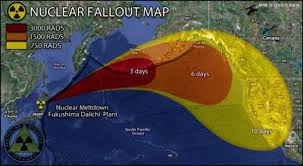
NOAA, Sept 5, 2014: Disease is destroying sea stars along entire Pacific coast of N. America
Skagit Valley Herald, Sept. 7, 2014: “It certainly is shocking… from 51 sea stars with none of them affected to all of them affected, and then gone.”
The Straight (Vancouver), Aug 20, 2014: [Sea] stars that normally crammed into every rock gully along the beach were missing. Not one starfish… empty black crevices… devoid of life. This scene is repeated up and down the West Coast… Divers report piles of white goo and pieces of starfish arms on the ocean floor… [T]o suddenly disappear is more than disconcerting: it is truly shocking. The speed… is mystifying. Yet the great die-off has not attracted that much media coverage… what else might follow tomorrow?
Portland Monthly, August 2014: In the spring, [Oregon State Prof. Bruce Menge] says, the tide pools were lined with thousands of healthy sea stars… The sickly few that remain hang limply
Laguna Beach Independent, Sept. 4, 2014: Scientists [say] pollution is surfacing as a suspected cause… [UC Santa Cruz biology professor] Pete Raimondi… attended a sea star “mortality event” conference… and left confused… Water pollution, scientists agree, is usually localized and doesn’t affect an entire coastline or an entire species. Usually… Scientists are debating [if] a secondary infection took over because the sea stars were weak due to environmental pollutants… Raimondi reported that pollution is being considered because no pathogens were detected in the animals until a secondary infection took over… [The] findings raised a question, Raimondi relayed… if the bacteria is always present… why would it lead to an epidemic now?
Prof. Raimondi: “I used to think I knew, but now I don’t… AIDS would be a good example for a human analogy… what kills you off is usually a secondary infection… I left [the conference] much more uncertain than when I walked into the room.”
Santa Cruz Sentinel, Sept. 1, 2014: “It’s been very mysterious in a lot of ways,” said Raimondi, as he discounted, but did not dismiss, possible causes. Unlike previous wasting events, this one occurs in warm and cold water, near and far from pollutant discharge… Ocean acidification and de-oxygenation are possible factors, yet sea stars are exposed to natural variations in acidity and oxygenation and they have never before been observed to exhibit this extent of wasting. To date, no one has found Fukushima radiation where the syndrome is observed.
So “no one has found Fukushima radiation where the syndrome is observed”? Significant levels of Fukushima fallout have been found in ecosystems along the Pacific coast from Canada to Southern California. Additionally, the massive amount of radioactive water being transported across the ocean from Fukushima was detected along the N. American shores in June 2013.
Prof. Steven Manley, Cal State Univ: “We measured significant… levels of radioactive iodine… it may have affected certain fish… the big question was, is another major isotope that came over in the cloud, cesium 137, present in the kelp, too? It has a half-life of 30 years [and may still be there]… Most of this fallout comes from the atmosphere primarily in rain… Radioactivity is taken up by the kelp and anything that feeds on the kelp will be exposed… [it] got into the environment… In fact, the values that we reported for iodine probably [are an] underestimate [and] could be two to three times more… it enters the coastal food web and gets dispersed over a variety of organisms… It’s not a good thing, but whether it actually has a measurable detrimental effect is beyond my expertise.”
Published: September 10th, 2014 at 9:00 am ET
|
Related Posts
- UC Berkeley Professor: California seeing Fukushima fallout won’t be a surprise — ‘Especially concerned’ after radioactive leaks at plant were admitted — “I’m not terribly confident in information Japan is sharing” January 19, 2014
- BBC: Scientist surprised at how much higher radiation levels are in some parts of ocean from Fukushima, it’s a ‘mystery’ — KPBS: Fukushima radiation is just going to become ‘a way of life’ for us” — California Professor: It’s certainly going to be in the environment, it just doesn’t go away (AUDIO) February 10, 2014
- ‘Marine Mystery’ in California: “Toxic outbreak threatening marine life” — Birds falling from sky, sea lions convulsing — “Worst they’ve ever seen” — Toxin hits record level, almost 1,000% above gov’t limit — Heart lesions, severe shrinking in part of brain, nervous system failure (VIDEO) May 3, 2014
- California Professor: “Serious threat” to our ocean, environment and society from ongoing Fukushima radiation releases — U. of California: “Unprecedented events with global consequences… fallout is far from over” — Scientist: ‘Risky’ (PHOTO) May 27, 2014
- PHOTOS: Sea star began “ripping itself into pieces” — Like a horror movie — AP: Deaths from Alaska to S. California — Biologist: Related to an environmental change? “An early warning that we aren’t picking up on?” — Professor: “None of us had ever seen anything like this before” November 4, 2013
It’s Time for People to Demand Information About Our Own Nuclear Disaster! We Cannot Allow a Cover-Up!
Top Official: “Really concerned” over radiation release at US nuclear site; Feds “have put a noose around scientific personnel”… they refuse to reveal crucial information about WIPP disaster — Investigators becoming suspicious — Nuclear Expert: “It sure seems like there’s a cover-up” (AUDIO)
The Santa Fe New Mexican, Sept 6, 2014: Flynn accuses feds of blocking WIPP probe — New Mexico’s top environmental regulator lashed out at the U.S. Department of Energy this week, accusing it of impeding the state’s investigation into [the WIPP] radiation leak… Secretary Ryan Flynn warned [about] Energy Department roadblocks that have protracted the probe… Increasingly in recent weeks, the federal Energy Department has thwarted attempts by the state… Flynn accused the Energy Department of muzzling scientists with crucial information about the waste…. [They] asked for documentation supporting the scientists’ observations [but] the Energy Department has repeatedly refused… his frustration with the Energy Department grew as its denials… became more frequent… The Energy Department’s refusal to provide information raised suspicions among Flynn’s investigators…
New Mexico Environment Department Secretary Ryan Flynn, Sept 6, 2014: “The problem is that Department of Energy headquarters back in Washington, D.C., is looking at this situation through a political or (public relations) lens, so they’ve put a noose around the scientific personnel who can answer our questions… there’s a willingness (by LANL personnel) to provide information [but] someone back at headquarters decides that no, they’re not going to provide that information to the state… it happens repeatedly, that’s when you start to get really concerned… they don’t provide certain information [or] make staff available… The more we investigate, the more we’re discovering at Los Alamos… the Department of Energy headquarters refuses to provide certain information.”
Greg Mello, Los Alamos Study Group, Sept 6, 2014: “[Not sharing this information] could be a danger signal for workers and the public. Mislabeling drums and withholding information can be criminal.”
The Santa Fe New Mexican, Sept 3, 2014: Review, relabeling of LANL waste raises questions about scope of problem… [Los Alamos National Laboratory’s] review of the incident has led to uncertainty over the volatility of hundreds of other drums… The lab notified state environment officials late last month that it was re-evaluating and relabeling as “ignitable” or “corrosive” the contents of 86 drums at LANL… The Department of Energy also is reviewing and relabeling more than 300… stored in WIPP’s underground… [This] raises questions about the scope of the problem that led to the leak at WIPP.
Chris Harris, former licensed Senior Reactor Operator & engineer, Aug 28, 2014 (at 22:15 in): “It sure seems like that there’s a combination of a cover-up, and a combination of slip-shot record keeping. Now there’s talk of whether they ditched those records after the fact or before the fact, but those records are nonexistent. One would expect really good records as to what is being stored, where it’s being stored, when it was put away, when it was stored, all that – every bit of information that one would expect to have in a nuclear storage facility and these are missing, there’s a lot of information.
Full interview with Harris here
Published: September 6th, 2014 at 5:16 pm ET
|
Related Posts
- Officials: Leakage seen on “many” nuclear waste drums in WIPP underground — We think the seals have degraded — Public “should be concerned” about another explosion — 1,000s of radioactive drums now seen as too risky to move (VIDEO) June 13, 2014
- Expert: No one in world has ever dealt with something like WIPP disaster — Continuous release of radioactive material ’24/7′ to environment — Nobody knows when leaking will end — It’s a ‘major failure’ for so many people to be exposed — Gov’t yet to say if dump will open again (AUDIO) April 6, 2014
- Video: WIPP nuclear site may close for several years — Explosion in multiple drums suspected — “Very much a cause for concern” — Top official gives ‘fiery speech’ calling for public to be told what has happened — DOE refuses to name source of nuclear wasteMay 9, 2014
- WIPP Expert: Nuclear waste is getting out above ground — Plutonium / Americium found in “every single worker” on site when leak began — New Mexico officials ‘totally unsatisfied’ with lack of info from Feds — “We don’t know how far away it’s gone” — Continuing threat for long time to come (AUDIO) March 5, 2014
- Officials now admit over 500 barrels of nuclear waste at risk of bursting open — AP: 368 already at WIPP dump — “New Mexico sees ‘imminent’ danger” — State orders WIPP to prevent “health or environmental threat”; Must ‘permanently seal’ underground storage areas May 21, 2014
City of Springfield Banned all Foreclosures! How Will The Supreme Court Rule On That?

(Republican File Photo)
 By
By
Follow on Twitter
on September 04, 2014 at 3:35 PM
MASSACHUSETTS SUPREME JUDICIAL COURT
- Massachusetts couple convicted of harassing neighbors with fake Craigslist ads, emails says actions protected by First Amendment
- Man convicted of murdering Springfield exotic dancer in 1984 has 5th request for new trial rejected by Massachusetts Supreme Judicial Court
- Suffolk D.A. appeals after judge finds defendant not guilty without hearing any evidence
- Geraldine Hines nominated to Massachusetts Supreme Judicial Court; would become 1st black woman on state’s highest court
- After diverse career, Ralph Gants confirmed as chief justice of Massachusetts Supreme Judicial Court

BOSTON – A group of Western Massachusetts banks argued before the state’s highest court on Thursday that the city of Springfield’s anti-foreclosure ordinances should be overturned.
The banks say the local ordinances contradict state laws, and a bond levied on lenders constitutes an illegal tax. “It’s not that banks are opposed to mortgage laws and reform, but to how it’s being done,” said Craig Kaylor, general counsel for Hampden Bank, one of the banks that brought the lawsuit. “These are for the state to decide, not city by city.”
But the city disagrees and says the laws are necessary to avoid blight and protect neighborhoods that have high rates of foreclosure.
“This is the city’s response to the foreclosure crisis,” said Springfield Assistant City Solicitor Thomas Moore, who argued the case before the Supreme Judicial Court. “It’s a response from the city council and mayor based on what they see every day in the city. They’ve taken the strongest stance to protect homeowners and the city itself.”
The city of Springfield passed two anti-foreclosure ordinances in 2011 as the city was being hit hard by the mortgage foreclosure crisis. One ordinance requires a bank that forecloses on a home to pay for a $10,000 bond, which can be used by the city to maintain the foreclosed properties, if the bank fails to do so.
The other ordinance requires the establishment of a mandatory mediation program to help homeowners facing foreclosure. The bank would be responsible for paying most of the cost of the mediation.
Springfield is among the top cities in the state in the number of distressed properties it has. The city says high rates of foreclosures lead to health and education problems for children in families that lose their homes, and high rates of blighted or vacant properties lead to crime and violence in those neighborhoods.
Six western Massachusetts banks, with Easthampton Savings Bank as the lead plaintiff, challenged the ordinances. A U.S. District court judge upheld the ordinances. However, on appeal, the U.S. Court of Appeals issued a stay preventing Springfield from enforcing them. The federal court then asked the Supreme Judicial Court, the state’s highest court, to answer two questions related to state law before the federal court makes its ruling. The case is Easthampton Savings Bank and others vs. City of Springfield.
The SJC must decide whether the local foreclosure ordinances are preempted by existing state foreclosure laws. The court must also decide whether the $10,000 bond is a legal fee or an illegal tax. Cities and towns cannot create taxes without legislative approval.
The banks also argue that the ordinances violate the contract clause of the U.S. Constitution by impairing the contract between the homeowner and the mortgage-holder, a question that remains before the federal court.
During Thursday’s arguments, Tani Sapirstein, an attorney representing the banks, argued that the bond is a tax because banks do not get any particular benefit from paying it – which is the criteria for calling something a fee. The way the bond works is when a foreclosed property is sold, if the city did not have to use the bond money to maintain it, $9,500 would be returned to the bank and $500 is kept by the city as an administrative fee, used to maintain blighted properties and implement the foreclosure laws.
Chief Justice Ralph Gants questioned Sapirstein on whether the bank does not actually receive benefits. “You have an interest in preserving the value of your property,” Gants said. “If there are foreclosed properties going to hell all around your property, it diminishes the value of your property and diminishes the value of what you receive on the foreclosure. Why is this concern about avoiding blight not something that would benefit the bank as well as the city?”
Sapirstein replied that eliminating blight would benefit the bank “as well as the city and other property owners in the neighborhood.” “How is that a particularized benefit?” she said.
Moore argued that the bond is a fee, which the city needs to hire code inspectors and create a database of who controls foreclosed properties.
But Justice Geraldine Hines said if she pays for a copy of her birth certificate, she gets a document in return for the fee. “Here I don’t see that,” she said. “The property owners, the mortgagees, don’t have something tangible.”
Moore said the banks get a “well-regulated industry” and preservation of their property values. In addition, when a bank registers ownership in the database, the city knows who is responsible and problems can be resolved more easily.
Sapirstein also argued that local law cannot require more than state law in an area that is regulated by the state or the result would be “a patchwork of ordinances.”
Gants indicated that the court may move to narrow the ordinances – for example, applying them only to a bank that has taken possession of a house, not a bank that is in the process of foreclosure when the homeowner is still living there. Gants said the ordinance as written could fine a bank for not maintaining a property where the homeowner still lives. As a homeowner, Gants said, “I’d say I’m still living here. This is my home. How can they be punished for not invading what’s still my home just because they happen to be foreclosing on it?” Gants said.
Moore acknowledged that the ordinance may be overbroad and said the city does not anticipate pursuing a violation in a case like that. Moore said the lenders’ lawsuit is premature because there is no information yet about how the city will enforce the laws. “We have the lenders essentially saying the sky will be falling, we are worried about x, y, z happening. None of that has happened and none of that may happen,” Moore said.
Moore said the city is still writing the regulations for the ordinances and if they are upheld, “The city is ready to go forward with implementation within a period of weeks.”
Similar foreclosure ordinances were established in Lynn and Worcester, and local banks challenged those as well. That lawsuit is pending in U.S. District Court in Worcester. The case involving Lynn and Worcester could be affected by the SJC’s ruling in the Springfield case.
Several activists supporting homeowners came in from Lynn and Springfield to hear the arguments. Candejah Pink, a Springfield homeowner and community organizer battled foreclosure for four years before reaching an agreement to keep her home. She helped write the Springfield ordinances. Pink said the bond is there to ensure that homes are maintained, which keeps crime and violence down. The mediation program, she said, is important to help homeowners come to an agreement with lenders. “We’re not asking to live in our homes for free. We’re asking for some mediation,” she said.
 The BlackRobed Mafia